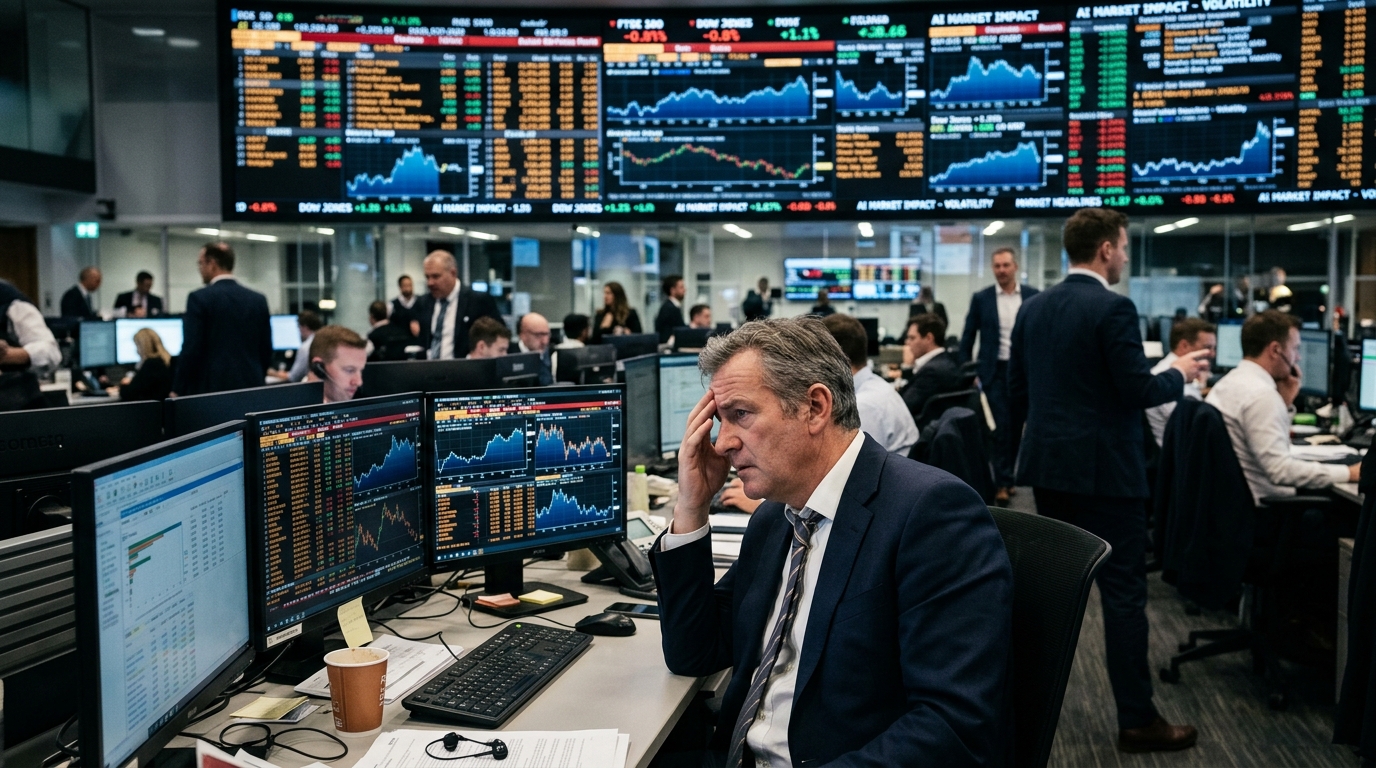
As we navigate the middle of 2026, the discourse surrounding the automation of financial services has reached a critical inflection point. While large language models and sophisticated machine learning algorithms can now analyze trillions of data points in milliseconds, the prediction that investment advisors would become obsolete is proving to be premature. Investing is not merely a mathematical exercise; at its core, it is an exercise in managing fear, hope, and uncertainty.
The Psychology of Crisis and the Trust Deficit
The primary reason Artificial Intelligence (AI) fails to replace the human advisor is the lack of Emotional Intelligence (EQ). During periods of extreme market volatility, investors aren't just looking for an optimal portfolio allocation; they are looking for reassurance. An algorithm can rationally explain why a 15% drop is statistically expected, but only a human can empathize with the anxiety of a parent seeing their child's college fund shrink.
Trust is the ultimate currency in wealth management. In markets like Greece, where personal relationships have traditionally played a decisive role, the transition to purely digital advisory faces significant resistance. Clients want to know who is accountable for their decisions and desire an ethical commitment that a machine, for now, cannot provide.
Regulatory Frameworks and the 'Black Box' Liability
Another major hurdle is the regulatory and legal landscape. The European Union, through the AI Act, has established strict rules regarding transparency and accountability. Investment advisors bear a fiduciary duty, meaning they must act in the best interest of the client. When an AI system makes a decision through a 'black box' process, it is exceptionally difficult to assign liability in the event of systemic failure or miscalculation.
- Who is legally responsible for a loss caused by a model's 'hallucination'?
- How is data privacy ensured within closed banking ecosystems?
- How do we address the inherent bias in historical data that trains these algorithms?
These questions remain largely unanswered, creating a protective moat around the profession. The advisor is now evolving into a 'curator' of technology rather than its victim.
Holistic Management and Life's Complexity
Investment strategy is not just about stock returns. It encompasses tax planning, inheritance issues, philanthropic goals, and family dynamics that are often irrational or non-quantifiable. AI excels at analyzing structured data but fails at the unstructured data of human existence. A human advisor can sense when a client is being overly optimistic due to a recent personal success and restrain them from unnecessary risk—something AI would struggle to detect without invasive access to every aspect of a user's private life.
"Technology will make investing cheaper, but humans will make it safer on an emotional level," notes a prominent financial analyst.
The Rise of the 'Centaur Advisor'
The future belongs neither to the human nor the machine alone, but to their combination. The 'Centaur Advisor' uses AI to automate routine tasks—such as portfolio rebalancing, data harvesting, and report generation—freeing up time for meaningful client interaction. In the Greek market, banks and brokerage firms are already investing in hybrid models where AI acts as a powerful co-pilot, providing real-time insights to the advisor, who then filters and presents them to the investor in a relatable and personalized manner.
In conclusion, AI will be slow to replace investment advisors because money is more than just numbers; it is an extension of human values and anxieties. As technology continues to advance, the premium on authentic, human judgment will only increase.