In an era where Silicon Valley and global tech titans have transformed into a vast laboratory for Artificial Intelligence (AI), a historic power from Kyoto, Japan, chooses to walk its own, solitary path. Nintendo, the company that brought video games into our homes decades ago, stubbornly refuses to follow the "herd" of investments in Generative AI, preferring to invest in what it knows best: human creativity and its iconic characters.
AI Fatigue and the Return to Fundamentals
In recent months, an interesting shift has been observed in international markets. After a prolonged rally in AI-related stocks, investors are beginning to show signs of "fatigue." The question "where are the profits?" is starting to echo louder than promises about the future. In this context, Nintendo emerges as a safe haven. The recent rise in its stock price is not due to any announcement of large language models, but to investors' unwavering faith in its business model based on intellectual property (IP).
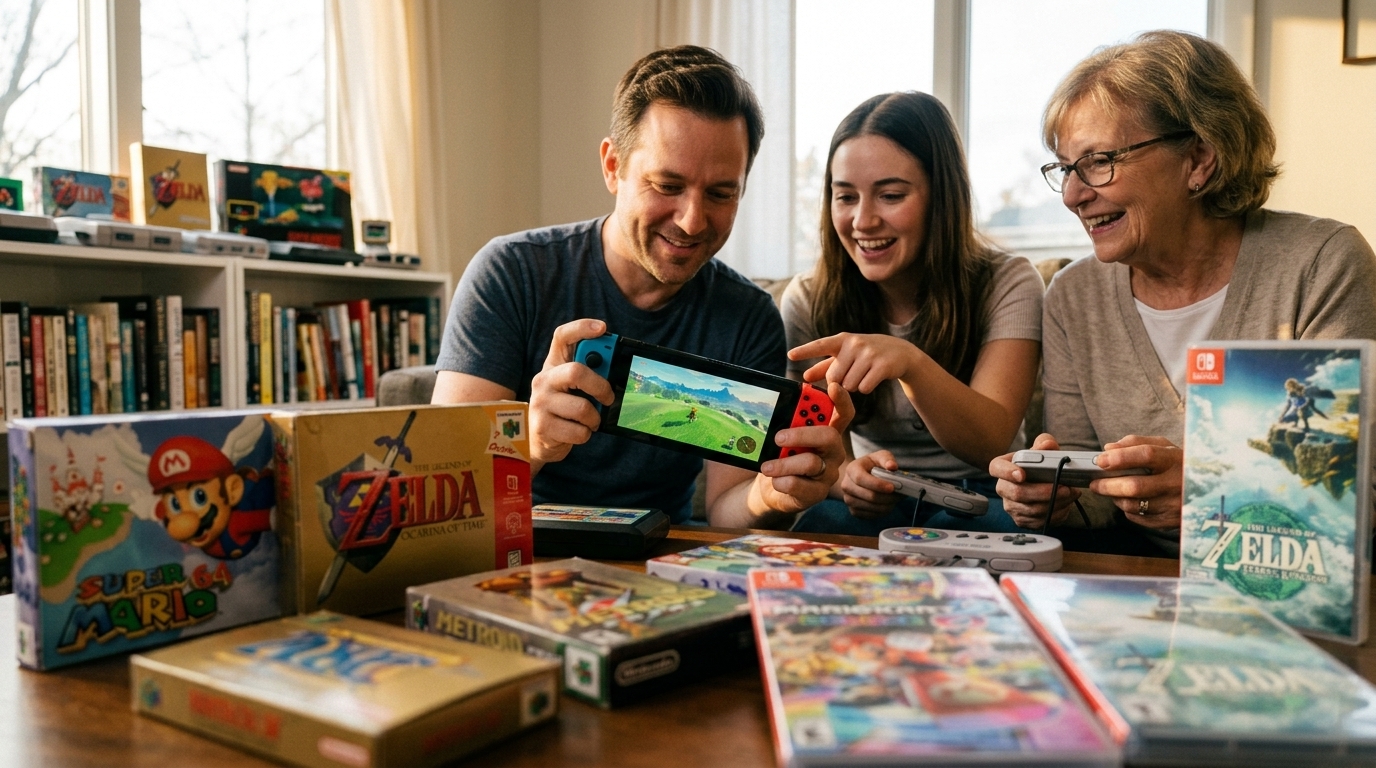
Nintendo's strategy is clear: technology is the means, not the end. While Sony and Microsoft explore how AI can accelerate game production or create dynamic dialogues, Nintendo focuses on how the next Legend of Zelda title will offer a unique, handcrafted experience. This "artisanal" approach is what gives the company a competitive advantage that cannot be replicated by any algorithm.
The "Blue Ocean" Phenomenon in the 21st Century
For years, Nintendo has applied the "Blue Ocean Strategy" – the creation of a market where there is no competition. Instead of engaging in a war of specs and processing power with Nvidia or AMD, the company creates entertainment ecosystems. The success of the Super Mario Bros. Movie and the opening of Super Nintendo World theme parks in Japan and the US prove that the company is transforming from a hardware manufacturer into a Disney-style entertainment giant.
- The dominance of the Nintendo Switch, even at the end of its life cycle.
- Expansion into cinema with the upcoming Zelda live-action movie.
- Maintaining high profit margins through software sales.
- Refusal to participate in the costly AI arms race.
The "Switch 2" Challenge and the Future
Of course, the road is not without obstacles. The market is waiting with bated breath for the successor to the Switch, the so-called "Switch 2." The challenge for Nintendo is to prove it can innovate again without relying on the conveniences offered by AI. The company's management has expressed reservations about Generative AI, focusing on copyright issues and the potential loss of the "soul" of its games.
"Technology should serve fun, not replace it. An algorithm can build a level, but only a human can build a memory," company executives often remark in internal meetings.
In conclusion, Nintendo serves as a living reminder that in the attention economy, authentic content remains king. While the rest of the world tries to figure out how to use AI to cut costs, Nintendo uses its tradition to increase its value. In a world flooded with synthetic content, sticking with Mario and Zelda might be the most revolutionary act in tech today.