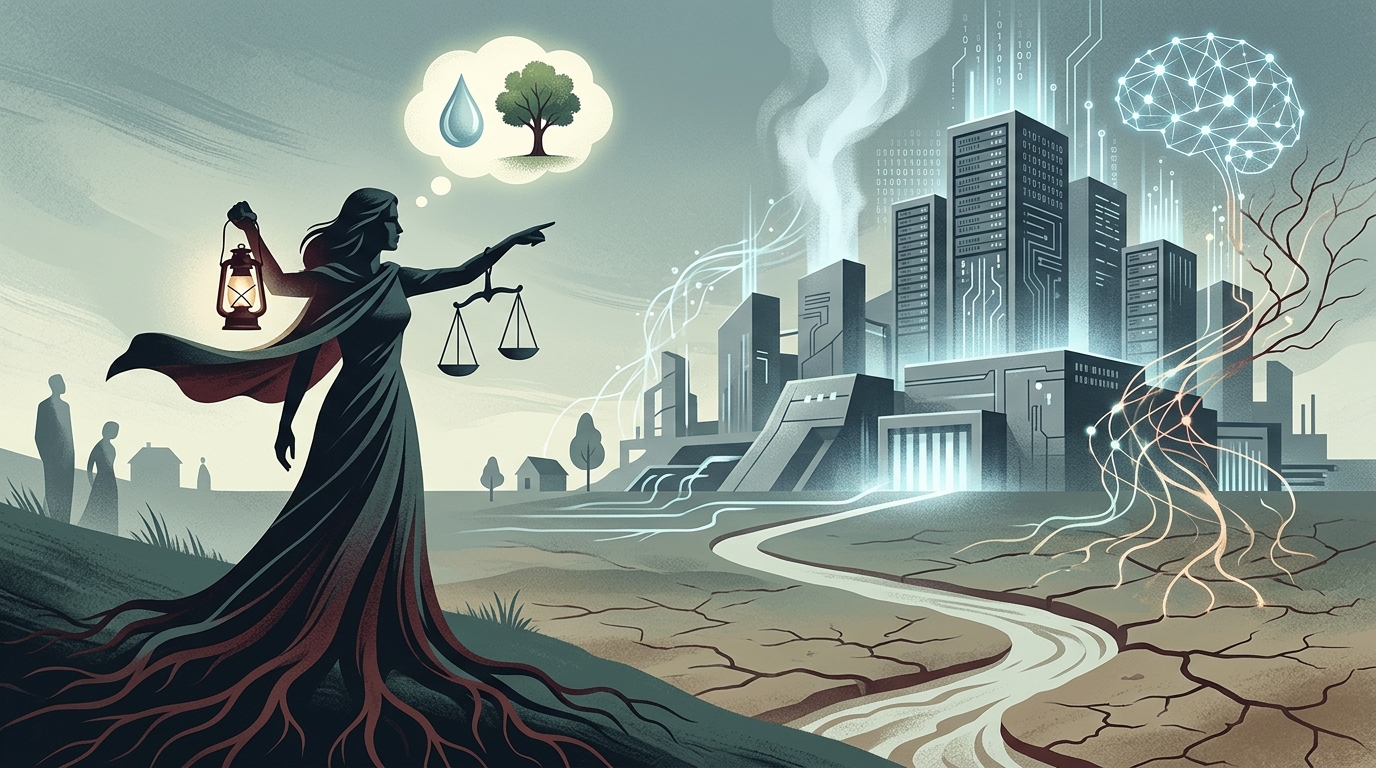
At the heart of the digital revolution lies a paradox that the global community can no longer afford to ignore. While Artificial Intelligence (AI) promises to solve some of humanity's most intractable problems—from climate change to incurable diseases—its very existence demands a resource sacrifice that now rivals the consumption of entire nations. A recent, highly detailed report by the United Nations Trade and Development (UNCTAD) sounds the alarm, highlighting that the hunger of data centers for electricity and water has reached the proportions of a geopolitical crisis.
The report depicts a reality where the digital economy is no longer an intangible entity in the "cloud," but a heavy industry with massive ecological footprints. According to the data, energy consumption from data centers worldwide has grown exponentially, reaching levels equivalent to developed countries such as Ireland or Denmark. The question now being asked urgently is: can the planet withstand the cost of our technological progress?
The Thirst of Large Language Models
One of the most concerning findings of the report involves water consumption. Cooling the millions of servers that run models like GPT-4 or Gemini requires billions of liters of fresh water. The UN points out that training a single large model can consume as much water as a small town needs for an entire month. In regions already plagued by water scarcity, the presence of giant data centers causes social tensions and competition for natural resources between tech giants and local communities.
Furthermore, the report highlights the growing problem of electronic waste (e-waste). The speed at which AI hardware evolves means that graphics cards (GPUs) and specialized processors become obsolete within a few years. This creates a mountain of toxic waste, which often ends up in developing countries, creating a new form of "digital colonialism" where the wealthy North enjoys the benefits of AI while the South suffers the environmental consequences.
The Energy Trap and Jevons Paradox
Despite tech companies' efforts to present themselves as "carbon neutral," the reality is far more complex. The UN observes the emergence of the "Jevons Paradox" in the IT sector: as technology becomes more efficient, total consumption increases rather than decreases because its use becomes cheaper and more widespread. Increased algorithmic efficiency does not lead to less energy use, but to a larger scale of applications.
In many cases, demand from data centers is forcing governments to extend the operation of fossil fuel power plants that were scheduled to close. In the United States and Europe, plans for the green transition are being upended by the sudden need for stable "baseload" power that only coal, natural gas, or nuclear energy can currently provide with consistency.
Toward an Ethic of Digital Sustainability
The UN report is not limited to criticism; it also proposes solutions. A new international governance framework is required to compel tech companies toward full transparency regarding their environmental footprint. "Green" promises in marketing brochures are no longer enough. We need independent audits and strict standards for data center efficiency.
Ultimately, the challenge is cultural. We must ask ourselves if every AI application is necessary. Do we really need an energy-intensive model to write a simple email or to create an image that will be forgotten in seconds? "Data sobriety" may be the key concept for the coming years. Technology must serve the planet's survival, not undermine it in the name of speed and convenience.