In the heart of Rome, far from the gleaming glass towers of San Francisco, a man in a brown robe and sandals holds one of the most critical keys to humanity's future. Father Paolo Benanti, a Franciscan friar and professor at the Pontifical Gregorian University, is no ordinary priest. He is the man the Vatican has stationed on the front lines of the technological revolution, serving as a bridge between centuries of spiritual tradition and the rapid evolution of Artificial Intelligence.
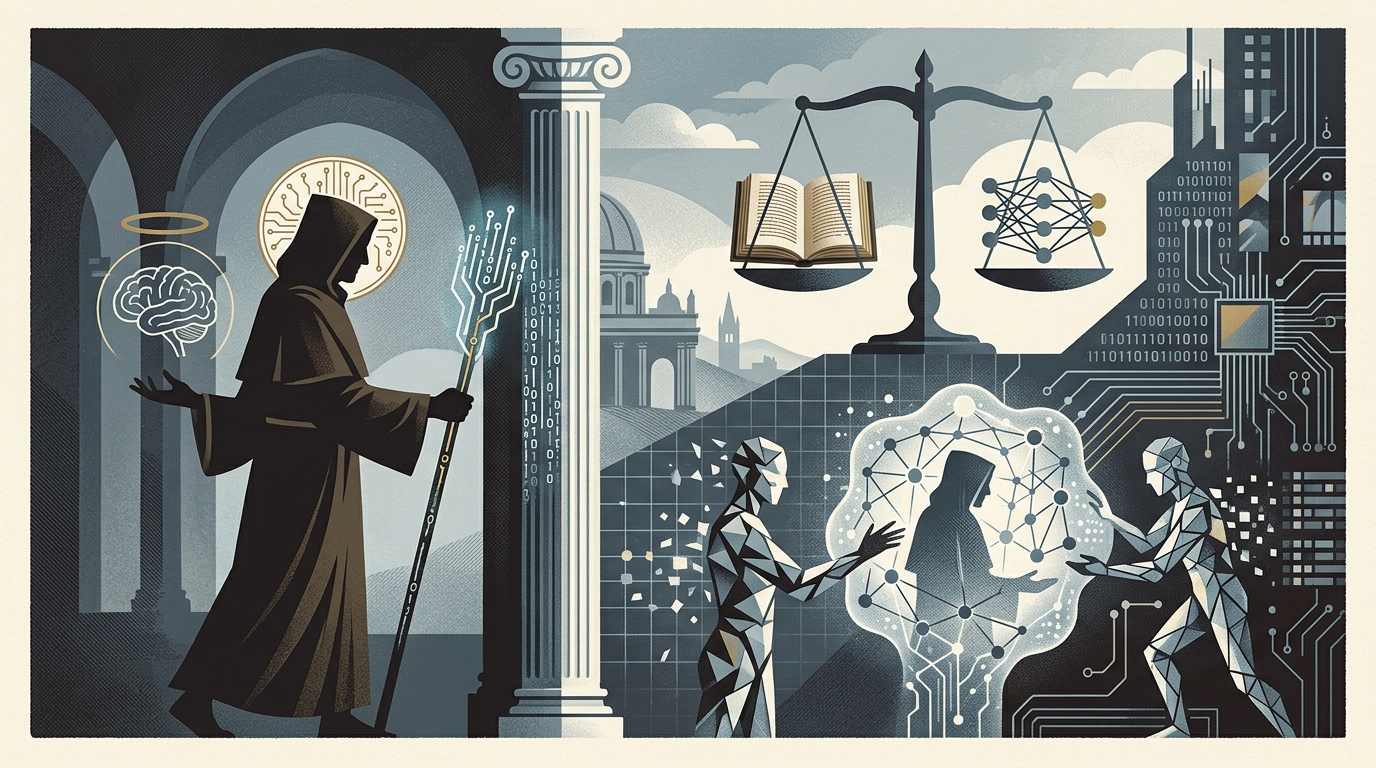
The recent revelation of his close ties with Anthropic—the company founded by the Amodei siblings, which positions itself as the "ethical alternative" to OpenAI—highlights an unexpected convergence. The Vatican, under the guidance of Pope Francis, is not merely seeking to understand AI but to "civilize" it through a concept Benanti coined: "Algorethics." This is the effort to embed ethical values directly into the code and structure of large language models.
The Birth of Algorethics
For Benanti, technology is never neutral. Every line of code contains a worldview, a choice of values. "If we let the algorithm decide without an ethical framework, then we turn humanity into data," he often argues. Algorethics is the term he devised to describe the need for an ethical protocol governing the operation of machines. At Anthropic, this approach found fertile ground through "Constitutional AI."
Anthropic utilizes a method where the AI model is trained to follow a specific set of principles—a "constitution." The Vatican’s contribution to this dialogue is not about imposing religious dogmas but about defending human dignity. In his meetings with Silicon Valley executives, Benanti poses questions that engineers often overlook: How does AI affect social cohesion? How do we ensure that technology does not marginalize the already vulnerable?
"The challenge is not to make machines look like humans, but to ensure that humans do not start thinking like machines," says Father Benanti.
The Strategy of Pope Francis
Pope Francis has proven to be one of the most visionary leaders regarding the digital age. With the "Rome Call for AI Ethics," the Vatican managed to bring giants like Microsoft and IBM to the same table, committing them to principles of transparency, inclusion, and accountability. Benanti’s presence within Anthropic is the practical application of this diplomacy. It is not a typical advisory relationship but a profound cultural intervention.
The choice of Anthropic is not accidental. After leaving OpenAI due to disagreements over commercialization and safety, the Amodeis created a company that puts alignment at its core. Benanti sees in them a "secular ally" in the effort to set boundaries for a technology that many fear could spiral out of control. His role involves reviewing the moral implications of the "constitutional" rules that guide Claude, Anthropic’s flagship AI.
Resistance and Challenges
Of course, the Church’s presence in the inner sanctums of Silicon Valley does not go without criticism. Many technologists believe that ethics should stem from rationalism rather than religious centers of power. Others fear that the Vatican’s involvement could lead to a form of digital censorship based on conservative values. However, Benanti responds that the ethics he proposes are universal: based on the protection of life, freedom, and justice.
The question remains whether AI companies will uphold these commitments when the pressure for profits and the arms race with China intensify. Anthropic, despite its ethical declarations, remains a business receiving billions from Amazon and Google. Can a friar stop the momentum of global capitalism if it decides to sacrifice ethics on the altar of power? The tension between the "Public Benefit Corporation" status and the need for massive compute resources is the ultimate test for this alliance.
Conclusion: A New Humanistic Renaissance?
The story of Benanti and Anthropic reminds us that technology is too important a matter to be left only to technocrats. We need philosophers, theologians, and humanists to navigate the uncharted territory of artificial intelligence. If AI is the new "cathedral" of our era, then Benanti is there to ensure its foundations are built not just on processing power, but on the human soul. The success or failure of this endeavor will determine whether AI will be a tool for liberation or a new form of digital enslavement.