In an era where technological superiority is increasingly translated into algorithmic power, warnings from the highest echelons of the military establishment carry a unique, almost existential weight. General Bryan Fenton, head of the U.S. Special Operations Command (SOCOM), recently addressed a critical concern, emphasizing that the integration of Artificial Intelligence (AI) into weapon systems must be accompanied by an non-negotiable guarantee: violence must be delivered only where there is intent.
This statement, originally reported by Fortune, is not merely a technical observation but a profound ethical and strategic position. As autonomous systems and targeting algorithms become faster than human thought, the question is no longer whether AI can kill, but whether it can do so with the same 'discretion' and moral responsibility required of a trained soldier.
The Ethics of 'Programmed' Violence
The concept of 'intent' in warfare is the bedrock of International Humanitarian Law. When a soldier makes the decision to fire, that decision is filtered through training, rules of engagement, and ultimately, human conscience. In the case of AI, 'intent' is a mathematical probability. General Fenton points out that industry and the military must ensure there is no 'leakage' of violence toward unintended targets due to data errors or model 'hallucinations.'
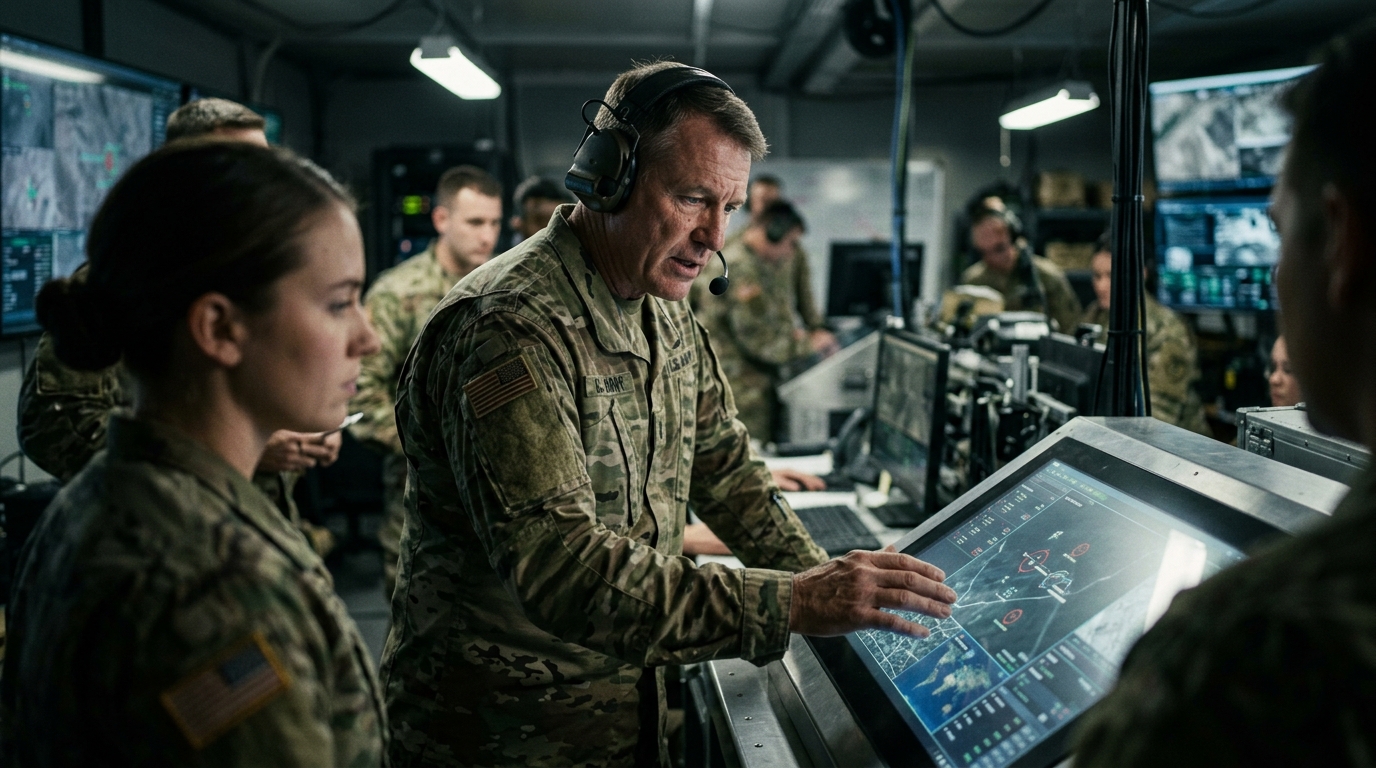
The problem lies in the so-called 'black box' of neural networks. If an algorithm decides a civilian vehicle is a threat due to a flawed correlation in its training data, the violence delivered will be precise in execution but incorrect in intent. The challenge for Special Operations, which often operate in densely populated areas and ambiguous environments, is to maintain control over a system designed to operate at speeds that exceed human oversight (human-in-the-loop).
The Speed of War vs. Human Judgment
One of the primary arguments for AI on the battlefield is the reduction of the 'sensor-to-shooter' cycle. In a conflict with near-peer adversaries like China or Russia, seconds can mean the difference between victory and defeat. However, this need for speed directly conflicts with the need for careful evaluation.
- Data and Reliability: AI is only as good as its data. In combat conditions, data is often incomplete, misleading, or intentionally corrupted by the enemy.
- Ethical Accountability: Who bears responsibility for an autonomous strike that leads to civilian casualties? The programmer, the commander who authorized the system, or the algorithm itself?
- Psychological Detachment: The use of AI risks turning warfare into a data management exercise, insulating decision-makers from the painful reality of kinetic violence.
Fenton argues that AI should function as an 'augmenter' of human capability rather than a replacement. Special Operations forces rely on judgment and adaptability—traits that the current generation of AI struggles to replicate consistently.
Geopolitical Competition and the 'Nuclear Dilemma'
The debate over AI in weaponry strongly mirrors the dawn of the nuclear age. There is a global arms race to develop Lethal Autonomous Weapon Systems (LAWS). If the U.S. imposes strict ethical constraints on its AI while its adversaries do not, it risks being at a disadvantage. Nevertheless, ethical superiority and the avoidance of collateral damage are not just matters of humanitarianism but of strategic survival: indiscriminate violence fuels insurgency and undermines alliances.
"We must be sure that this technology is going to deliver violence only where we intend it," Fenton stated, setting the stage for a new era of military ethics.
In conclusion, the integration of AI into Special Operations is not just an equipment upgrade. It is a renegotiation of the social contract between the state, the military, and technology. Ensuring that 'intent' remains human, even if the execution is mechanical, will be the greatest challenge of the 21st century.