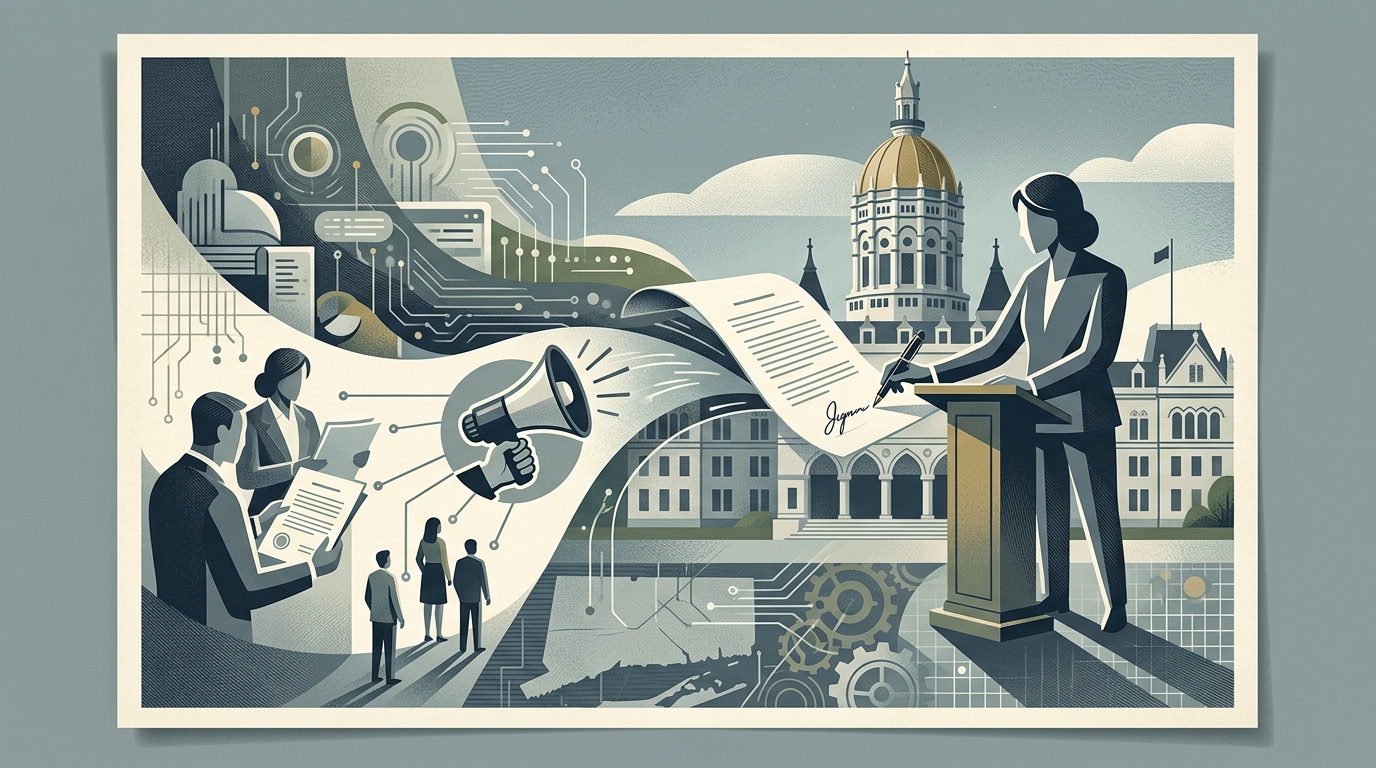
In a move destined to reshape the landscape of workplace ethics in the age of digital transformation, Connecticut Governor Ned Lamont has signed one of the most comprehensive Artificial Intelligence (AI) legislative acts in the United States. The law, known as Senate Bill 2, is not merely an attempt to regulate an emerging technology; it is a fundamental statement on the rights of citizens and employees against the opacity of algorithms.
Transparency as a Corporate Mandate
The centerpiece of the new law concerns the obligation of employers to notify their employees when AI systems are used to make critical decisions. This encompasses hiring, promotions, performance evaluations, and even terminations. Historically, many workers have faced algorithmic "black boxes" that determined their professional trajectories without any explanation. Connecticut’s law now mandates that companies provide clear disclosures, ensuring that technology does not operate in the shadows.
Furthermore, the law requires businesses to conduct regular audits to detect algorithmic bias. It is now well-documented that AI systems can inherit and amplify biases related to race, gender, or age if their training data is flawed or biased. Under this new legislation, the burden of proof shifts to the employers to demonstrate that their tools are fair and objective.
Safeguarding Against Deepfakes and Political Deception
Beyond the workplace, Connecticut’s legislation addresses one of the gravest threats to democracy and personal dignity: deepfakes. The law criminalizes the use of artificially generated content intended to deceive voters or defame individuals through non-consensual sexual material. In an era where trust in information is increasingly fragile, Lamont’s move is seen as vital for preserving the integrity of electoral processes.
These provisions reflect a broader concern across the U.S., as Congress struggles to reach a consensus on a national AI strategy. States like Connecticut, California, and Colorado are now taking the lead, creating a tapestry of regulations that major tech firms are forced to navigate. This phenomenon, often referred to as the "Brussels Effect" on a domestic scale, means that the strictest state laws often become the de facto national standard.
Challenges and Business Community Reactions
While the law has been hailed as a victory for human rights, some business groups have expressed reservations. The primary argument is that stringent disclosure requirements and constant auditing could stifle innovation or increase operational costs for small and medium-sized enterprises. There is also a fear that the lack of uniformity across states will create a bureaucratic labyrinth for companies operating nationwide.
However, the Lamont administration maintains that trust is a prerequisite for AI adoption. Without guardrails, public backlash against technology could lead to its outright rejection. SB 2 seeks to find the middle ground: allowing technological advancement while ensuring that humans remain at the center of decision-making processes.
Conclusion: A Model for the Future
The signing of this law marks a new era in technology policy. Connecticut is not just regulating software; it is regulating power. As AI permeates every aspect of our lives, the need for transparency, accountability, and justice becomes imperative. Ned Lamont’s action serves as a loud signal to both Silicon Valley and Washington: progress without ethics is not true progress.