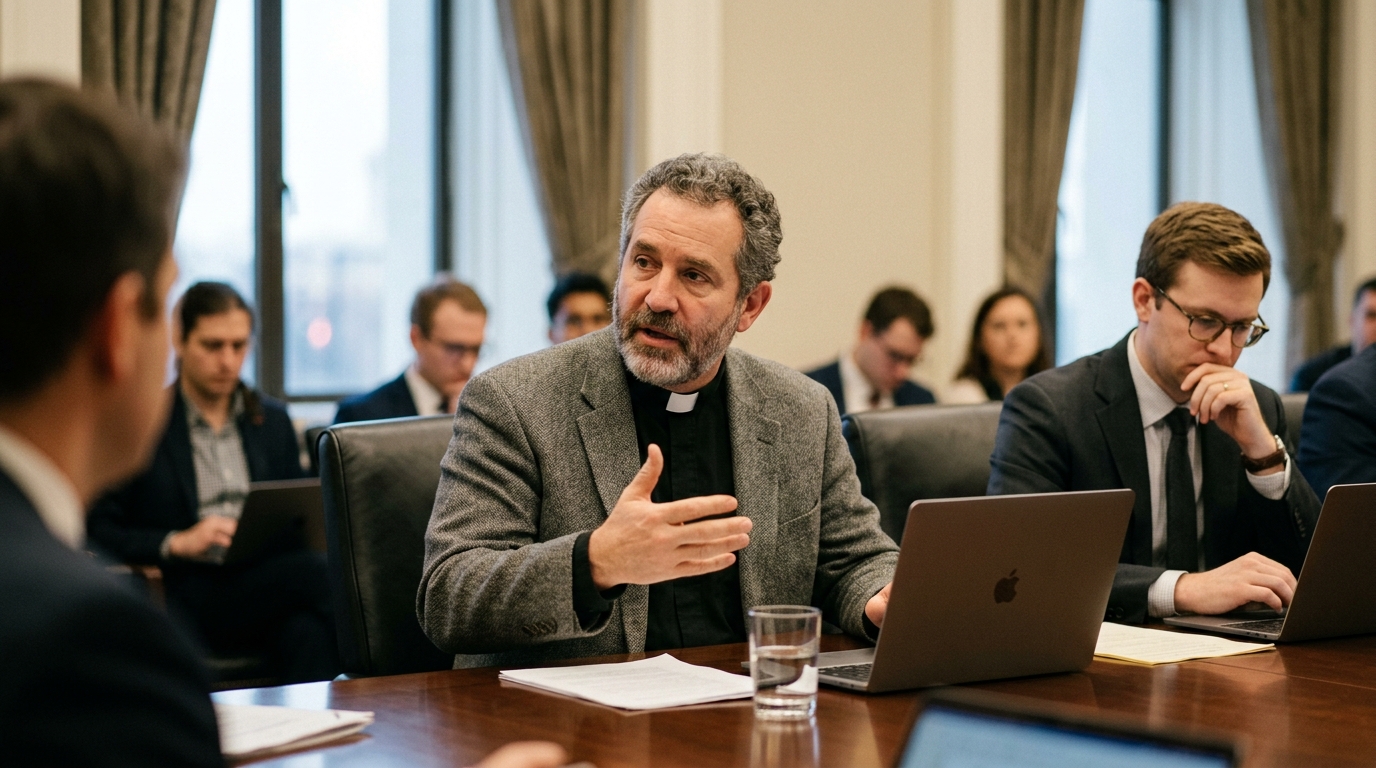
In an era where algorithms are beginning to dictate not only our consumption habits but also our fundamental social structures, the voice of the Vatican resonates with an unexpected yet urgent gravity. Pope Francis, assuming a role that transcends religious boundaries, has emerged as one of the most consistent critics and visionaries regarding the ethical use of Artificial Intelligence (AI). His recent plea for compassion and humanity in the development of new technologies is not merely a wish, but a political and moral demand to the international community.
The Birth of 'Algorethics'
The Pontiff introduced the term 'algorethics,' arguing that technology is never neutral. Every line of code contains the values, biases, and priorities of its creators. According to the Vatican, the lack of an ethical framework in AI development risks turning humanity into a mere set of data to be exploited. Algorethics seeks to ensure that machine decision-making always remains under the supervision of human judgment, particularly in areas concerning justice, health, and labor.
"We must not allow algorithms to determine the value of a human life. Technology must serve the human person, not the other way around," the Pope has pointedly stated.
Risks and Social Inequalities
One of the primary concerns expressed by Pope Francis is the widening of social inequalities. AI, while offering immense potential for progress, may concentrate even more power in the hands of a few tech giants and developed nations. The risk of a 'digital totalitarianism' is visible, where vulnerable social groups are further marginalized by automated systems that do not understand the context of human suffering or social need.
- Data Bias: Algorithms trained on historical data tend to reproduce and amplify racial or sexist discrimination.
- Job Displacement: Automation primarily threatens lower-paid jobs, hitting those with the least capacity to adapt.
- Autonomous Weapons: The Pontiff has called for a total ban on Lethal Autonomous Weapons Systems (LAWS), emphasizing that the decision over life and death should never be delegated to a machine.
Humanity at the Center
The Pope's intervention is not a technophobic reaction but a call for vigilance. At the core of his teaching is the concept of 'encounter.' AI, no matter how sophisticated, lacks the capacity for empathy and compassion—elements that form the backbone of social cohesion. The concern is that by relying too heavily on technological efficiency, we will lose our ability to relate as human beings.
In his discussions with G7 leaders and Silicon Valley executives, Francis emphasized that innovation must be guided by the principle of the common good. This means that the design of AI systems must include voices from different cultures, religions, and social strata, so it does not remain the product of a narrow, Western-centric, and profit-driven perspective.
The Future of AI Governance
As we move into the latter half of the 2020s, the need for international regulatory frameworks is becoming imperative. The Vatican, through the 'Rome Call for AI Ethics,' has already managed to bring companies like Microsoft and IBM to the table, alongside representatives of Islam and Judaism. This interfaith and multidisciplinary approach is perhaps the only bulwark against an unchecked technological arms race.
In conclusion, Pope Francis's voice reminds the world that progress is not measured solely by the speed of processors or the accuracy of predictions, but by how much it protects the weakest members of society. The challenge for humanity in 2026 is not to stop AI, but to imbue it with the same compassion that makes us human.