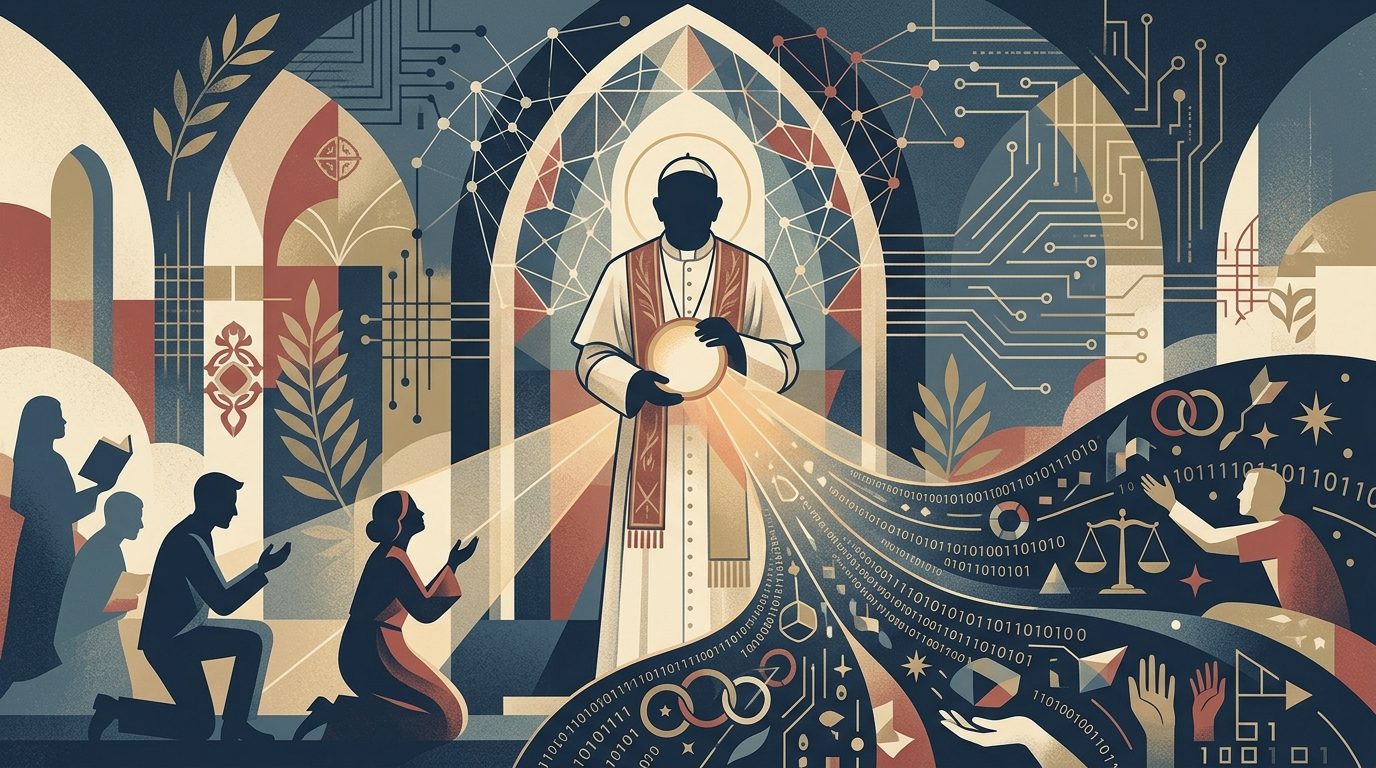
In the heart of Vatican City, where centuries of tradition meet the daunting challenges of the future, Pope Francis has undertaken an act that will be remembered as a turning point in the relationship between faith and technology. By issuing his latest encyclical—the highest form of papal teaching—the Pontiff is no longer addressing only the faithful, but all of humanity, elevating the ethics of Artificial Intelligence (AI) to the same moral status as social justice and climate change.
This encyclical is not merely a technical intervention; it is a profound theological and humanistic cry for conscience. Francis argues that AI is not a neutral tool but a force capable of reshaping the very essence of human existence. Introducing the concept of "algor-ethics," the Vatican seeks to bridge the gap between computer code and the moral code of humanity, ensuring that technological progress does not come at the cost of our soul.
Human Dignity in the Age of Algorithms
The central argument of the encyclical revolves around protecting the individual from the "dictatorship of algorithms." The Pope warns that when decisions regarding life, labor, health, or justice are delegated to opaque machine learning systems, we risk losing the capacity for compassion and individualized judgment. The encyclical emphasizes that no machine should ever have the final word on the fate of a human being.
Particular emphasis is placed on social inequalities. Francis highlights that AI, instead of being a tool for liberation, tends to reinforce existing biases, further marginalizing the already vulnerable. "Algorithms must not become the new judges of the poor," the text states, calling on developers and tech corporations to integrate ethics into the very design of their systems—a concept known as "ethics by design."
From 'Laudato Si' to the Digital Frontier
This move does not emerge from a vacuum. It is the natural evolution of Francis's papacy, which in 2015, with the encyclical "Laudato Si'," placed ecology at the heart of faith. Now, recognizing that the digital environment is humanity's "second home," he seeks to impose rules that will prevent a spiritual and social collapse. The encyclical thoroughly analyzes the risks of misinformation, the loss of privacy, and the alienation caused by excessive dependence on screens.
Furthermore, the Pope makes a bold reference to autonomous weapons systems, labeling them an "affront" to creation. The idea that a machine can decide on life and death without human intervention is viewed by the Vatican as the ultimate moral failure. The call for an international treaty banning "killer robots" is a central pillar of this new papal teaching, linking the digital realm to the global peace movement.
Global Response and the Responsibility of Tech Giants
The encyclical is not limited to mere aspirations; it demands concrete political action. The Pope calls on governments to establish regulatory frameworks that ensure transparency and accountability for Big Tech companies. The influence of the Catholic Church over 1.3 billion believers worldwide gives this call a political weight that Silicon Valley leaders cannot easily ignore.
Already, major companies like Microsoft and IBM have signed the "Rome Call for AI Ethics," an initiative that preceded the encyclical. However, the Pope goes a step further, calling for a "global governance" of technology that prioritizes the common good over profit. The encyclical concludes with a message of hope tempered by vigilance: technology is a gift from God, provided it remains at the service of humanity and not the other way around.
- The necessity for human oversight (Human-in-the-loop) in every critical decision.
- Combating algorithmic discrimination that affects minorities and the poor.
- The ban on autonomous weapons as a religious and moral imperative.
- Ensuring AI contributes to eradicating hunger and poverty rather than concentrating wealth.
In a world moving at the speed of light, the Church chooses to pause and reflect on the consequences of progress. Pope Francis's encyclical serves as a roadmap for how we can remain human in an era where machines are learning to mimic us, predict us, and ultimately, define us.