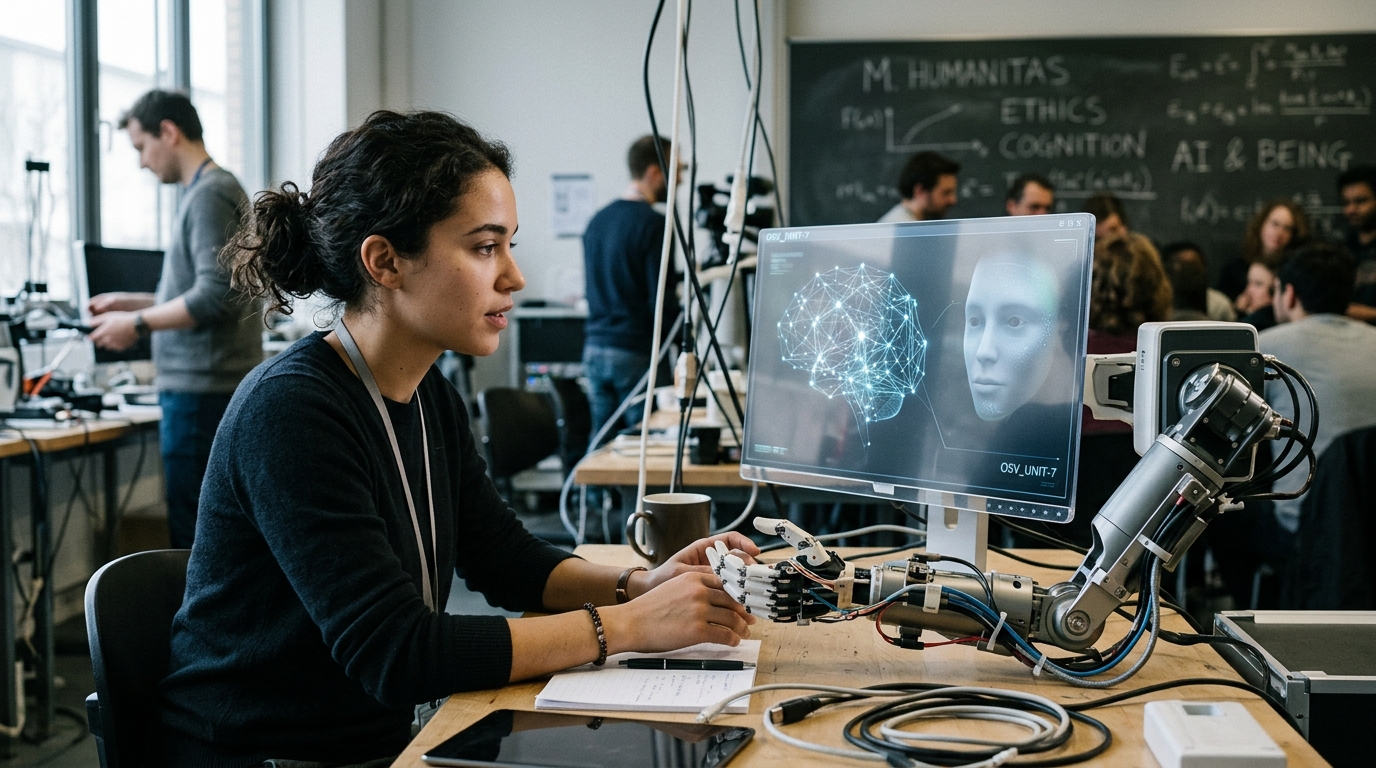
In an era where the boundaries between biological and artificial intelligence are becoming increasingly blurred, the ‘Magnifica Humanitas’ (Magnificent Humanity) initiative emerges as a critical ethical compass. Rooted in recent dialogues within the Catholic Church and international philosophical circles, this endeavor is not merely an academic study but an existential outcry for the preservation of the elements that make us unique. As we navigate through 2026, Artificial Intelligence (AI) is no longer a productivity tool but a mediator of reality itself, influencing everything from personal faith to global social structures.
The Theology of Code: Can a Machine Reflect the Divine?
The central question posed by ‘Magnifica Humanitas’ concerns the concept of ‘Imago Dei’ (Image of God) in a world dominated by silicon. Participants in the initiative argue that while AI can simulate logic, problem-solving, and even creativity, it falls desperately short of the 'embodied experience.' The human condition is inextricably linked to mortality, suffering, and the capacity for self-sacrifice—concepts that remain incomprehensible to an algorithm, no matter how advanced. The analysis focuses on the risk of reducing human value to mere data, transforming the person into a user and the soul into a set of preferences to be exploited.
Algor-ethics: A New Social Doctrine
One of the most innovative terms promoted by ‘Magnifica Humanitas’ is ‘Algor-ethics.’ This refers to the ethical framing of algorithms to ensure that technology serves humanity rather than subjugating it. The report emphasizes that algorithms are not neutral; they carry the biases of their creators and the data on which they were trained. In this context, social justice takes on a new dimension. Digital marginalization, job displacement, and the concentration of power in a few tech giants represent the modern 'sins' of the digital age. The initiative calls for global AI governance that prioritizes the 'common person' over shareholder profit.
The Peril of Mechanized Empathy
A particularly concerning aspect examined is the use of AI in the fields of care and human relationships. From companion robots for the elderly to algorithmic mental health advisors, technology promises solutions to loneliness. However, ‘Magnifica Humanitas’ warns that ‘artificial empathy’ is an illusion that could lead to further isolation. Authentic human contact requires vulnerability, something a machine cannot possess. The analysis concludes that the magnificence of humanity lies in our imperfection and our ability to connect through that imperfection—something no software update can replace.
Conclusion: Towards a New Humanism
‘Magnifica Humanitas’ is not a polemic against progress but an invitation to a ‘New Humanism.’ In a world moving at the speed of light, it calls us to pause and reflect: What kind of humans do we want to become? Technology should be the mirror that shows us how to be better, not the mold that forces us to become machines. The challenge of the 21st century is not whether machines will think, but whether humans will continue to feel and act with moral autonomy.