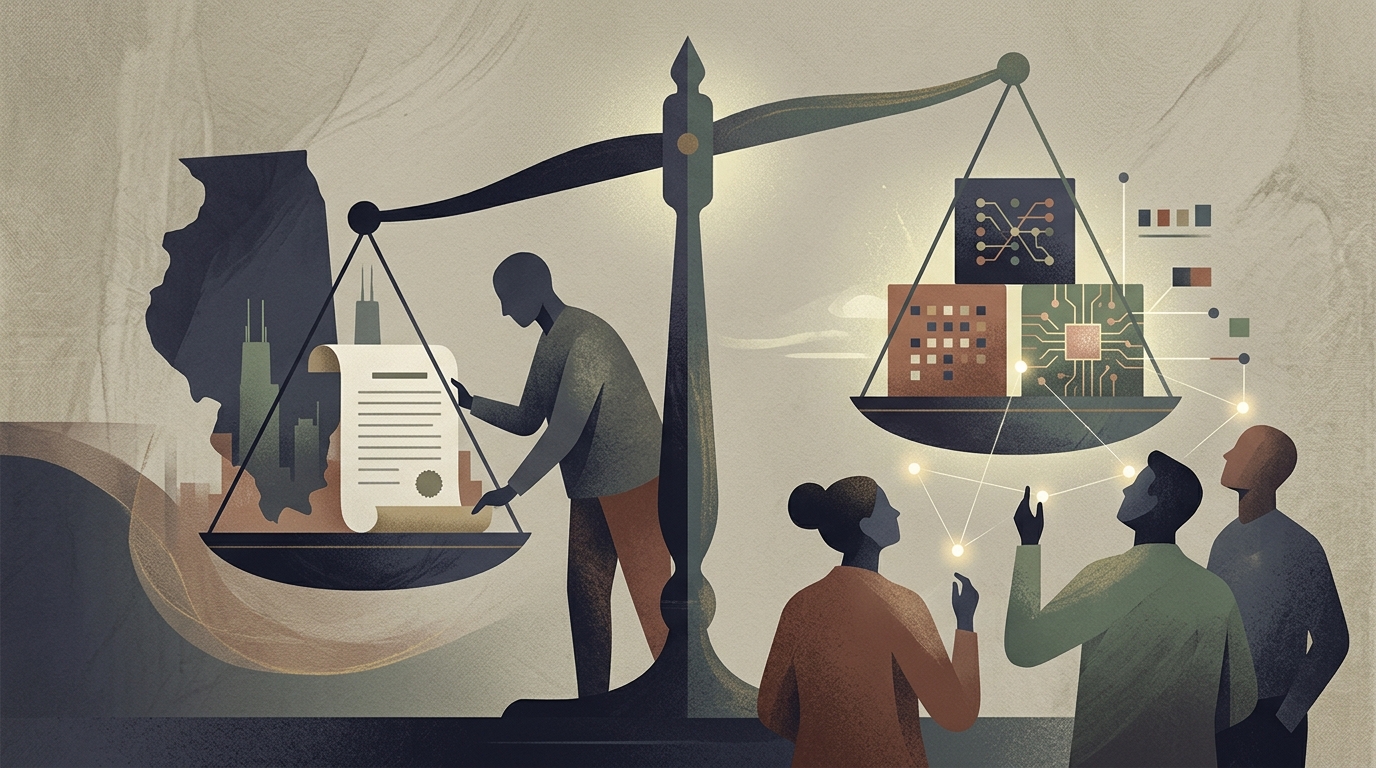
The state of Illinois is once again cementing its reputation as a regulatory laboratory for the digital age. The Illinois Department of Human Rights (IDHR) recently unveiled a draft set of rules aimed at strictly governing the use of Artificial Intelligence (AI) in the workplace. This move follows the enactment of House Bill 3773, which amended the Illinois Human Rights Act to explicitly encompass algorithmic decision-making. As organizations worldwide rush to deploy AI tools for screening resumes, evaluating performance, and determining promotions, Illinois is confronting a fundamental question: How do we ensure the 'black box' of an algorithm doesn't perpetuate the human biases of the past?
The Mandate for Notice and Transparency
At the core of the proposed regulations lies the principle of transparency. According to the draft, employers using AI tools for decisions that impact employment—ranging from initial recruitment to termination—will be required to provide clear and timely notice to employees or candidates. This requirement is far more than a bureaucratic hurdle; it is the bedrock of individual rights. When a candidate is aware that their rejection was facilitated by an automated system, they gain the agency to question the process if they suspect unfair treatment.
The regulations specify that this notice must be accessible and comprehensible. A mere footnote in a dense terms-of-service document will not suffice. Employers must explain what data is being collected and how it influences the final outcome. This approach aims to demystify AI, transforming it from an opaque tool of power into a monitored process subject to the rule of law. For the first time, the burden of proof regarding the fairness of these tools is shifting toward the entities that deploy them.
Combating Algorithmic Discrimination
The most ambitious segment of the regulations focuses on the prohibition of discrimination. It is now well-documented that AI systems, if trained on historical data containing biases, tend to replicate or even amplify those prejudices. For instance, a hiring algorithm might systematically downgrade female candidates for engineering roles because its training data reflects a male-dominated past in the sector.
The IDHR makes it clear that the use of AI is no excuse for violating civil rights. Employers will be held liable if the tools they utilize result in a 'disparate impact' on protected classes, including racial minorities, individuals with disabilities, and older workers. This forces companies to conduct rigorous audits of their systems, ensuring that technology does not become a vehicle for a new, digital form of exclusion. The draft rules create a legal framework where 'the algorithm made me do it' is no longer a valid defense.
Illinois as a Global Regulatory Blueprint
This is not Illinois' first foray into tech regulation. With the Biometric Information Privacy Act (BIPA) and the Artificial Intelligence Video Interview Act (AIVIA), the state has already established one of the most stringent legal environments for technology in the United States. The IDHR's new initiative completes this regulatory puzzle, offering a holistic framework for worker protection.
The significance of this move extends far beyond the borders of Illinois. Many multinational corporations, seeking to avoid a patchwork of localized procedures, often adopt the strictest standards across all their operations. Much like the GDPR in Europe or the CCPA in California, the Illinois rules could become the de facto standard for the ethical use of AI in employment globally. The open public comment period offers a rare opportunity for academics, labor unions, and tech giants to help shape the future of the modern social contract between employer and employee.
Challenges and the Corporate Response
Despite the noble intentions, the new regulations are not without significant hurdles. Business groups have expressed concerns regarding the cost of compliance and the technical complexity of auditing these systems. How can a small or medium-sized employer verify the integrity of an algorithm purchased from a third-party vendor? There is also the risk of 'regulatory overhang,' where the fear of litigation might stifle the adoption of innovative tools that could, under the right conditions, actually make hiring more objective by removing human gut-feeling biases.
Furthermore, the technical nature of deep learning makes it difficult to fully explain every single decision—the so-called 'explainability problem.' Critics argue that transparency requirements might clash with the proprietary trade secrets of software developers. Nevertheless, Illinois' stance remains firm: human rights protections supersede corporate proprietary interests. This balance will likely be tested in the courts for years to come, but the signal is unmistakable: the era of unchecked algorithmic governance in the workplace is coming to an end.