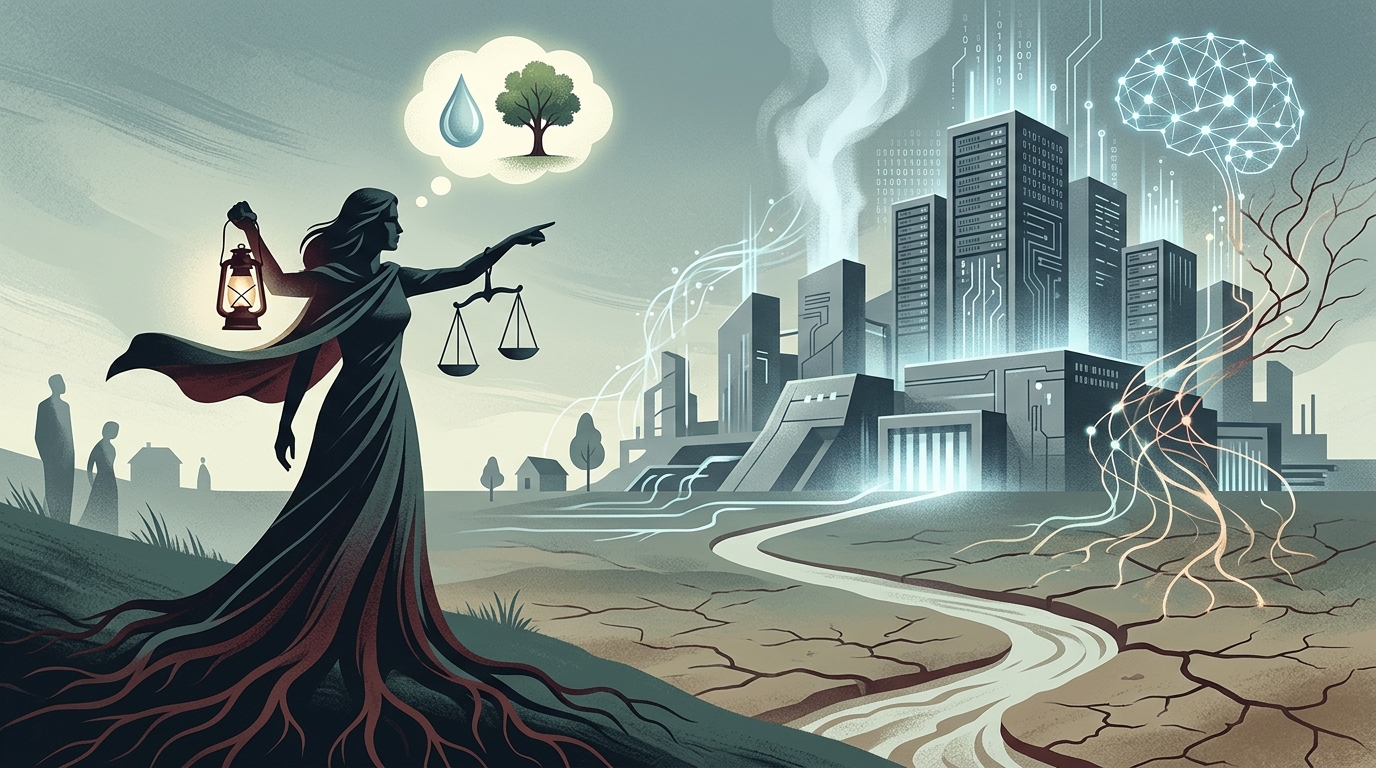
At the dawn of the digital revolution, the discourse surrounding Artificial Intelligence (AI) is often trapped between two extremes: the utopian promise of an infallible machine and the dystopian fear of an uncontrollable superintelligence. However, a closer look, as highlighted by recent analyses in Modern Ghana, reveals a more complex truth: the technology itself is neutral. It is human intent, values, and the data that feed it that determine whether the outcome will be a blessing or a curse for humanity.
The concept of neutrality in technology is not new. A hammer can be used to build a house or to cause harm. The difference with AI lies in its scale and autonomy. As we move through 2026, the ability of algorithms to make decisions that affect the lives of millions—from loan approvals to disease diagnosis—makes "intent" the most critical element of the equation. AI possesses no moral compass; it reflects the compass of those who program it.
The Mirror of Data and Bias
The strongest argument against the absolute neutrality of AI is the nature of training data. Algorithms learn from the world as it is, not as it should be. If historical data contains racial, gender, or economic biases, AI will replicate and often amplify them. At this point, the machine's "neutrality" becomes the vehicle for perpetuating human injustice.
For example, in Africa and other parts of the Global South, there is significant concern that AI models developed in the West do not account for local specificities, languages, or cultural values. The intent of developers in Silicon Valley may not be malicious, but the omission of diverse data constitutes a form of "passive intent" that leads to exclusion. AI acts as a mirror: if the image we show it is skewed, the reflection will be equally distorted.
The Dual Nature of Use: From Healing to Surveillance
Intent becomes even more evident when we examine "dual-use" applications. The same neural network architecture that can detect cancerous tumors with greater accuracy than a radiologist can also be used to develop autonomous weapons systems or to organize mass surveillance of citizens. Here, the technology remains the same; its ethical standing changes radically depending on who holds the "remote control."
"Artificial Intelligence will not destroy us, nor will it save us on its own. It will simply be the magnifying glass of our own ambitions," notes an ethics analyst.
In this context, the international community is called upon to establish rules that do not stifle innovation but ensure that the intent behind innovation aligns with human rights. The European AI Act and UN initiatives are steps in this direction, attempting to codify "good intent" into legal frameworks.
The Responsibility of the Creator and the User
In conclusion, we must understand that AI is not an exogenous force that invaded our society. It is a human creation. Responsibility for its actions does not belong to the code, but to the people, companies, and governments that develop and deploy it. Training engineers in ethics is now just as important as training them in mathematics.
- Transparency in algorithms allows for the scrutiny of intent.
- Inclusivity in data reduces unintended bias.
- Accountability ensures that negative consequences have a name and a face.
The future of AI will be judged by our ability to remain honest about our intentions. If we seek only profit or power, AI will become the tool of oppression. If we seek prosperity and equality, AI can become the most powerful ally the human race has ever had. The choice, for better or worse, remains ours.