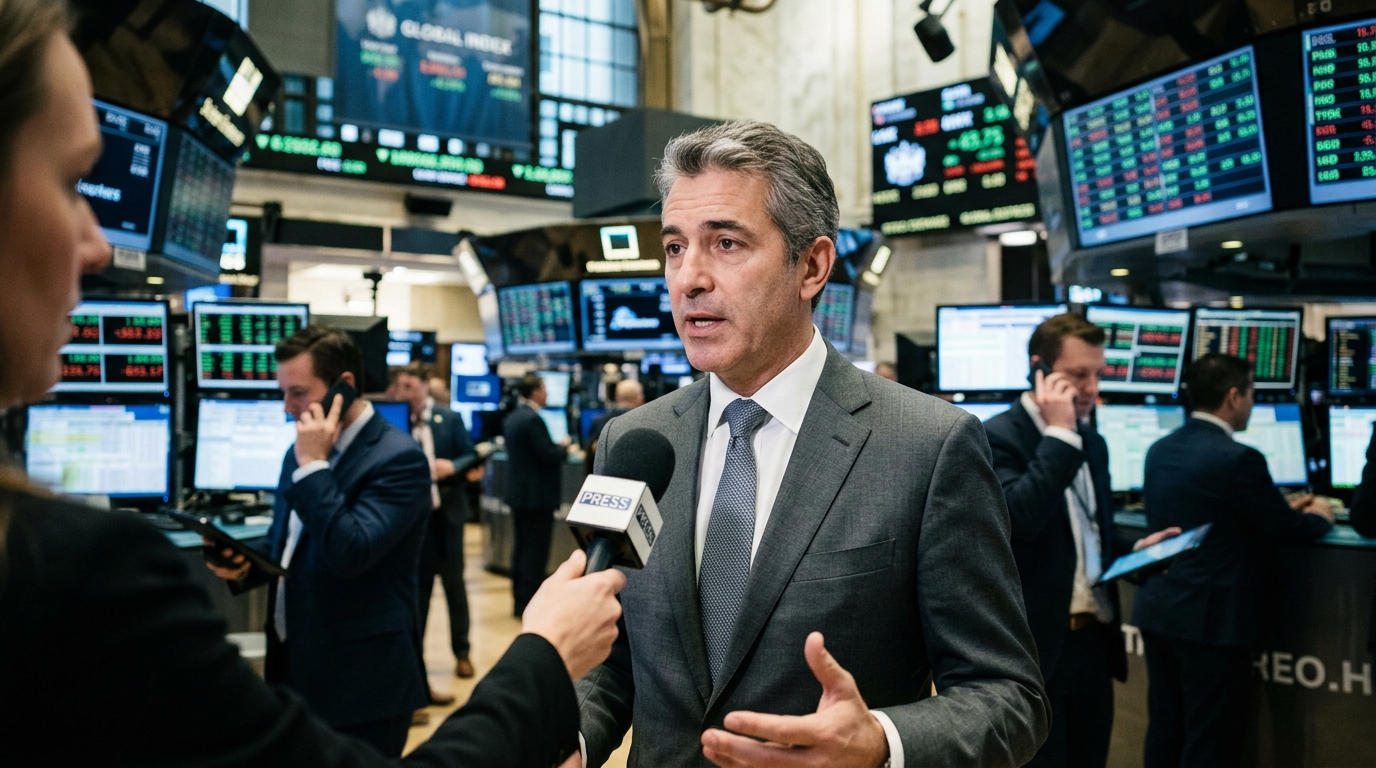
In an era where anxiety over the future of employment dominates boardroom discussions and union rallies alike, Sander van ’t Noordende, CEO of the global recruitment titan Randstad, offers a grounded and data-driven perspective. In a recent interview with Bloomberg Tech, the leader of the world’s largest staffing firm laid out Randstad’s projections for the next five to ten years, estimating that 7-8% of jobs will be directly replaced by Artificial Intelligence (AI). Despite this figure—which represents millions of workers globally—Van ’t Noordende refuses to subscribe to the "doomsday scenarios" predicting mass unemployment and societal collapse.
Quantifying the Shift: Moving Beyond the Headlines
The estimate of 7-8% job replacement is not a shot in the dark; it is the result of analyzing automation trends across sectors like administrative support, customer service, and basic data analysis. However, Randstad emphasizes a critical distinction: the replacement of a job role does not necessarily mean the permanent exit of a worker from the labor market. "We are seeing an evolution, not an apocalypse," the CEO noted. Technological history has consistently shown that waves of automation—from the steam engine to the internet—tend to eliminate tasks rather than entire professions, while simultaneously creating new demands that are currently unimaginable.
The linchpin of Van ’t Noordende’s analysis is the speed of adaptation. A five-to-ten-year window provides a crucial opportunity for businesses and governments to invest in reskilling. AI, in its current iteration, functions more as a "co-pilot" than a total replacement for human intelligence, boosting the productivity of those who learn to harness its capabilities effectively.
The Demographic Counterbalance and the Talent Scarcity
One of the most compelling points raised by the Randstad CEO is the intersection of AI and the demographic crisis facing the West and East Asia. While many fear AI will steal jobs, the reality in many developed economies is a chronic shortage of workers to fill existing roles. With aging populations and shrinking workforces, AI may be the only viable solution to maintaining productivity levels and sustaining social security systems.
- Labor shortages remain the primary concern for employers globally.
- AI can handle repetitive, mundane tasks, freeing up human workers for creative and strategic endeavors.
- Sectors like healthcare, education, and specialized trades remain highly resilient to full automation due to the need for empathy and complex physical tasks.
According to Van ’t Noordende, the companies that will thrive are those that successfully marry technological power with the "human touch." Randstad itself has pivoted toward being a "Partner for Talent," focusing on managing individual career trajectories within an ever-shifting landscape.
Future Challenges: Ethics and Social Responsibility
Despite his pragmatic optimism, the CEO does not ignore the hurdles ahead. The transition will not be painless for everyone. Older workers or those in sectors with low digital penetration are at high risk of being left behind. Here, the role of recruitment firms is evolving: from simple intermediaries to consultants in education and lifelong learning. Social stability will depend on whether the 7-8% of displaced workers can quickly find pathways into new roles created by the AI economy itself.
"AI won't take your job. A human using AI will," Van ’t Noordende often remarks, capturing the essence of the current industrial revolution.
In conclusion, Randstad’s stance suggests we are in a phase of restructuring rather than collapse. The labor market of 2030 will be different—more efficient, perhaps more demanding—but human labor will remain the central gear of the global economy, provided it is coupled with a continuous drive for new skills.