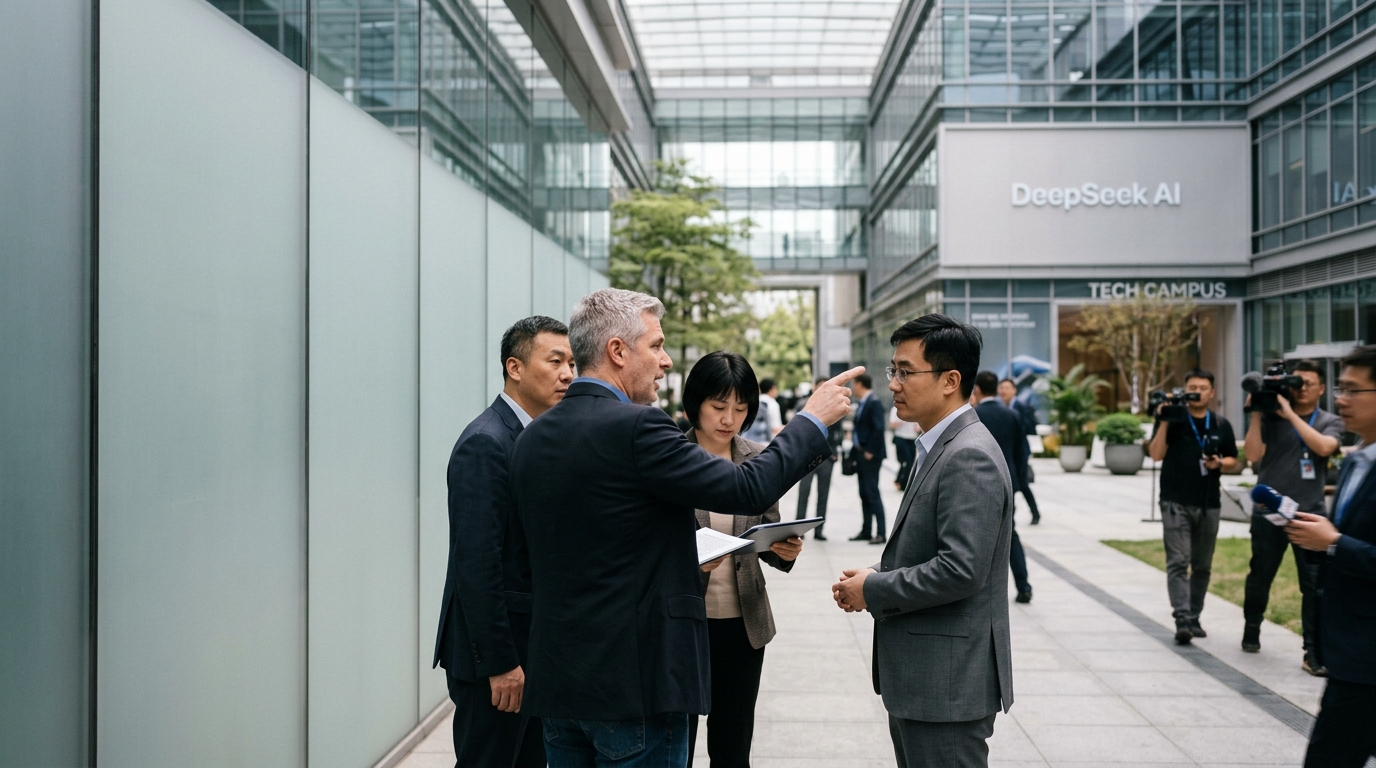
In the high-stakes theater of global artificial intelligence, a seismic shift is occurring in the East. According to reports from The Information, Chinese tech giants Tencent and Alibaba are in advanced negotiations to lead a funding round for DeepSeek, a startup that has rapidly become the poster child for Chinese AI innovation. The deal is expected to value the company at over $25.5 billion, catapulting it into the same league as Western heavyweights like Anthropic and potentially challenging the dominance of OpenAI.
DeepSeek, originally the research arm of the quantitative hedge fund High-Flyer Quant, has achieved what many thought impossible under the current regime of US export controls. It has developed reasoning models—most notably the DeepSeek-R1—that rival the performance of OpenAI’s o1 and GPT-4o in complex tasks such as mathematics and coding. What makes DeepSeek particularly formidable is its efficiency; while Silicon Valley spends billions on massive GPU clusters, DeepSeek has optimized its algorithms to achieve similar results with significantly less hardware and energy consumption.
The Strategic Synergy of Giants
The potential collaboration between Tencent and Alibaba is a rare phenomenon. These two companies have traditionally operated as fierce rivals, competing across cloud computing, digital payments, and entertainment. However, the existential threat posed by US chip sanctions and the strategic necessity of domestic AI sovereignty have forced a realignment. By backing DeepSeek, both giants are securing a stake in the most advanced large language model (LLM) technology currently available in China.
For Alibaba, this investment is a defensive and offensive play for its cloud division. As DeepSeek scales, its computational needs will be astronomical, providing a steady stream of revenue and technical validation for Alibaba Cloud. For Tencent, the integration of DeepSeek’s reasoning capabilities into WeChat and its vast gaming empire could redefine user engagement. This isn't just a financial investment; it is an infrastructural bet on the future of the Chinese internet.
Innovation Born of Necessity
The $25.5 billion valuation is a testament to DeepSeek's unique position. Unlike many of its peers, DeepSeek has embraced an open-source philosophy, releasing model weights that have allowed developers worldwide to experiment with its technology. This has created a virtuous cycle of feedback and improvement that proprietary models often lack.
"DeepSeek has proven that the path to AGI isn't just about who has the most H100s, but who has the smartest math," says one industry analyst.
The company's success stems from its architectural innovations. By utilizing techniques like Mixture-of-Experts (MoE) and specialized attention mechanisms, DeepSeek has managed to bypass some of the bottlenecks that plague traditional LLMs. This "efficiency-first" approach is not just a choice but a necessity in a country where high-end AI chips are a scarce resource. It is a classic example of innovation being driven by constraints.
Geopolitical Implications and the Road Ahead
The rise of DeepSeek at a $25.5 billion valuation complicates the narrative of US technological superiority. If a Chinese startup can produce world-class AI models despite being cut off from the latest Nvidia hardware, it suggests that the "chip moat" may be shallower than previously thought. This investment will likely trigger further scrutiny from Washington, potentially leading to even tighter restrictions on software and collaborative research.
However, DeepSeek faces internal challenges as well. Navigating the regulatory landscape in China requires a delicate balance between pushing the boundaries of AI capabilities and adhering to strict content moderation laws. Furthermore, as the company grows, it will need to prove that it can transition from a research-focused entity into a commercially viable powerhouse that can generate returns for its new, high-profile investors.
Conclusion: A Bipolar AI World
The involvement of Tencent and Alibaba marks the beginning of the "national champion" era for Chinese AI. With the backing of the country's most powerful corporations, DeepSeek is no longer an underdog; it is a titan. This move signals to the world that the AI race is no longer a solo run by the United States, but a bipolar competition where architectural ingenuity is becoming just as important as raw data and silicon. As we move further into 2026, the $25.5 billion bet on DeepSeek may well be remembered as the moment the global AI balance of power finally tilted.