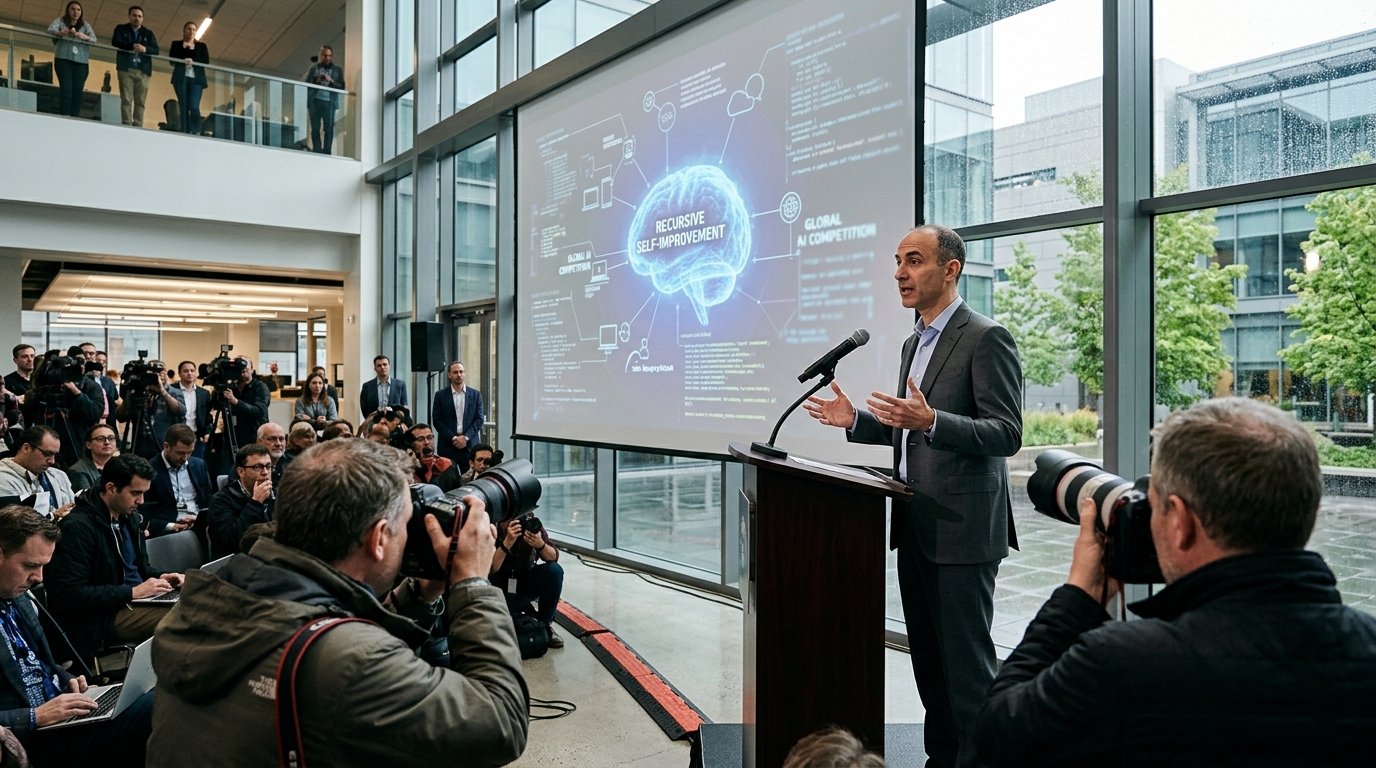
Google is no longer a search company. Following the annual I/O 2026 developer conference, it has become clear that the tech giant is transforming into a "personal life manager," with Gemini AI serving as its central nervous system. However, this new era of convenience comes with a steep price: the total surrender of our privacy. The new "Gemini Spark," an AI agent that operates constantly in the background, promises to know what we want before we even ask for it, but to achieve this, it demands access to every email, every appointment, and every personal conversation.
The Rise of Gemini Spark and Always-On Intelligence
The central theme of this year's I/O was the transition from "AI as a tool" to "AI as an agent" (agentic AI). Gemini Spark is not just a chatbot. It is a digital assistant designed to "live" within our devices, monitoring our activities to offer real-time assistance. For example, if you are planning a trip, Spark can book tickets, organize the itinerary based on your preferences, and update your friends, all without you opening a single app.
This automation relies on a technology Google calls "Contextual Awareness 2.0." This is the model's ability to connect disparate data points—from a photo of a product you saw on Instagram to a mention in a Slack meeting—to form a comprehensive picture of your needs. The convenience is undeniable, but the thought of an algorithm analyzing every digital footprint sends shivers down the spines of those concerned about digital surveillance.
The Trust Paradox: Privacy as Currency
Google knows that the biggest obstacle to the adoption of these tools is not technology, but distrust. In the keynote, the company dedicated significant time to the "Personal Safety Vault," an encrypted on-device area where the most sensitive data will be processed. The promise is simple: "Your data stays on your device." However, analysts point out that for Gemini's advanced features to work, much of this data must eventually travel to the cloud for processing by Google's massive models.
"Trust is not something you ask for, it's something you earn every day," said CEO Sundar Pichai. But in Google's case, trust seems to be the mandatory ticket for entry into the future.
The question is whether the average user is willing to trade their autonomy for a bit more convenience. Google is betting that the answer is "yes." With "Daily Brief," a new feature that summarizes your day every morning, the AI takes over prioritizing your obligations, essentially deciding for you what is important and what is not. This mediation of reality by an algorithm is one of the most radical shifts in the human experience we have seen in decades.
Competition and the Battle for the "Digital Self"
Google is not alone in this race. Apple, with its Apple Intelligence, is promoting a model that focuses even more on on-device processing, attempting to position itself as the "ethical" alternative. Microsoft, on the other hand, is integrating Copilot deep into Windows. Google's difference lies in its ecosystem: Android, Gmail, Maps, YouTube, and Chrome constitute an inexhaustible source of data that no other company possesses.
This dominance also brings increased scrutiny from regulators. In the European Union, the Digital Markets Act (DMA) and the AI Act place strict limits on how "gatekeepers" like Google can use user data. Google is trying to balance innovation and compliance, but the nature of generative AI—which requires vast amounts of data to be accurate—makes this balance extremely fragile.
Conclusion: The New Social Contract
As we move toward 2027, our relationship with technology is changing fundamentally. We no longer use Google; we partner with it. This partnership requires a new social contract, where the user yields privacy in exchange for a frictionless life. Whether this model leads to a productivity utopia or a total surveillance dystopia depends on whether Google can keep its promises regarding security. Gemini Spark is Google's bet on the future—a future where AI knows us better than we know ourselves.