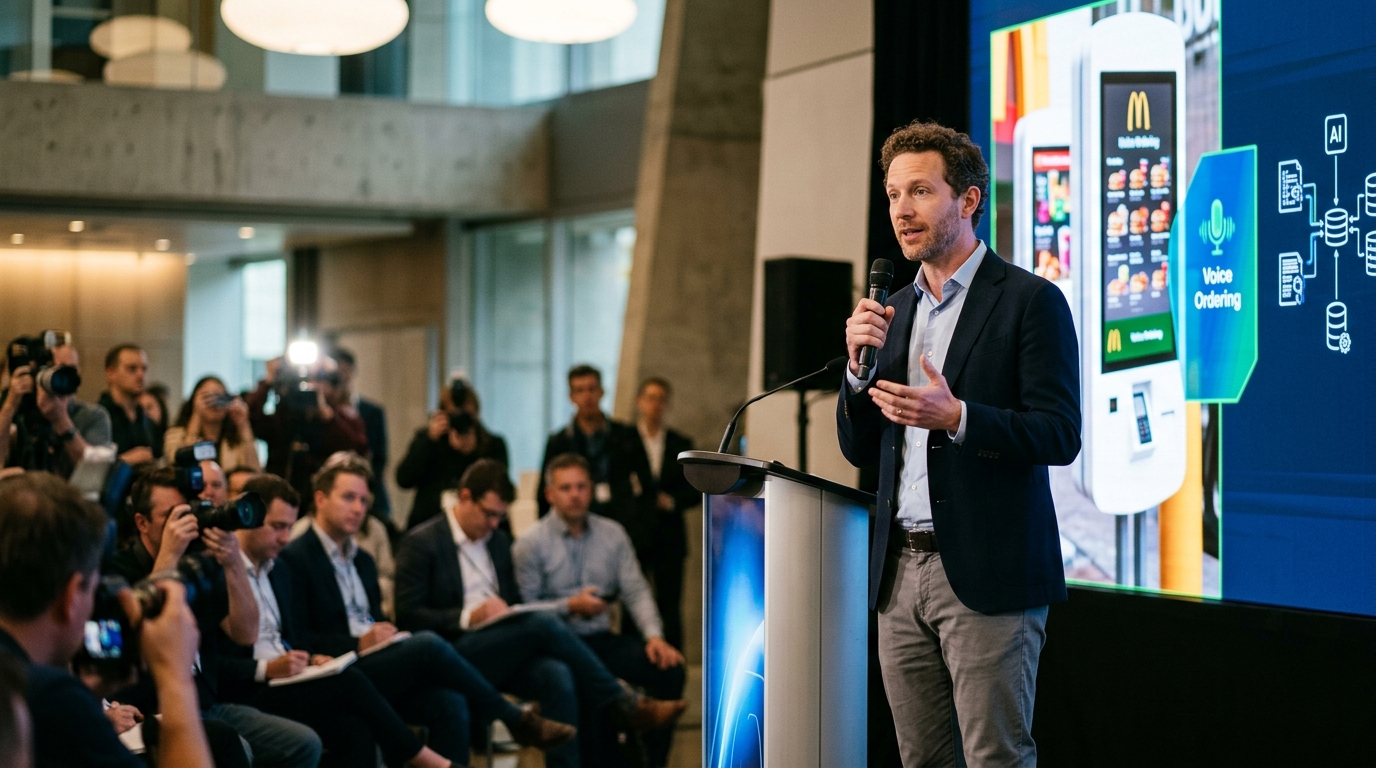
The history of McDonald’s with artificial intelligence mirrors the process of testing a new menu item: sometimes the recipe requires a total reset. Following the widely publicized decision to terminate its voice-ordering pilot program developed with IBM in mid-2024, many believed the "King of Burgers" would take a step back toward traditional human service. However, as of June 2026, the landscape looks entirely different. McDonald’s isn't abandoning AI; instead, it is embedding it deeper into its operational core, promising an experience that is finally "customer-ready."
The Legacy of Errors and the New Strategy
The company’s previous attempt went viral for all the wrong reasons. TikTok videos showcased the AI system adding hundreds of nuggets to a single order or confusing ice cream with bacon. The issue wasn't just the technology itself, but the environment. A drive-thru is a natural language processing (NLP) nightmare: engine noise, children screaming in the back seat, poor weather conditions, and diverse accents create a chaotic acoustic landscape.
The new generation of systems being piloted now relies on sophisticated Large Language Models (LLMs) specifically trained for high-decibel environments. Unlike the previous static system, the new AI possesses "contextual awareness." It can understand when a customer corrects themselves ("I want a Big Mac, no, wait, a McChicken") and suggest complementary items based on the time of day, weather, and even current kitchen capacity. The partnership with Google Cloud, announced in late 2025, appears to be the backbone of this new effort, providing the necessary compute power and low latency required to keep drive-thru times from ballooning.
Economic Pressures and the Automation Mandate
Why is McDonald’s being so persistent? The answer lies in the numbers. With labor costs rising globally and staffing shortages remaining a structural issue in the hospitality sector, automation is no longer a luxury—it's a survival necessity. A successful AI drive-thru system can shave 30-45 seconds off the service time per vehicle. In a business where 70% of revenue is generated at the drive-thru window, those seconds translate into millions of dollars in additional annual turnover.
- Reduction of human error in order entry.
- Consistent application of upselling strategies (e.g., "Would you like to make that a meal?").
- Freeing up staff to focus on food preparation speed in the kitchen.
- Real-time data collection on consumer behavior and preferences.
However, the challenge remains consumer acceptance. McDonald’s must convince its patrons that interacting with a machine is not a downgrade in service, but an upgrade in speed and accuracy. The "Human-in-the-loop" strategy, where a human employee can instantly intervene if the AI struggles, is the key to avoiding the fiascos of the past.
The Future of Dining is Digital
McDonald’s move is being closely watched by the entire fast-food industry. If successful, it will set the standard for competitors like Wendy’s and Burger King, who are already experimenting with similar tech. The challenge in 2026 isn't just for AI to "hear," but to "understand" the human experience. Success will be judged by whether the customer leaves the drive-thru with the correct burger and a sense of satisfaction, even if no human face was seen during the transaction.
"Technology is no longer an experiment at McDonald’s; it is the new foundation of our operations," a senior executive recently stated.
In conclusion, the return of AI to McDonald’s drive-thrus is a high-stakes gamble. The company has invested billions into its digital infrastructure, and failure is not an option. With the maturation of Generative AI, the odds are in their favor, but the final verdict will be delivered by the millions of hungry drivers pulling up to the microphone tomorrow morning.