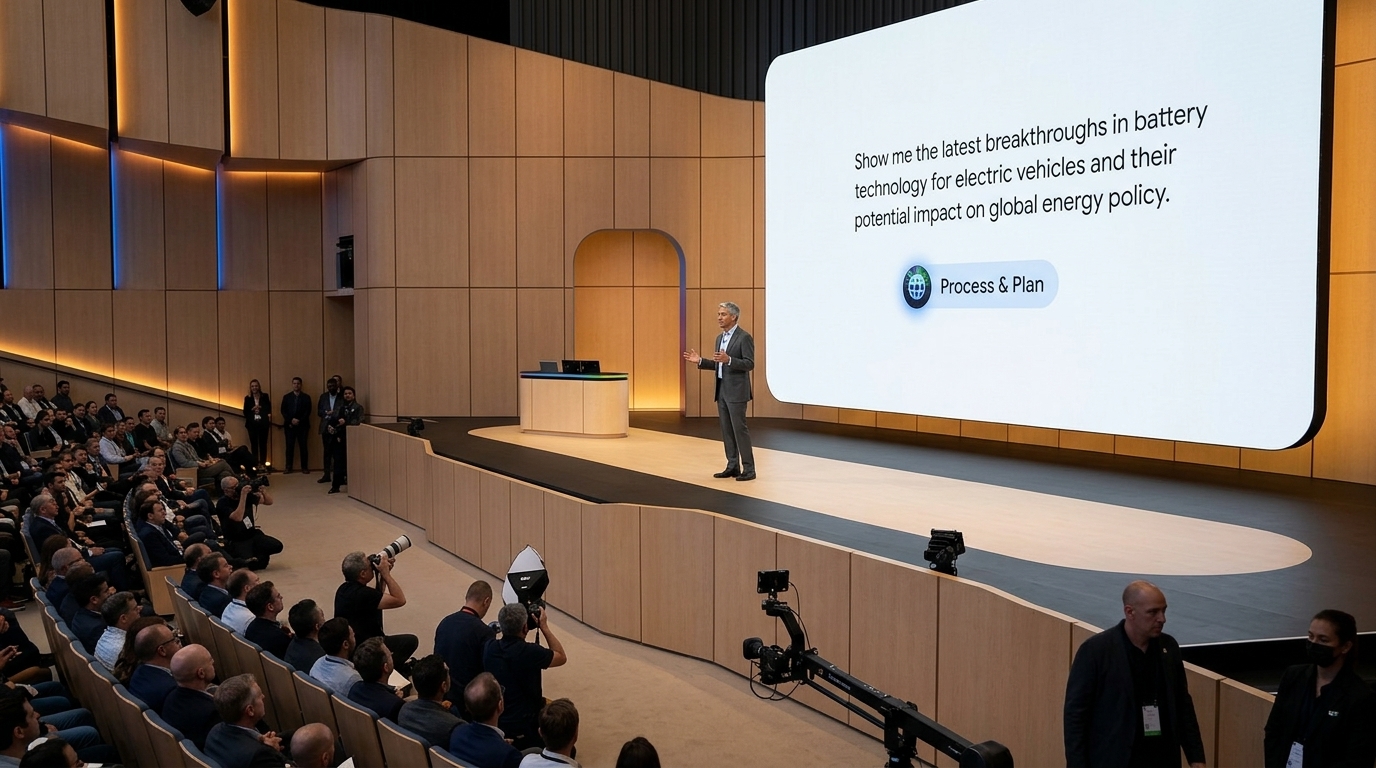
When Larry Page and Sergey Brin founded Google nearly three decades ago, their mission was clear: to organize the world’s information and make it universally accessible. At Google I/O 2026, however, it became evident that this mission has mutated. Google no longer just wants to show you where information lives; it wants to consume it, process it, and perform the task for you, all from within the familiar, minimalist confines of the search box.
From Search to Execution: The Rise of Agentic AI
This year’s keynote in Mountain View wasn’t about incremental improvements in speed or ranking accuracy. It was about "Agentic AI." In Google’s 2026 vision, the search bar is no longer a gateway to other websites, but a remote control for your digital existence. If you type "organize a trip to Rome for next month with a budget of €1,500," Google won't give you a list of Expedia or TripAdvisor links. It will book the flights, reserve the hotel, create a calendar itinerary, and send out invites to your friends.
This shift signals the end of the "click" era. For years, the web relied on a symbiotic relationship: Google provided traffic, and content creators provided information. Now, Google uses its Gemini models to "read" others' content and present the final answer or execute the action without the user ever leaving the platform. What was once called Search Generative Experience (SGE) has matured into a full-fledged operating system within the browser.
An Ecosystem Under Siege
Anxiety across the digital market is palpable. If Google becomes the sole intermediary executing tasks, what happens to the millions of websites that rely on ads and visits? News publishers, booking platforms, and niche blogs are facing an existential threat. Google argues it is "sending more traffic than ever," but data suggests a different reality: the rise of "zero-click searches," where the user gets exactly what they need without ever visiting a source.
- Service Integration: Gmail, Docs, Maps, and YouTube now function as a single body under Gemini's orchestration.
- Deep Personalization: The AI knows your preferences, purchase history, and daily habits, offering solutions before you even ask.
- Conversational Interaction: Search is increasingly a dialogue, with Google acquiring a "personality" and the ability to understand complex emotional contexts.
"We are not just building a search engine; we are building a personal assistant that understands the world as you do," Sundar Pichai stated during the keynote.
Privacy in the Age of Omnipresent AI
For this "do-everything agent" to function, Google requires access to every facet of our data. It’s no longer just about what we search for; it’s about what we buy, where we go, and who we talk to. The promise of convenience is seductive, but the price is the absolute transparency of the individual to the algorithm. Google insists that processing is done securely and often locally on-device, yet the concentration of power remains unprecedented in human history.
The future of Google is no longer the open web. It is the creation of a parallel, controlled digital layer that overlays reality. As the search box transforms into an execution portal, the question is no longer "what do you want to know," but "what do you want to happen." And in this new world, freedom of choice may well give way to the sheer comfort of automation.