In my workshop, I’ve always believed that the strength of a wing isn’t just in the feathers, but in the wax and the frame that holds them together. Today, as we look at the resurgence of the Greek defense industry in May 2026, we are seeing a similar structural transformation. We aren't just buying 'black boxes' from abroad anymore; we are building the nervous systems of modern maritime and aerial platforms right here in the Mediterranean.
The Architecture of Sensor Fusion
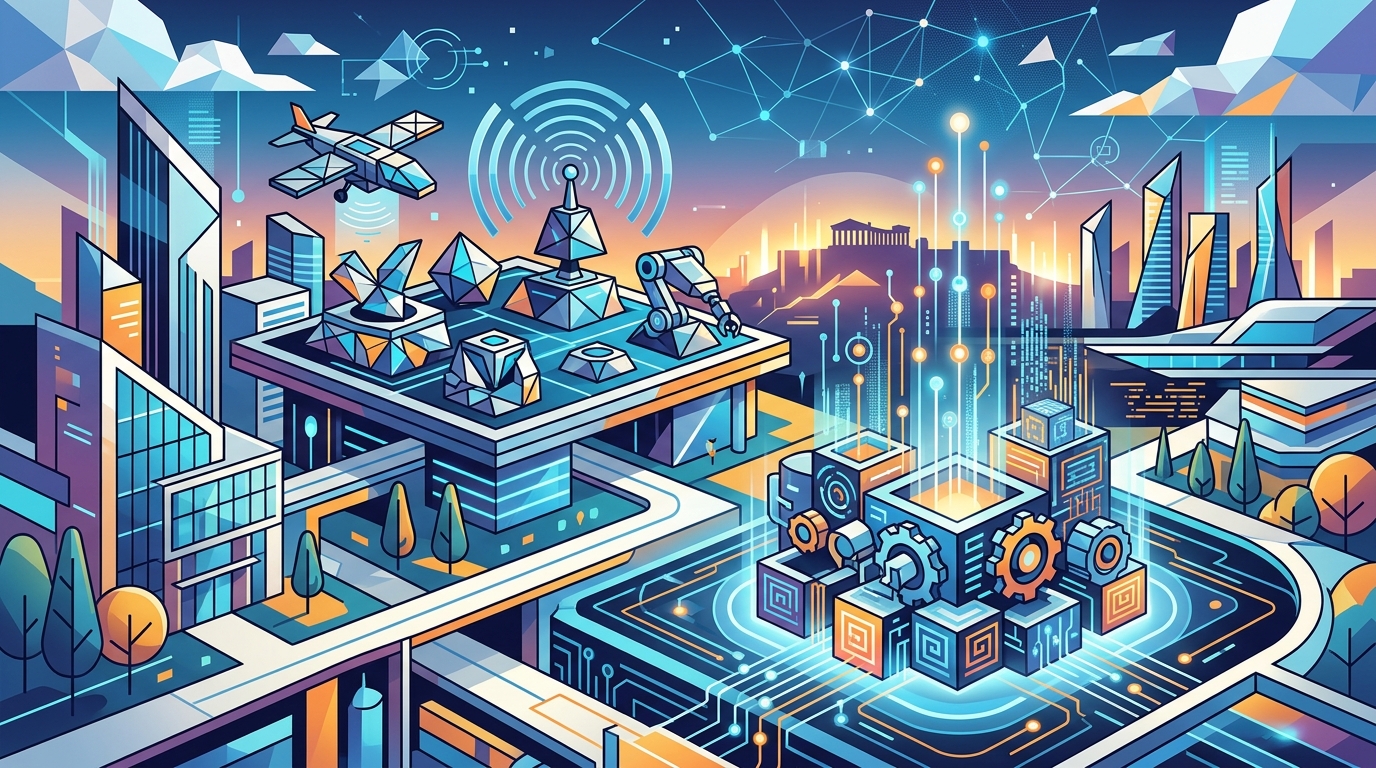
The real engineering marvel isn't just a drone or a frigate; it's the Combat Management System (CMS) integration. I’ve spent the last few months analyzing the data flows in these new systems. We are moving toward an architecture of Distributed Sensor Fusion. Instead of a single radar tower acting as the 'brain,' we are seeing a mesh network where every UAV (Unmanned Aerial Vehicle) and USV (Unmanned Surface Vessel) acts as a localized node.
Technically, this relies on Edge AI processing. By utilizing FPGA (Field-Programmable Gate Array) chips directly on the sensor hardware, these systems can filter gigabytes of noise to identify a single thermal signature in milliseconds. This reduces the latency that usually plagues remote-controlled systems. In my experience, the bottleneck has always been the 'round-trip' time of data; by moving the intelligence to the 'edge' of the wing, so to speak, we eliminate that lag.
The Icarus Protocol: Autonomy vs. Control
As I always warned Icarus, flying too high—or in this case, relying too heavily on full autonomy—can be fatal. The Greek defense renaissance is wisely adopting a 'Human-in-the-loop' (HITL) architecture. We are seeing the implementation of Decision Support Systems (DSS) rather than fully autonomous killers. These systems use machine learning to categorize threats and suggest 1-3 optimal responses to a human commander.
From a builder's perspective, the craftsmanship here lies in the UI/UX of the command center. It’s about preventing information overload. We are using Digital Twins—virtual replicas of our frigates in the Aegean—to run millions of simulations per hour, predicting mechanical failures before they happen. This is the pragmatic side of innovation: it’s not just about the 'flashy' drones, but about the predictive maintenance that keeps the fleet operational.
Pragmatic Patriotism
The 'extrovert' nature of this new industry is its greatest strength. By exporting these AI-driven subsystems, Greece is moving from a consumer to a creator. However, we must remain cautious. The complexity of these systems introduces new attack vectors. As we integrate more AI, our 'cyber-hull' must be as thick as our steel ones. We are building a new Labyrinth, but this time, we are the ones holding the thread.