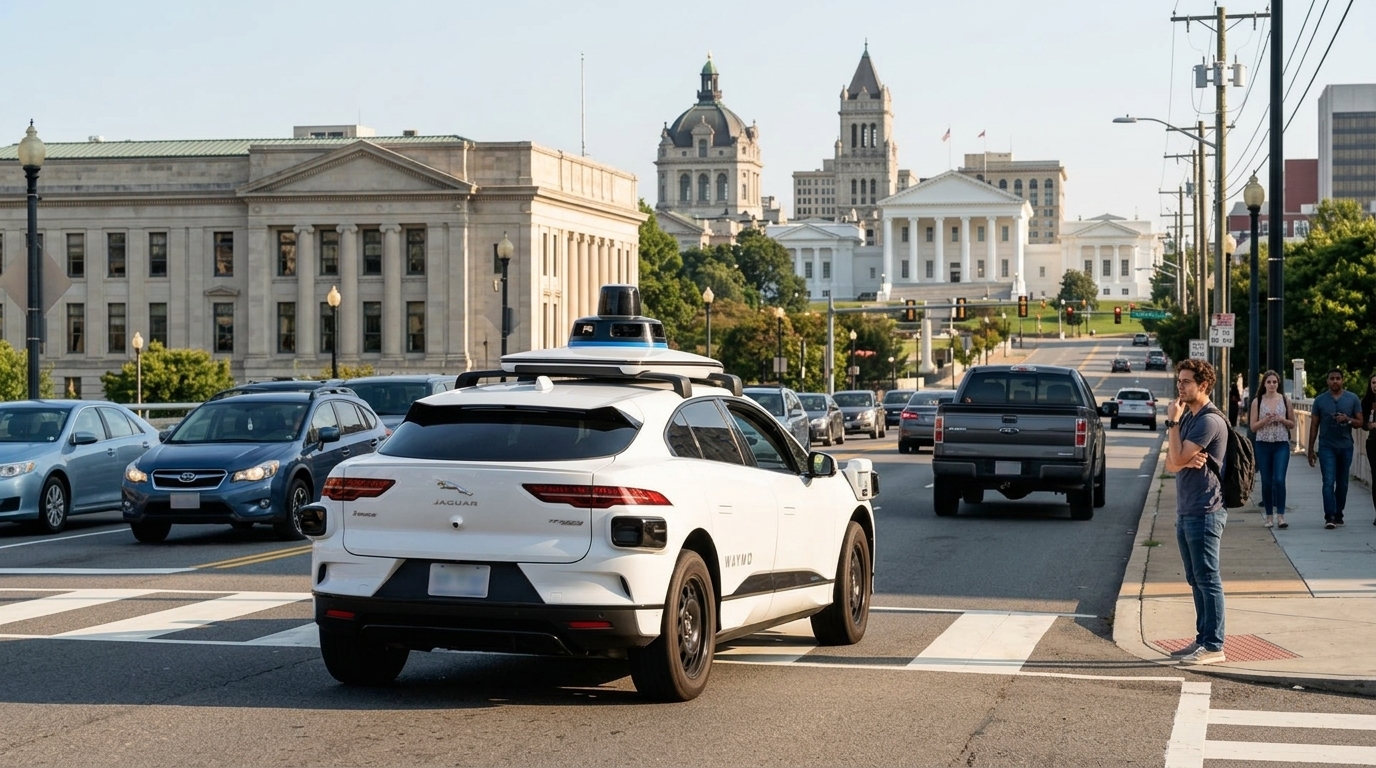
Waymo’s expansion into the Commonwealth of Virginia is far more than a mere geographical footprint increase for the Alphabet-owned subsidiary. It is a move laden with deep strategic and political symbolism. By mapping the streets of Alexandria and, soon, Arlington, Waymo is positioning its autonomous vehicles just across the Potomac River, within earshot of the U.S. Capitol and the White House. This maneuver marks the beginning of a new phase for autonomous driving—one where high technology meets regulatory scrutiny and political lobbying at their most concentrated point.
The Geography of Power and Technological Demonstration
The choice of Northern Virginia is calculated. This region is home to some of the most densely populated and affluent suburbs in the United States, but more importantly, it serves as the residential hub for thousands of federal employees, lobbyists, and lawmakers. The presence of Waymo’s white Jaguar I-PACE SUVs, bristling with state-of-the-art Lidar and radar sensors, acts as a continuous, living advertisement to the very people who will draft the autonomous vehicle framework for decades to come.
Until now, Waymo has largely focused on cities with predictable weather and wide, grid-like boulevards, such as Phoenix, San Francisco, and Los Angeles. Moving operations to the East Coast brings a fresh set of challenges: older infrastructure, more complex street layouts, and the notoriously fickle weather of the D.C. metro area. Waymo’s ability to navigate this environment safely will serve as the ultimate proof of the Waymo Driver’s maturity and readiness for national deployment.
Regulatory Theater and the 'Charm' Strategy
The autonomous vehicle (AV) industry is at a critical juncture. Following high-profile setbacks and safety incidents from competitors like GM’s Cruise, public and regulatory trust has been shaken. Waymo, by contrast, has maintained a more conservative and methodical pace, positioning itself as the industry's 'adult in the room.' Being in Virginia allows policymakers to witness the technology firsthand, demystifying the black box of AI and fostering a sense of familiarity.
- High-Definition Mapping: The initial phase involves creating granular 3D maps that capture everything from curb heights to traffic light positions.
- Community Engagement: Waymo has proactively engaged with local authorities and emergency services to ensure integration is seamless and transparent.
- Phased Deployment: The service will begin with human safety drivers behind the wheel before transitioning to fully driverless Robotaxi operations.
Virginia has historically maintained a technology-forward stance, offering a legislative environment that permits AV testing without the heavy bureaucratic hurdles found in other states. This makes it the perfect 'staging ground' for Waymo before an inevitable push into the District of Columbia itself.
Technical Challenges of the East Coast
Driving in Alexandria is a world apart from driving in San Francisco. The streets are often narrower, pedestrian traffic is unpredictable due to historic tourism zones, and traffic patterns can change instantly due to motorcades or demonstrations. Waymo’s AI must be trained on these specific 'edge cases,' proving it can handle the unique 'social friction' of a political hub.
"Our expansion into the D.C. area is a major step in understanding how our technology can serve diverse communities and environments," a company spokesperson noted.
Furthermore, this move has significant financial implications. Northern Virginia is one of the wealthiest markets globally, with high demand for premium transit services. If Waymo can establish a foothold here, it will unlock a massive revenue stream, proving to Alphabet’s shareholders that the Robotaxi business model is scalable and economically viable outside of the West Coast tech bubble.
Conclusion: The Road to the Capitol
Waymo isn’t just mapping roads; it is mapping the path to its own legitimacy. Success in Virginia will provide the company with its strongest argument against critics calling for tighter restrictions on AVs. As Waymo’s vehicles become a daily fixture in the lives of those who write the laws, autonomous driving will cease to be a futuristic novelty and become an undeniable reality of the urban fabric. The road to Washington D.C. runs through Alexandria, and Waymo is already in the driver’s seat.