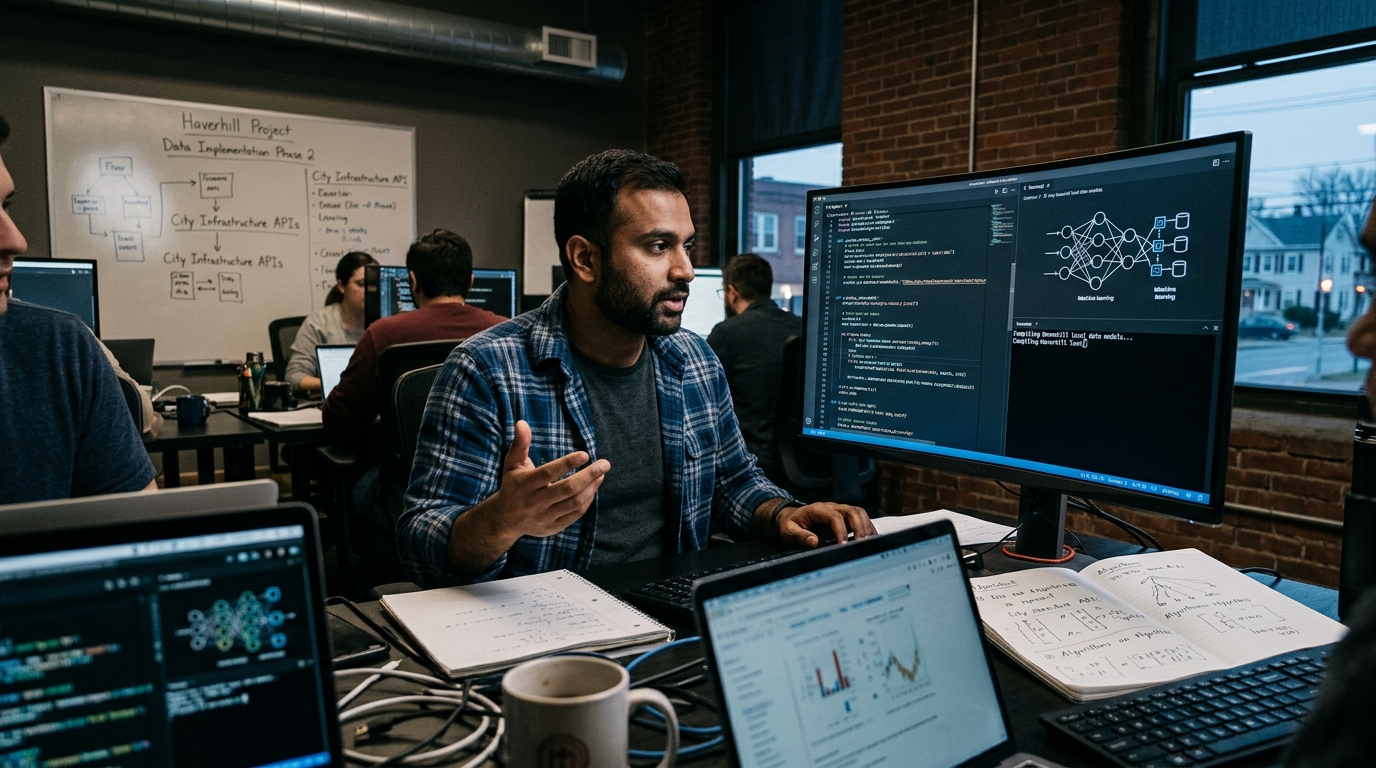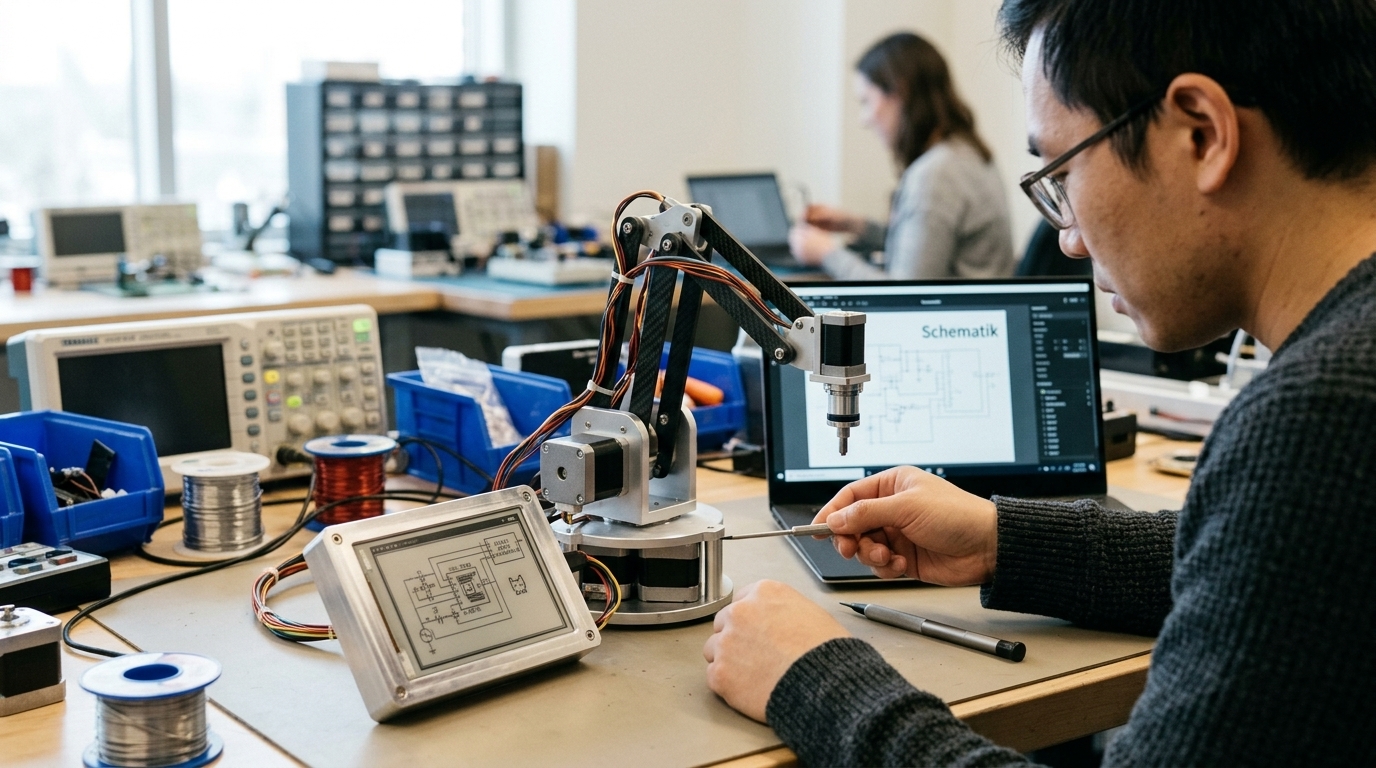
For years, software development and hardware engineering have moved at fundamentally different speeds. While developers enjoyed the flexibility of agile methodologies and the ability to test code instantly, electronic circuit designers remained trapped in a world of slow cycles, manual wire routing, and costly errors that cannot be fixed with a simple patch. The arrival of Schematik, a new platform self-described as the ‘Cursor for hardware,’ promises to bridge this gap by bringing the ease of AI-assisted coding to the physical world of atoms and electrons.
The Shift from Bits to Atoms
Schematik’s core promise is simple yet radical: to allow engineers to design complex circuits using natural language and artificial intelligence. Just as Cursor allowed thousands of people to ‘code at the speed of thought,’ Schematik aims to do the same for PCBs (Printed Circuit Boards). Instead of manually searching for components in vast libraries and connecting thousands of pins, a user can simply describe the desired functionality.
This process, often jokingly referred to as ‘vibe coding’ in the software world, takes on a new, more dangerous dimension in hardware. Here, a wiring error doesn’t just lead to a system crash; it can cause a short circuit, overheating, or even a fire. Nevertheless, the demand for faster prototyping is so high that the industry appears ready to embrace the risk.
Why Is Anthropic Investing in Hardware Engineering?
The involvement of Anthropic, the company behind the Claude model, is no coincidence. While OpenAI and Google focus on general-purpose assistants, Anthropic seems to recognize that the true value of AI lies in specialization. Schematik utilizes Anthropic’s models to ‘understand’ schematics and the spatial relationships between components.
“Hardware engineering is the next great frontier for large language models. It’s not just about text; it’s about a deep understanding of physics and system logic,” industry analysts note.
Claude 3.5 Sonnet has demonstrated impressive coding capabilities, but its application in Schematik requires something more: spatial reasoning. The ability to ‘see’ how a component affects signal flow on a board is a challenge that Anthropic considers crucial for the evolution of Artificial General Intelligence (AGI).
The Democratization of Invention
Beyond speed, Schematik brings the democratization of creation to the forefront. Until now, designing an advanced electronic product required years of study and access to expensive software like Altium or Cadence. With AI-based tools, the barrier to entry is dropping dramatically. A software developer can now design a custom IoT device without being an electronics expert.
- Automated Component Selection: AI suggests the best chips based on availability and cost.
- Real-time Error Checking: Identifying potential short circuits before production.
- Seamless Manufacturing Link: Directly sending designs to factories for rapid prototyping.
Challenges and the Future of ‘Hardware-as-Code’
Despite the excitement, Schematik faces significant hurdles. The most prominent is reliability. In hardware, an AI ‘hallucination’ can cost thousands of dollars in ruined materials. Furthermore, the electronics industry is traditionally conservative, as safety certification cycles are rigorous and uncompromising.
However, the direction is clear. We are moving toward an era where hardware is increasingly treated as code. Schematik’s partnership with Anthropic marks the beginning of a new phase where AI will not only help us write emails or generate images but will actively participate in building the physical objects that surround us. If Cursor changed the way we think about software, Schematik aspires to change the way we build the world itself.