Microsoft is taking one of the boldest steps in the history of productivity software by announcing the broad rollout of 'Agent Mode' for the Office suite. This new feature, which company executives have informally described as 'vibe working,' signals a transition from simple Generative AI to Agentic AI. It is no longer just a chatbot waiting for instructions, but a digital partner capable of taking initiative, synthesizing data from multiple sources, and completing complex tasks in the background.
From Copilot to Autonomous Agent
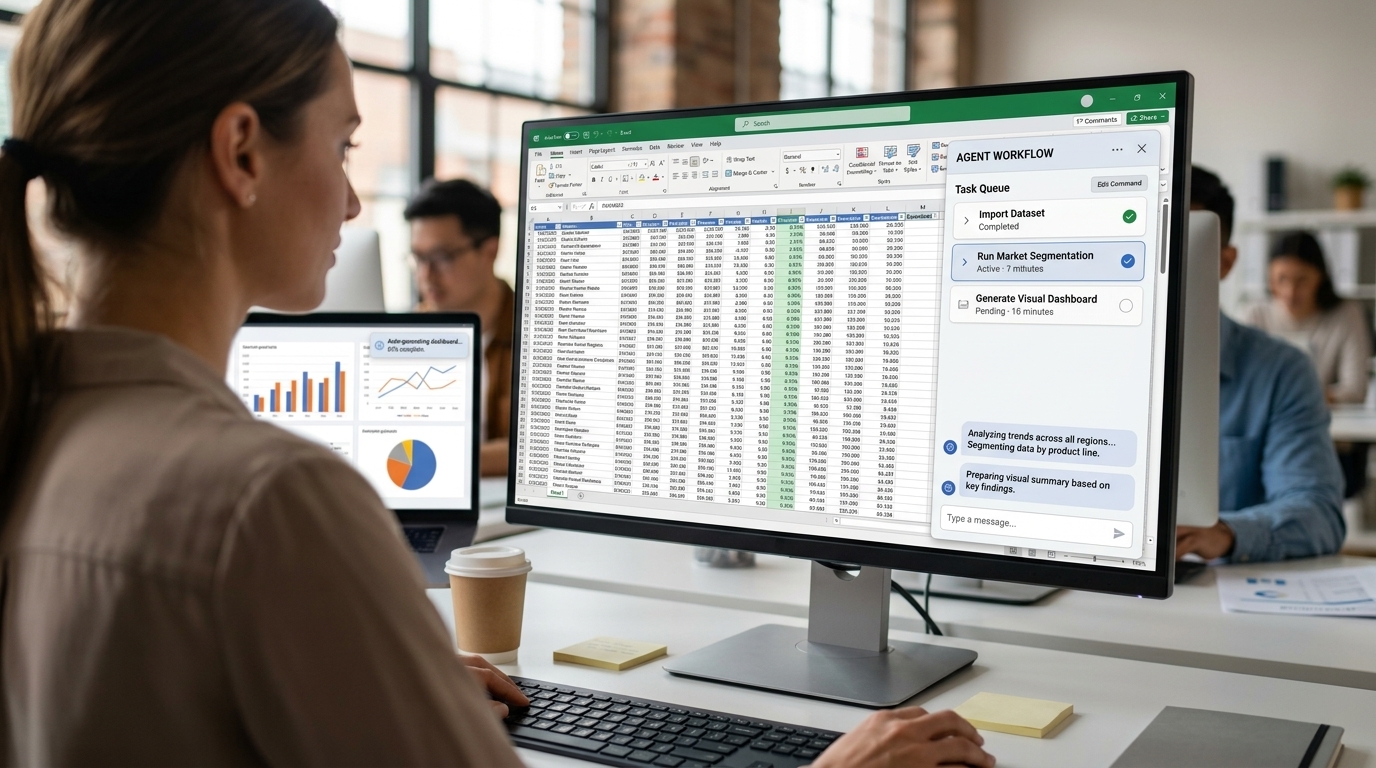
Until now, Microsoft's Copilot functioned primarily as a sophisticated assistant for drafting or analysis. The user had to provide a specific prompt and wait for a response. With Agent Mode, the dynamics change radically. 'Agents' can now operate autonomously within Word, Excel, and PowerPoint, executing multi-layered workflows without constant human supervision.
For example, an agent in Excel will no longer be limited to creating a chart. It will be able to monitor live data sources, identify anomalies, draft a report in Word about these findings, and prepare a draft presentation in PowerPoint for the next board meeting. This interconnectivity is what Microsoft calls 'vibe working'—a state where technology harmonizes with the user's rhythm, reducing the cognitive load of repetitive tasks.
The Philosophy of ‘Vibe Working’ and the Psychology of Labor
The term 'vibe working' may sound informal, but it hides a profound strategic shift. Microsoft aims to eliminate the 'friction' caused by switching between apps and manually transferring information. In the new work environment, AI is not a tool you use, but an environment in which you work. The emphasis shifts from execution to oversight.
- Word: The agent can compose entire white papers by drawing information from emails, previous documents, and internal databases.
- Excel: Autonomous data cleaning and trend forecasting using advanced statistical models running in the background.
- PowerPoint: Converting complex strategic plans into visually appealing presentations, with automatic selection of images and layouts that fit the corporate style.
Microsoft's Strategy and the Competition
This move comes at a time when Google and Salesforce are strengthening their own AI capabilities. However, Microsoft possesses the advantage of Office's ubiquitous presence in the corporate world. Agent Mode is not just a new feature, but an attempt to justify the high subscription cost of Copilot for Microsoft 365. Businesses are now demanding tangible results and Return on Investment (ROI), and automating entire processes is the surest path toward that goal.
“We aren't just building tools. We are building a new digital infrastructure where work flows without obstacles,” said a Microsoft executive during the launch.
Challenges, Security, and the Future of Jobs
Despite the excitement, the introduction of autonomous agents raises serious questions. The issue of AI 'hallucinations' remains critical. If an agent makes a wrong decision in Excel that affects financial forecasts, who bears the responsibility? Microsoft maintains that the 'human remains in the loop,' but in practice, the speed of AI may make human oversight superficial.
Furthermore, there are concerns about data privacy. Agents need access to a vast amount of corporate information to be effective. Microsoft promises strict security protocols, but concentrating so much power and information into a single autonomous mechanism is a challenge for cybersecurity departments worldwide. Finally, the automation of tasks traditionally performed by junior analysts or administrative staff is expected to reshape the labor market, requiring employees to evolve into 'agent managers' rather than task executors.