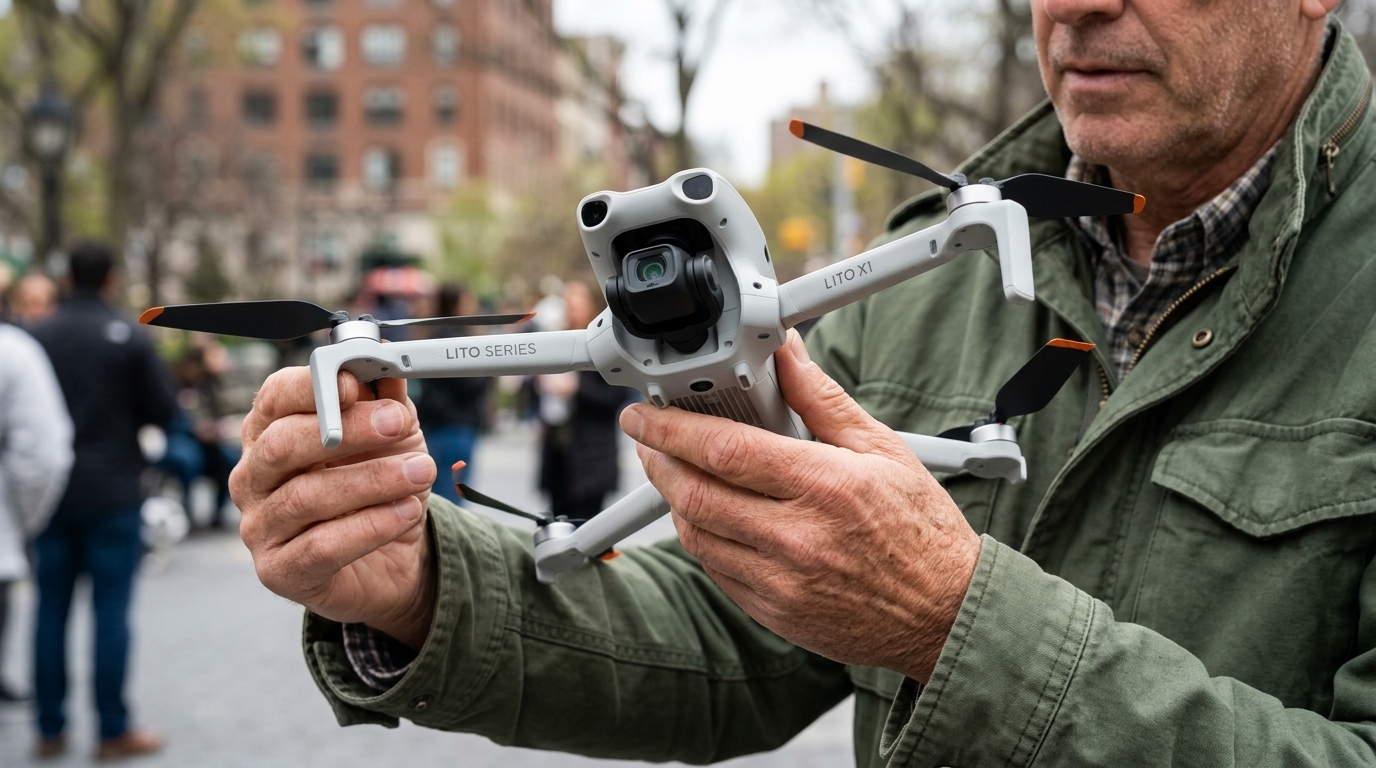
The consumer drone market is witnessing a seismic shift. DJI, the undisputed titan of the industry, has officially unveiled its new Lito series, featuring the Lito 1 and Lito X1 models. This move is far more than a mere expansion of an already dominant catalog; it is a calculated strike against the entry-level segment that has long been the playground for budget-friendly alternatives like Potensic and Holy Stone. With European pricing starting below the €400 threshold, DJI is effectively democratizing high-end aerial cinematography.
The 249-Gram Strategic Advantage
In the world of unmanned aerial vehicles (UAVs), the number 249 is transformative. Both the Lito 1 and Lito X1 tip the scales at just under 249 grams. This specific weight category is not arbitrary; it is a direct response to aviation regulations worldwide, including EASA in Europe and the FAA in the United States. Drones under this limit often bypass the most stringent registration requirements and pilot licensing for recreational use. By hitting this mark, DJI removes the primary barrier to entry for the average consumer: bureaucracy.
Despite their diminutive stature, these drones are not mere toys. The Lito X1, in particular, integrates multi-directional obstacle avoidance sensors—a feature previously reserved for the flagship Mavic and Air series. DJI’s ability to miniaturize these safety systems while maintaining a sub-250g profile demonstrates a level of engineering prowess that remains unmatched by its competitors.
Technical Prowess at a Consumer Price Point
Under the hood, the Lito series carries the hallmarks of DJI’s imaging excellence. The Lito 1 offers stabilized 4K video at 30fps, while the X1 pushes the envelope to 60fps with enhanced dynamic range and color grading options. Crucially, the inclusion of the OcuSync transmission system ensures a robust, low-latency video feed to the controller, even in environments with high electromagnetic interference—a common failure point for cheaper drones relying on standard Wi-Fi protocols.
- Lito 1: Designed for portability and ease of use, focusing on the essential flying experience.
- Lito X1: The premium entry-level choice, featuring advanced sensors and superior camera hardware.
- Battery Life: Both models boast a flight time of approximately 31 minutes, an impressive feat for their weight class.
The Geopolitical Elephant in the Room
One cannot discuss a new DJI launch without addressing the geopolitical context. Currently, the Lito series is conspicuously absent from the US market. This omission follows a period of intense scrutiny from Washington, where DJI has faced potential bans and inclusion on trade blacklists due to national security concerns. By prioritizing European and Asian markets with the Lito series, DJI is diversifying its revenue streams and reinforcing its dominance in regions where the regulatory climate remains more favorable.
"The Lito series represents a strategic pivot. By offering near-professional capabilities at a fraction of the cost, DJI is making its ecosystem indispensable to the global consumer, regardless of political headwinds in North America," notes a senior tech analyst.
Analysis: The Future of Entry-Level Flight
The introduction of the Lito series signals the end of the 'cheap drone' era as we know it. Consumers no longer have to settle for subpar image quality or erratic flight behavior when shopping in the $300-$400 range. DJI has effectively raised the floor of the entire industry. However, this dominance raises questions about market competition. When one company controls the hardware, the software, and the pricing strategy so effectively, what room is left for innovation from others?
For the end-user, the Lito 1 and X1 represent an incredible value proposition. They offer a safe, high-quality, and legally compliant way to explore the skies. As these drones become more ubiquitous, the conversation will likely shift from technical capabilities to the ethics of privacy and the management of crowded low-altitude airspace.