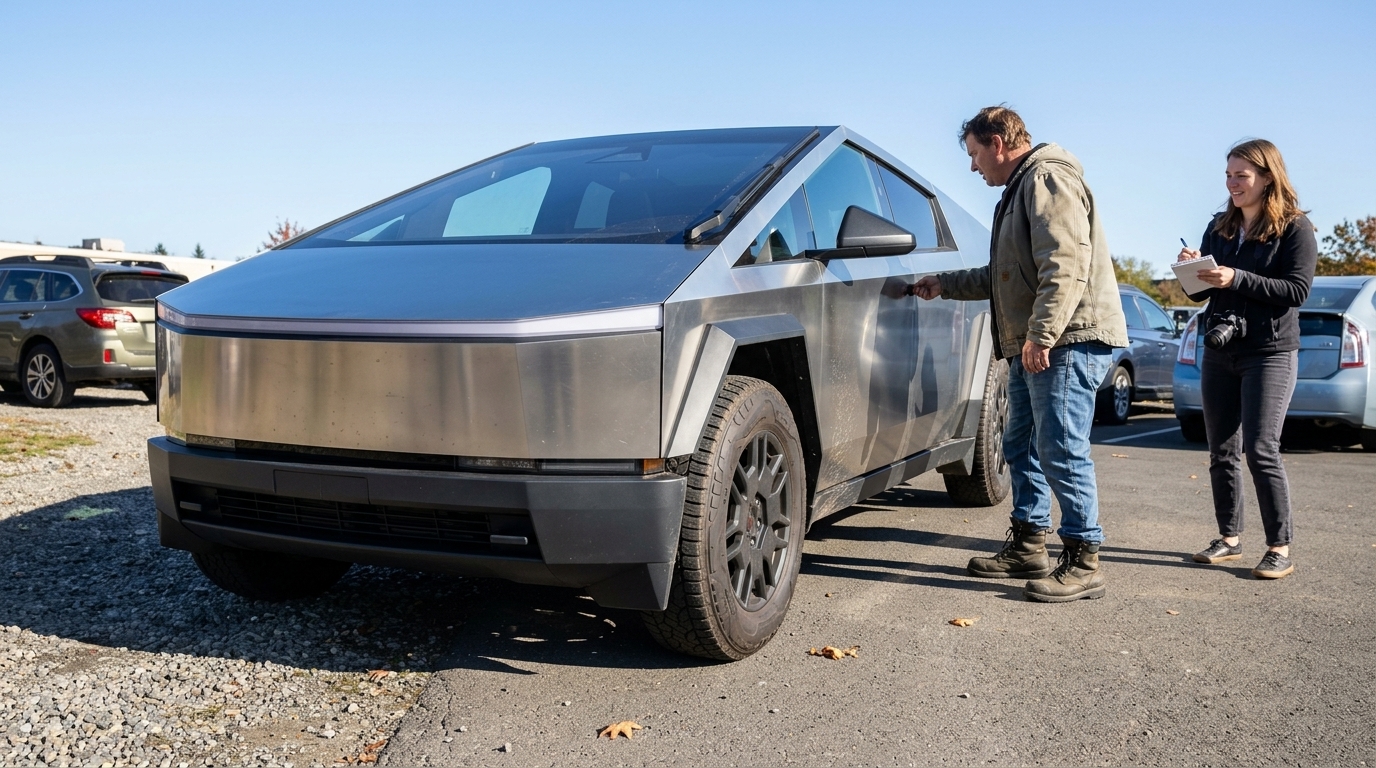
The recent news from Texas, where a Tesla Cybertruck owner attempted to transform his futuristic pick-up into a boat only to end up submerged in a lake and subsequently in custody, is not just another viral accident. It is a case study in how marketing hyperbole, social media promises, and blind faith in technology can lead to dangerous situations. The incident occurred when the driver activated the so-called "Wade Mode" and drove the heavy vehicle directly into the deep waters of a lake, apparently believing that Elon Musk’s steel beast could float.
The Wade Mode Trap and the Cult of Musk
To understand the driver's error, we must first examine what Wade Mode actually is. According to Tesla, this feature increases the ground clearance to its maximum level and pressurizes the battery pack using air from the suspension system to prevent water from entering sensitive electronic components. However, Tesla itself warns in the fine print that this mode is intended for crossing shallow water, not for navigation. The problem lies in the fact that Elon Musk himself has repeatedly stated on X (formerly Twitter) that the Cybertruck would be "waterproof enough to serve briefly as a boat," allowing it to cross rivers, lakes, and even seas that aren't too choppy.
This dissonance between official technical specifications and the CEO's public statements creates a dangerous confusion. Consumers, often die-hard fans of the brand, tend to trust Musk’s vision more than the owner's manual. In the Texas case, physics triumphed over rhetoric. A vehicle weighing over three tons cannot float without the necessary water displacement, regardless of how well-sealed its battery is. The result was immediate water ingress, the immobilization of the electrical system, and a call to the authorities to tow the "wreckage."
Legal Implications and Driver Responsibility
The driver faced more than just the financial ruin of a $100,000 vehicle; he also faced the law. According to local authorities, his actions were deemed reckless driving and environmental endangerment, as vehicle fluids and potential leaks from the battery cooling systems pose a threat to the lake's ecosystem. Furthermore, there were reports of driving under the influence, further complicating his legal standing. This highlights another aspect: the illusion of safety provided by modern "smart" vehicles. The driver felt so protected by the Cybertruck’s technology that he believed the rules of common sense and the law did not apply to him.
- Wade Mode does not make the vehicle amphibious; it only protects components in shallow water.
- Tesla’s warranty explicitly excludes water damage under these extreme conditions.
- The environmental impact of submerging an EV is significant due to battery chemicals.
- The social pressure to create "viral content" often overrides rational decision-making.
The Cybertruck as a Cultural Icon and Its Limits
The Cybertruck is not just a car; it is a cultural object symbolizing the rejection of established design and a belief in a technocratic future. But when this symbol fails spectacularly in such a basic test, the hollowness of techno-optimism is revealed. Manufacturers have an ethical responsibility not to exaggerate the capabilities of their products, especially when those exaggerations can endanger human lives. The Texas lake case should serve as a lesson for all high-tech vehicle owners: technology is a tool that obeys the laws of nature, not a magic shield that abolishes them.
In conclusion, the question remains whether Tesla will issue stricter warnings or continue to feed the narrative of the "invincible" vehicle. For now, it is certain that the Cybertruck remains an impressive vehicle for asphalt and dirt, but its place in a lake is at the bottom, not on the surface. The need for a regulatory framework regarding how the capabilities of autonomous and specialized vehicle features are advertised is now more urgent than ever, to prevent future "shipwrecks" on dry land.