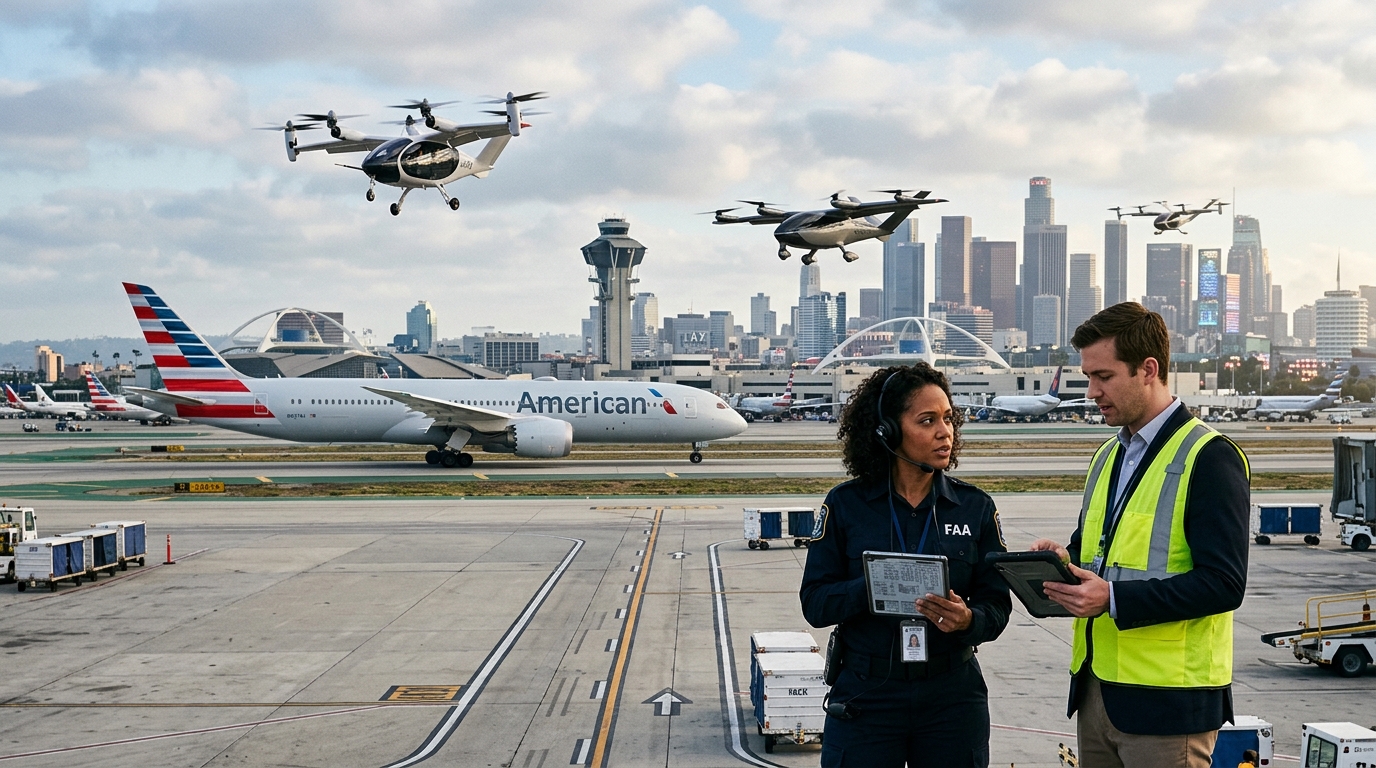
Aviation has always been at the forefront of technological advancement, but the current integration of Artificial Intelligence (AI) in the United States marks the most profound shift since the dawn of the jet age. As we navigate through 2026, American airspace is becoming the testing ground for a new digital infrastructure that promises to make flying safer, faster, and more environmentally friendly. The Federal Aviation Administration (FAA) and industry giants no longer view AI as a mere support tool, but as the central pillar of the next generation of air travel.
The FAA's Roadmap for Artificial Intelligence
The FAA has accelerated the release of its "Aviation AI Roadmap," a strategic framework defining how machine learning algorithms will be certified for use in critical flight systems. Safety remains the paramount concern. Unlike AI applications in the entertainment sector, there is no room for "hallucinations" in aviation. The US approach is built on the concept of "Explainable AI," where every decision made by an autonomous system must be traceable and understandable by human controllers.
The use of AI in predictive maintenance is already a reality, saving airlines billions of dollars. By analyzing data from thousands of sensors in real-time, systems can predict a component's failure before it happens, drastically reducing delays and flight cancellations that plague passengers.
Autonomous Flight and Urban Air Mobility (UAM)
One of the most exciting developments is the rise of electric Vertical Takeoff and Landing (eVTOL) vehicles. In cities like New York and Los Angeles, AI is the "invisible pilot" managing the complexity of low-altitude flights. Managing hundreds of small aircraft in a dense urban environment is impossible with traditional air traffic control methods. Here, AI takes on the role of coordinator, ensuring collision avoidance and optimal routing in fractions of a second.
"It's not just about replacing the pilot; it's about enhancing human capability to manage an incredibly complex ecosystem," says a leading industry analyst.
Furthermore, autonomous flight in long-haul commercial aircraft is beginning to be seriously considered for single-pilot operations, where AI acts as a permanently vigilant co-pilot, reducing workload and the likelihood of human error due to fatigue.
Ethical Dilemmas and the Cybersecurity Challenge
Despite the benefits, the transition to AI-driven aviation brings serious questions to the fore. Who bears responsibility in the event of an accident caused by an algorithm? Legal liability shifts from the pilot to the software manufacturer, creating a new field of legal contention in the US. Additionally, cybersecurity is becoming the "holy grail" of flight safety. An AI-based system is vulnerable to adversarial attacks, requiring the creation of new, impenetrable protection protocols.
- Enhancing safety through real-time data analysis.
- Reducing carbon emissions via optimized flight paths.
- Changing roles for pilots and air traffic controllers.
- The need for global cooperation on certification standards.
Conclusion: Toward a New Horizon
The integration of Artificial Intelligence into United States aviation is not a future promise but an evolving reality. As the technology matures, the goal is to create a system that is "self-healing" and "self-improving." The success of this endeavor will be judged by the ability of regulators to keep pace with the speed of innovation without sacrificing the unparalleled level of safety that modern aviation has achieved.