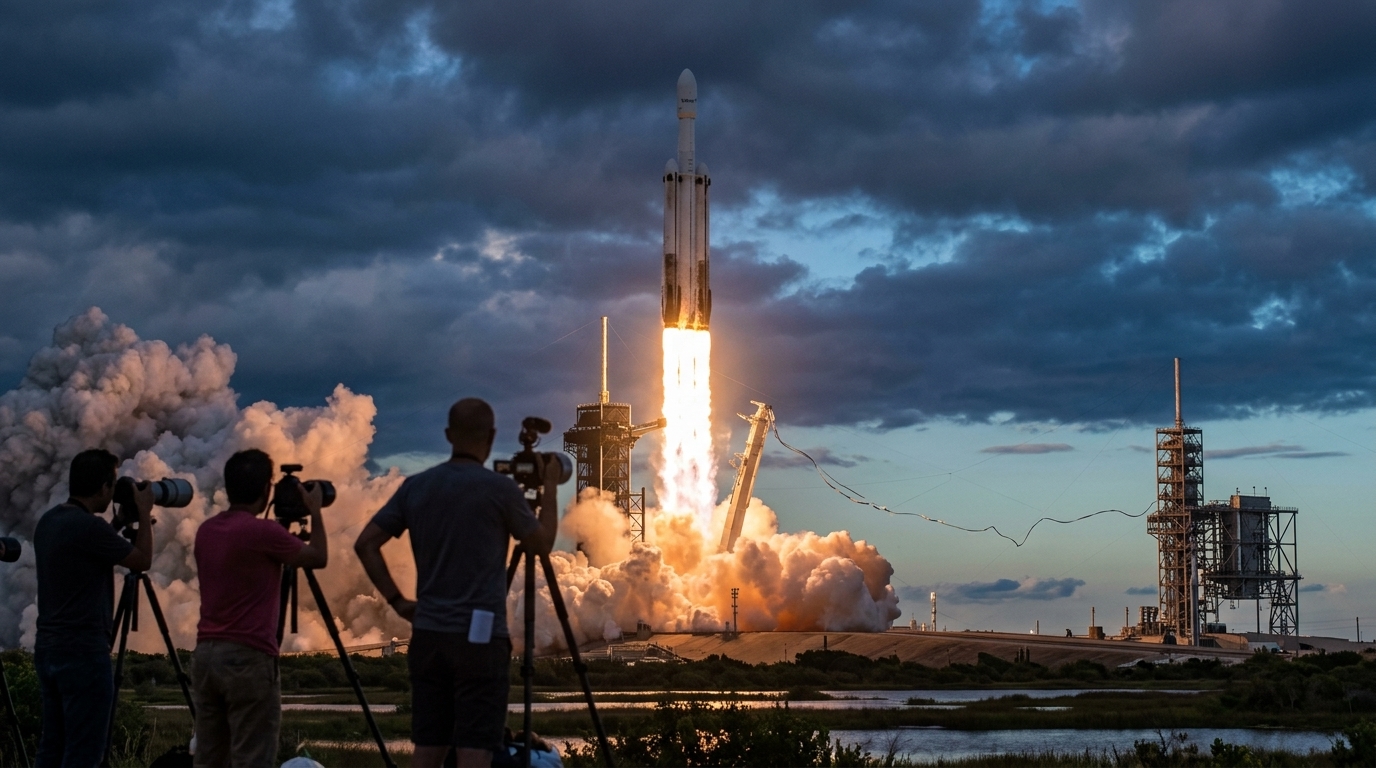
May 24, 2026, will likely go down in history as the moment the "final frontier" officially became part of the average investor's portfolio. Intense rumors and preparatory moves for SpaceX's stock market debut—either through the parent company or its highly profitable subsidiary Starlink—signal a tectonic shift in how humanity finances its expansion beyond the atmosphere. For decades, space was the exclusive privilege of superpowers and state budgets. Today, it is transforming into a thriving market where rockets, satellites, and space-based services compete for capital and market share.
The Starlink Engine and Financial Autonomy
The driving force behind SpaceX's economic dominance is not just the spectacular launches of Starship, but the quiet, continuous operation of the Starlink network. With thousands of satellites in Low Earth Orbit (LEO), the company has managed to create a steady revenue stream that supports Elon Musk's ambitious plans for Mars. Analysts estimate that Starlink is now generating positive cash flows, making it an ideal candidate for a standalone Initial Public Offering (IPO). SpaceX's entry into public markets isn't just about raising capital; it's about validating a business model that proves space can be profitable on a daily basis.
SpaceX's success has created a "halo effect" for the entire sector. Companies like Rocket Lab, Firefly Aerospace, and Intuitive Machines are no longer seen as mere experimental entities but as serious players in a supply chain that ranges from launching microsatellites to providing telecommunications in remote areas. The "New Space Economy" market is expected to exceed $1 trillion by 2040, and SpaceX is the undisputed hegemon opening the door for the rest.
Competition and the Challenge for Legacy Giants
While SpaceX steals the spotlight, traditional defense giants like Boeing and Lockheed Martin find themselves at a critical crossroads. Their difficulty in adapting to the reusable rocket model and the pace of Silicon Valley innovation has led to lost contracts and diminished prestige in the launch sector. However, the space economy is not just about rockets. Satellite manufacturing, geospatial data analysis, and space logistics offer opportunities where legacy companies can still dominate, provided they modernize.
- Rocket Lab: Has established itself as the reliable provider for small launches, while developing the Neutron rocket to compete with the Falcon 9.
- Intuitive Machines: Pioneering lunar missions, building the infrastructure for a future Moon-based economy.
- Firefly Aerospace: Focuses on flexibility and low cost, targeting government and commercial contracts that require rapid response.
These companies are creating an ecosystem where the failure of one player does not mean the collapse of the industry, but an opportunity for resource reallocation. This maturity is what is now attracting institutional investors who previously viewed space as too risky.
Geopolitics and the Regulatory Framework
SpaceX's transition to a public company brings new challenges. The dependence of NASA and the US Department of Defense on a private company that will now be accountable to shareholders raises national security questions. Furthermore, crowding in Earth's orbit increases the risk of collisions and space debris, forcing regulatory bodies (such as the FCC and FAA) to impose stricter rules. Orbital traffic management will soon become one of the most profitable—and necessary—sectors of the new economy.
"Space is no longer a destination for exploration, but a field for economic activity. Whoever controls orbital infrastructure will control the global economy of the 21st century."
In conclusion, the impending SpaceX IPO is the "Big Bang" of space investment. For Europe and the rest of the world, the challenge is not to remain mere spectators. The need for sovereignty in launches and satellite services is more urgent than ever, as American private initiative accelerates at a pace that traditional bureaucracies struggle to match. The future is written in the stars, but it is financed on the stock exchange floor.