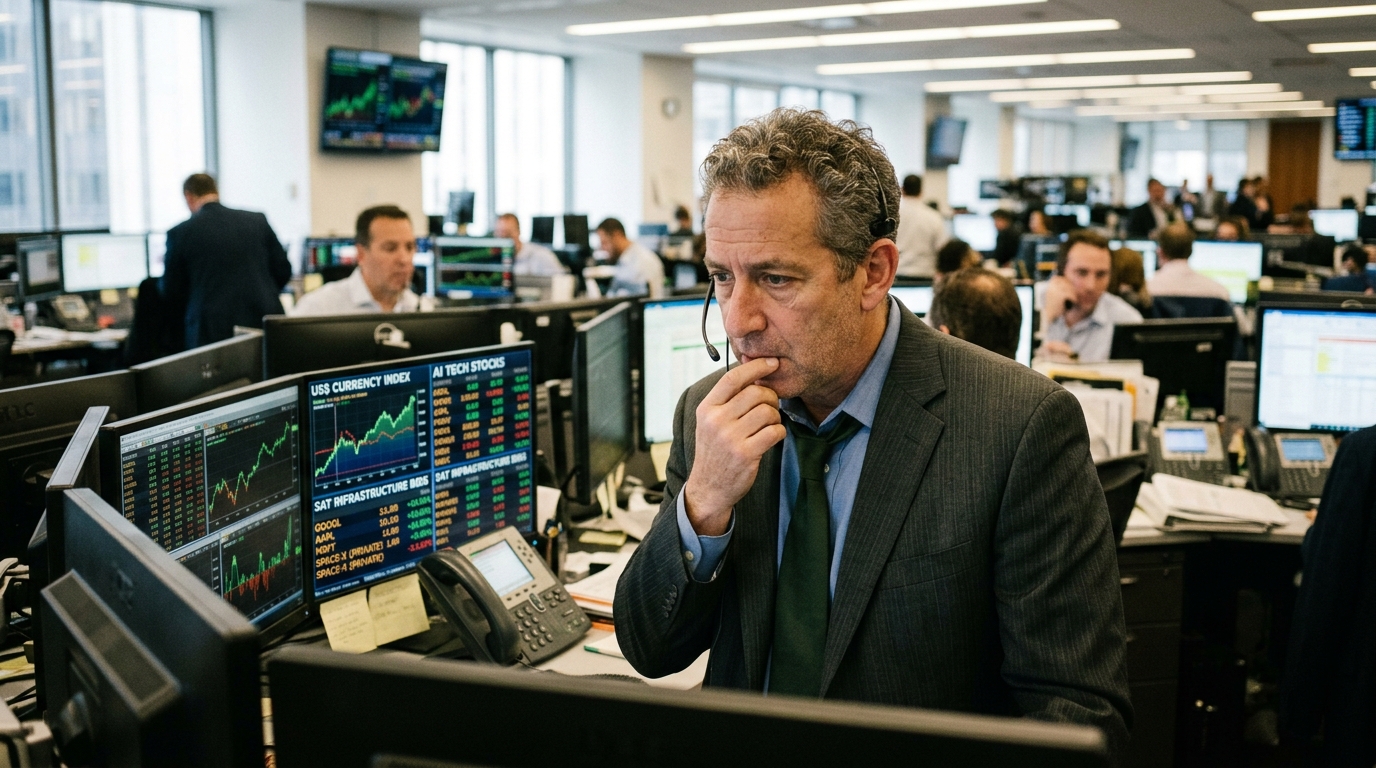
When DeepSeek, the Hangzhou-based AI powerhouse, unveiled its latest model, DeepSeek-V3, one might have expected a seismic shift in Silicon Valley’s landscape. The technical specifications are, by any objective measure, staggering: an open-weights model that matches or outperforms OpenAI’s GPT-4o and Anthropic’s Claude 3.5 Sonnet across a battery of benchmarks, all while being trained at a fraction of the cost and computational overhead. Yet, as noted by The Economist, the global response was largely a collective shrug. This apathy isn't born of ignorance but is the result of a complex interplay of geopolitical friction, market saturation, and a fundamental shift in how the world perceives AI progress.
Efficiency Born of Necessity: The MoE Strategy
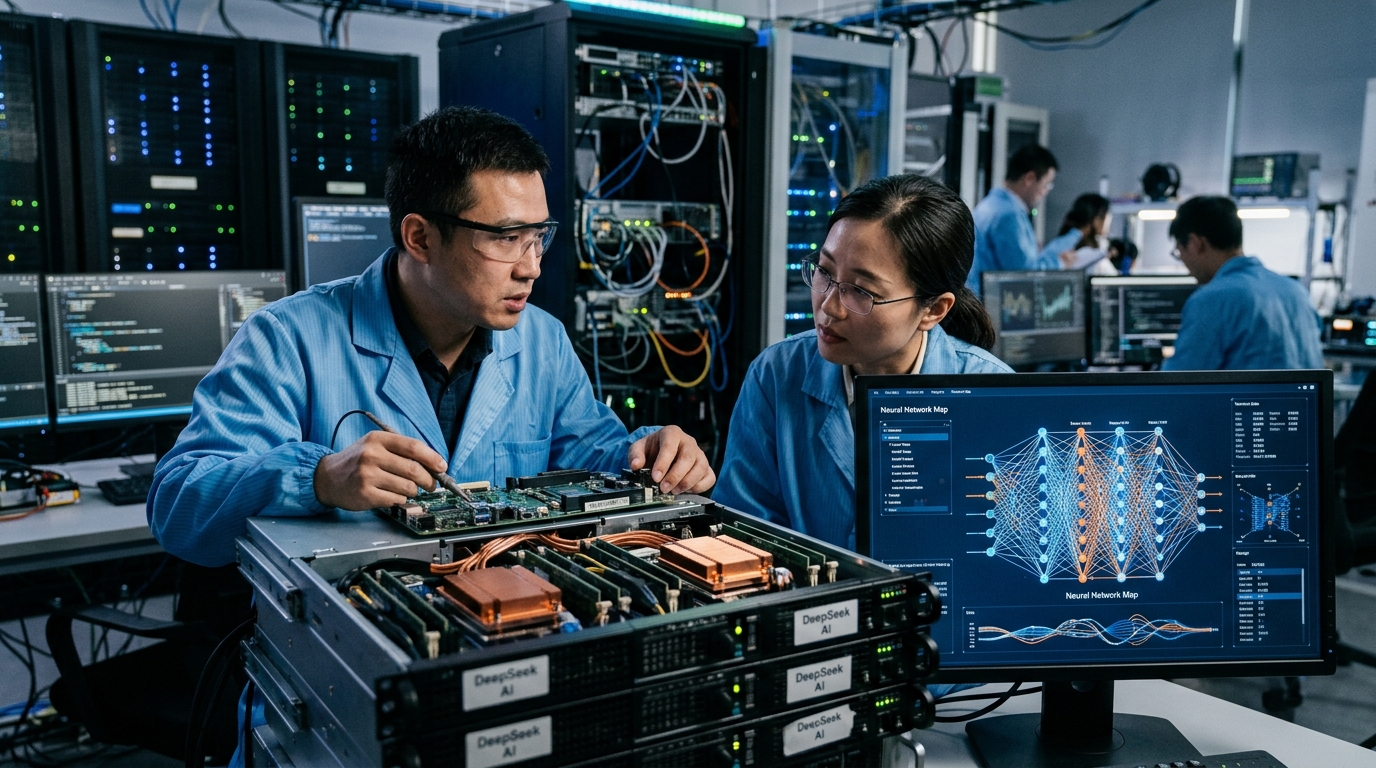
DeepSeek is not a typical startup. It is the brainchild of High-Flyer Quant, a quantitative hedge fund giant that has invested billions in its own supercomputing clusters. DeepSeek-V3 utilizes a sophisticated Mixture-of-Experts (MoE) architecture. Unlike dense models that activate every neuron for every query, MoE models only engage a specific subset of parameters, making them remarkably efficient. What makes this achievement particularly noteworthy is that DeepSeek trained this model using approximately 2,000 Nvidia H800 GPUs—the throttled versions permitted for export to China under US sanctions.
While American giants like OpenAI and Google rely on the 'scaling laws' of brute force—spending hundreds of millions on energy and the latest H100 or Blackwell chips—DeepSeek has proven that clever engineering can circumvent hardware bottlenecks. For the engineering community, this is a masterclass in optimization. For the broader market, however, it is perceived as just another entry in an increasingly crowded field of Large Language Models (LLMs) promising the moon.
The Geopolitical Wall and the Trust Deficit
The primary reason DeepSeek-V3 has failed to gain traction in Western enterprise circles is geopolitical. In an era of escalating technological rivalry between Washington and Beijing, deploying a Chinese-developed model for sensitive corporate or governmental data is seen as an unacceptable security risk. Despite the transparency of open weights, concerns regarding potential backdoors or the model’s alignment with Beijing’s political directives remain a significant barrier.
- Export Controls and Sanctions: The Biden administration's restrictive stance has created an environment where deep integration with Chinese AI labs is viewed as toxic for US-based corporations.
- Data Sovereignty: Compliance with GDPR in Europe and evolving privacy frameworks in the US makes it difficult to adopt models originating from jurisdictions with vastly different data protection standards.
- Ideological Guardrails: Chinese models often exhibit 'blind spots' or programmed biases on topics deemed sensitive by the CCP, which undermines their utility for a global market that demands objective, unfettered information.
Benchmark Saturation and 'Intelligence Fatigue'
We have entered an era of 'benchmark saturation.' Every week, a new laboratory releases a chart showing their model edging out GPT-4 in Python coding or MMLU scores. DeepSeek-V3 followed this script perfectly, but the delta in actual user experience has become marginal. The industry has reached a point of diminishing returns where incremental improvements in reasoning or knowledge retrieval no longer translate into the 'magic' moments that characterized the early days of ChatGPT.
Furthermore, the competitive landscape is shifting from raw intelligence to ecosystem utility. OpenAI has ChatGPT’s massive user base; Google has Gemini integrated into the Workspace suite; Microsoft has Copilot embedded in every enterprise tool. DeepSeek, despite its technical brilliance and cost-efficiency, lacks the distribution network and the strategic partnerships required to unseat the incumbents. The 'shrug' is not a dismissal of talent, but a sign that the 'model wars' are ending, and the 'application wars' have begun.
"Technology is no longer the only variable. Trust, distribution, and geopolitical stability are the new currencies of the artificial intelligence era."
In conclusion, DeepSeek has demonstrated that China can innovate under extreme pressure, debunking the myth that US sanctions would deal a fatal blow to Chinese AI development. However, a technical victory does not automatically grant commercial hegemony. For DeepSeek to truly conquer the global stage, it needs more than just efficient algorithms; it needs to bridge a chasm of trust that divides East and West—a task that may prove far more difficult than solving the most complex mathematical equations.