The news that a Vietnamese PhD researcher has secured one of the most prestigious science awards in the United States for Artificial Intelligence (AI) is more than just an individual milestone. It serves as a potent signal of the shifting geography of innovation in the 21st century. In an era where AI is the new frontline for global preeminence, the rise of scientists from emerging Southeast Asian economies highlights the necessity for a more inclusive and multipolar approach to technological advancement.
The Significance of the Award and Research Context
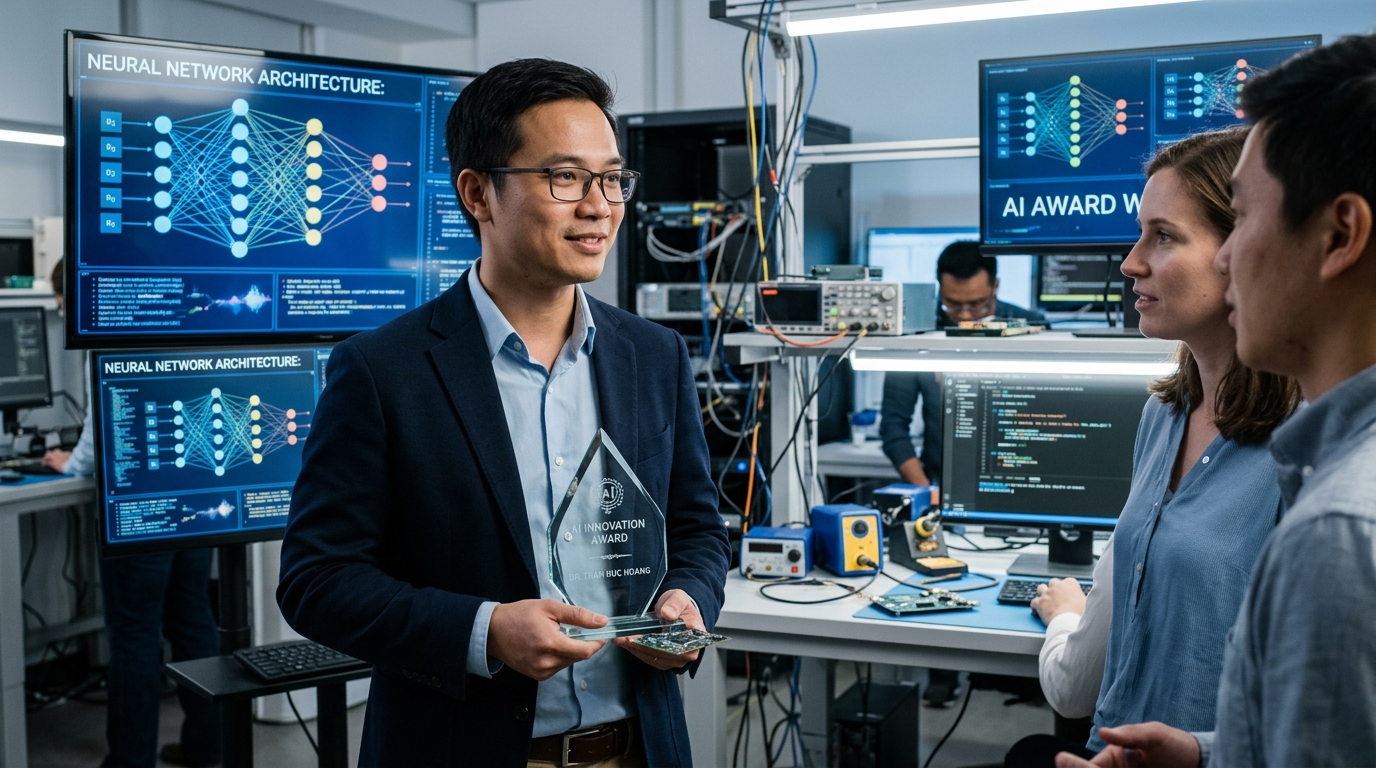
Dr. Nguyen, whose work focuses on optimizing Large Language Models (LLMs) and enhancing the efficiency of neural networks, was honored for his ability to bridge the gap between theoretical mathematical modeling and practical application. His research, conducted at a leading U.S. institution, addresses the energy footprint of AI training—one of the most pressing issues in modern computing.
This recognition from a storied American scientific body acknowledges not only the technical rigor of his work but also the strategic importance of his findings. In a world hungry for computational power, solutions that propose 'green' and more accessible AI are the ones that will define the industry's trajectory. The fact that a researcher of Vietnamese origin is at the forefront of this effort speaks volumes about the country's rigorous tradition in mathematics and the hard sciences.
From Brain Drain to Brain Circulation
For decades, Vietnam, like many developing nations, grappled with the phenomenon of 'brain drain.' Top-tier scientists would leave for the laboratories of Silicon Valley or Europe, often never to return. However, Dr. Nguyen’s case reflects a burgeoning trend: 'brain circulation.' Many of these researchers now maintain deep ties with their home country, contributing to the construction of a domestic high-tech ecosystem.
- The Vietnamese government has prioritized digital transformation as a national goal for 2030.
- Strategic investments in R&D centers are attracting global tech giants to the region.
- STEM education is being reinforced from the primary level to foster a talent pipeline.
This dynamic creates a new generation of scientists who, while excelling abroad, act as ambassadors for Southeast Asia's technological potential. Success in the U.S. acts as a catalyst for further investment in Vietnam, which aspires to become Asia's next 'digital tiger.'
Geopolitical Implications and the U.S. Role
This award comes at a sensitive geopolitical juncture. The United States is actively seeking to strengthen ties with Vietnam, viewing it as a critical partner in diversifying tech supply chains away from China. Recognizing Vietnamese talent bolsters U.S. 'soft power' and promotes a partnership based on the exchange of knowledge rather than just trade.
"Science has no borders, but the scientist has a homeland. Dr. Nguyen’s success is a victory for the global scientific community and a moment of immense pride for Vietnam," remarked a member of the award committee.
However, the challenge remains: how to ensure this knowledge filters back to local communities? AI has the potential to solve localized problems—from predicting natural disasters in the Mekong Delta to improving public health in hyper-urbanized cities. This award is a first step toward a deeper integration of emerging economies into the global tech elite.
Looking Ahead: The Global Talent War
As 2026 shapes up to be a landmark year for AI regulation and implementation, cases like this remind us that intelligence is distributed evenly across the globe, even if opportunities are not. The international community must support these talents, ensuring the AI revolution does not leave any region behind. Vietnam, through its scientists, is proving that it is ready to take center stage in the digital age.