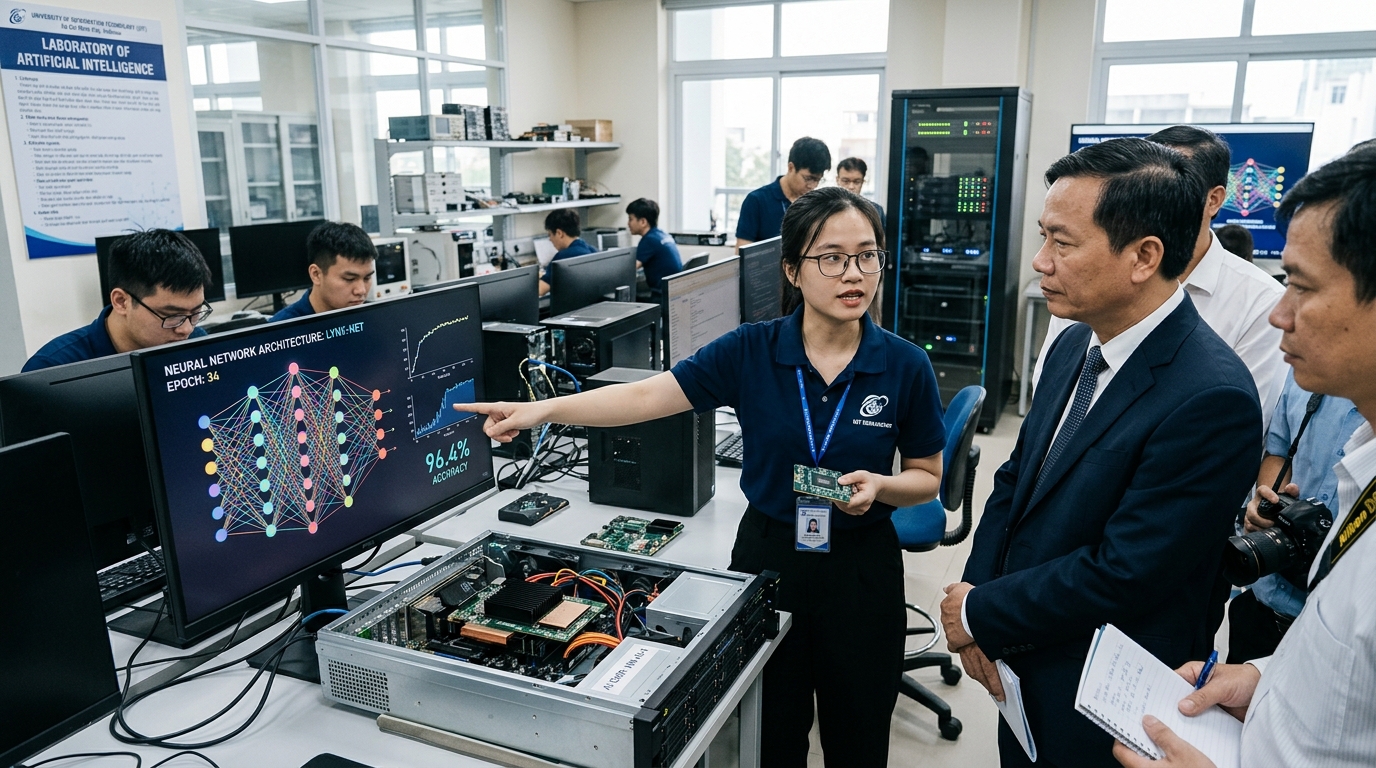
In the heart of Ho Chi Minh City, a new chapter is being written for Vietnam's technological ecosystem. The University of Information Technology (UIT), a member of Vietnam National University, has officially announced the launch of a state-of-the-art Artificial Intelligence Laboratory (AI Lab). This move is not merely an academic addition but a clear statement of intent by the country to transform into a regional innovation hub, competing with established powers such as Singapore and Malaysia.
The Strategic Role of the Laboratory
The new laboratory is designed to serve as a bridge between theoretical research and practical application. According to the university administration, the core focus areas include Machine Learning, Natural Language Processing (NLP), and Computer Vision. However, the unique aspect of this lab lies in its intention to tailor these technologies to the specific needs of local society and the economy.
For instance, Vietnam faces severe challenges due to climate change, particularly in the Mekong Delta. The AI Lab is oriented toward developing algorithms capable of predicting floods or optimizing agricultural production through smart irrigation systems. Connecting academic excellence with social contribution is the central pillar of UIT's philosophy.
The National AI Strategy 2030
The establishment of the lab fits into the broader framework of the "National Strategy on Research, Development, and Application of Artificial Intelligence until 2030," approved by the Vietnamese government. The goal is ambitious: to rank Vietnam among the top four ASEAN nations in AI development. The government recognizes that the digital economy will be the driving force of growth in the coming decades, and investing in infrastructure like UIT's AI Lab is vital.
"Artificial Intelligence is no longer an option but a necessity for the survival and prosperity of nations in the 21st century," university officials stated during the inauguration ceremony.
The laboratory is also expected to attract collaborations with international tech giants. Companies from South Korea, Japan, and the US have already expressed interest in joint research programs, viewing Vietnam as a reservoir of talented young scientists with high levels of mathematical training.
Challenges and Prospects
Despite the excitement, the road ahead is not without obstacles. "Brain drain" remains a significant threat, as many of Vietnam's top graduates choose to work in foreign tech hubs for higher salaries. The new laboratory aspires to reverse this trend by offering a world-class research environment within the country's borders.
Furthermore, the issue of data remains critical. Training AI models requires massive amounts of data, and Vietnam is called upon to establish strict yet functional frameworks for privacy protection and the ethical use of technology. UIT's AI Lab will also host a dedicated task force on AI Ethics, ensuring that progress does not come at the expense of human rights.
Conclusion
The operation of the AI Laboratory at the University of Information Technology marks a shift toward quality and specialization. Vietnam no longer wishes to be just the world's "manufacturer" but also its "designer." The success of this venture will be judged by the lab's ability to produce innovations that improve the daily lives of citizens while positioning the country at the forefront of the global technological stage.