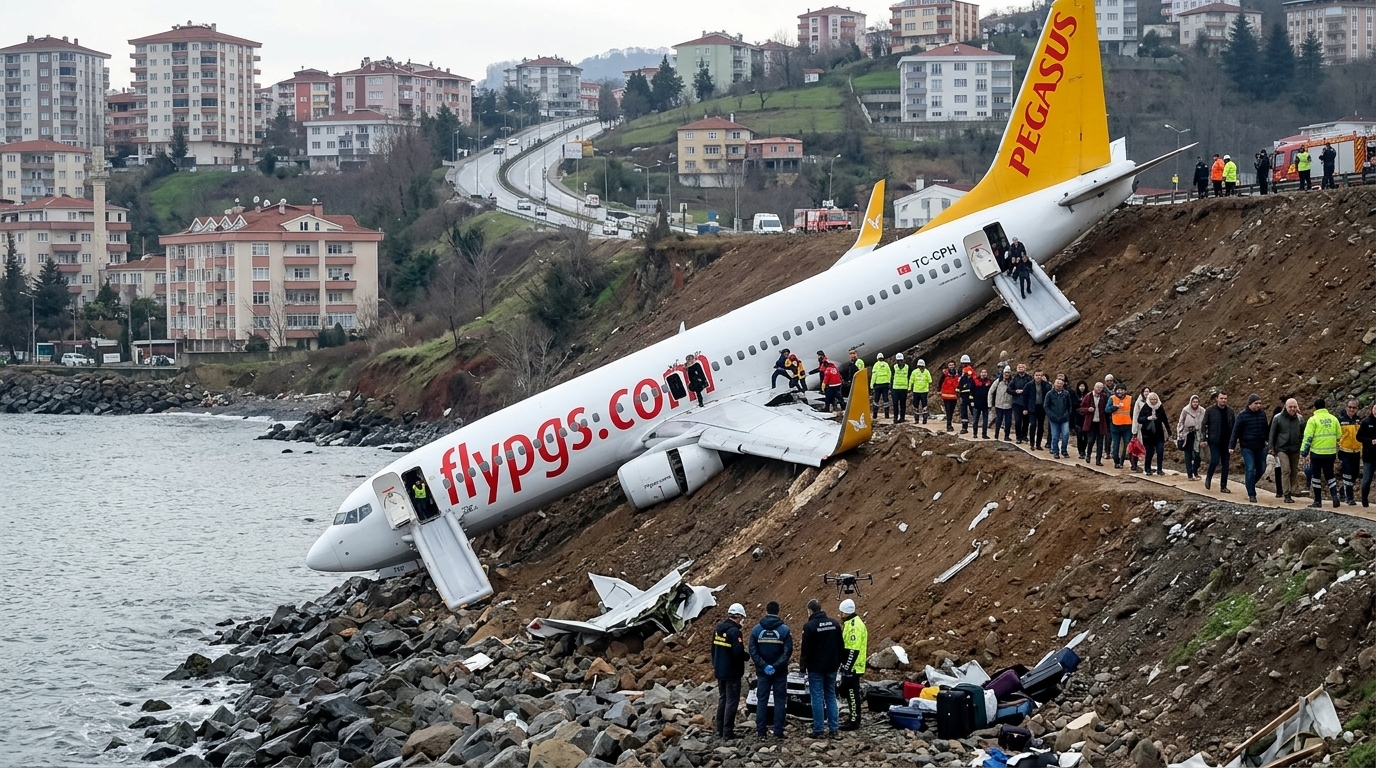
Aviation safety is one of the most rigorously regulated fields in modern engineering and transportation. Yet, despite advances in materials and fire suppression systems, the human factor remains the most unpredictable link in the chain of survival. A new study has brought to light a critical parameter often overlooked by current evacuation protocols: the strategic placement of elderly passengers within the aircraft cabin.
According to researchers, the traditional approach of random seating or clustering vulnerable groups in specific areas can be fatal. The study suggests that a more uniform distribution of elderly passengers, with a preference for seats located near emergency exits, can significantly reduce overall evacuation time by preventing the formation of bottlenecks that cost precious seconds.
The Physics of Human Flow
To understand the significance of this study, we must view an airplane evacuation not as a simple movement of people, but as a problem of fluid dynamics. When hundreds of people attempt to exit through narrow aisles simultaneously, they behave in ways that simulate the flow of liquid through narrow orifices. Any obstacle or slowdown at one point in the "conduit" causes turbulence and delays that propagate backwards.
Elderly passengers, due to physical limitations, tend to move at a slower pace. In the simulations conducted, it was found that when many elderly individuals are concentrated far from the exits, they create a "bottlenecking" effect that prevents younger and faster passengers from reaching the exits. Conversely, placing them near the exits allows them to be removed from the system faster, clearing the way for the rest.
The 90-Second Rule vs. Reality
International aviation authorities, such as the FAA and EASA, require manufacturers to prove that a fully occupied aircraft can be evacuated in just 90 seconds, using only half of the available exits. However, critics of these tests point out that they are conducted under ideal conditions, with healthy volunteers who are not under the influence of actual panic.
The new study introduces the parameter of demographic diversity. In an aging society, the likelihood that a significant number of passengers on a flight will be elderly is increased. Science now suggests that airlines may need to revise their seat allocation algorithms, not just based on profit or comfort, but with a view to optimizing flow in an emergency. This could mean that seats near exits, which are currently often sold at a premium as "extra legroom" seats, should perhaps be reserved for individuals who need the shortest possible path to safety.
The Luggage Obstacle and the Psychology of Panic
Beyond seat distribution, the study touches on the burning issue of carry-on luggage. In recent accidents, it has been observed that passengers stop to retrieve their bags from overhead bins, despite explicit instructions from the crew. This behavior negates any optimization in seat distribution.
Researchers suggest that technology could provide a solution, such as systems that automatically lock overhead bins in an emergency. However, the fundamental challenge remains public education. Understanding that our own small delay could cost someone else's life is a message that must be ingrained. Science shows us the way, but its implementation requires both technological and social interventions.
Conclusions and Future Perspectives
This study serves as a call to action for regulatory bodies. The use of artificial intelligence and advanced simulations can now accurately predict how a crowd will behave in a specific aircraft type. Integrating this data into cabin design and booking systems is no longer a luxury but a necessity.
In the future, we might see "smart" seating charts that adjust based on the passenger profile of each flight. Aviation safety is not a static field, but a continuous effort to adapt to the new data provided by science. Our lives may literally depend on where we sit and, more importantly, how quickly we can all move together as a single, coordinated whole.