The scientific community stands at the threshold of a structural shift in how the materials of the future are discovered. For decades, the discovery of new catalysts, drugs, and semiconductors relied on the arduous method of trial and error. Today, Artificial Intelligence (AI) promises to accelerate this process by thousands of times. However, a new debate is emerging at the forefront of research: are "self-driving labs" (SDLs) that use robots to perform experiments sequentially better, or are "megalibraries" that allow for the simultaneous screening of millions of materials the superior path?
According to a recent analysis published via EurekAlert! and based on research from pioneering institutions like Northwestern University, megalibraries appear to be taking the lead. This approach is not merely about automation, but about scale and parallel data processing, fundamentally changing the landscape of nanotechnology and materials science.
What are Megalibraries and Why Do They Lead?
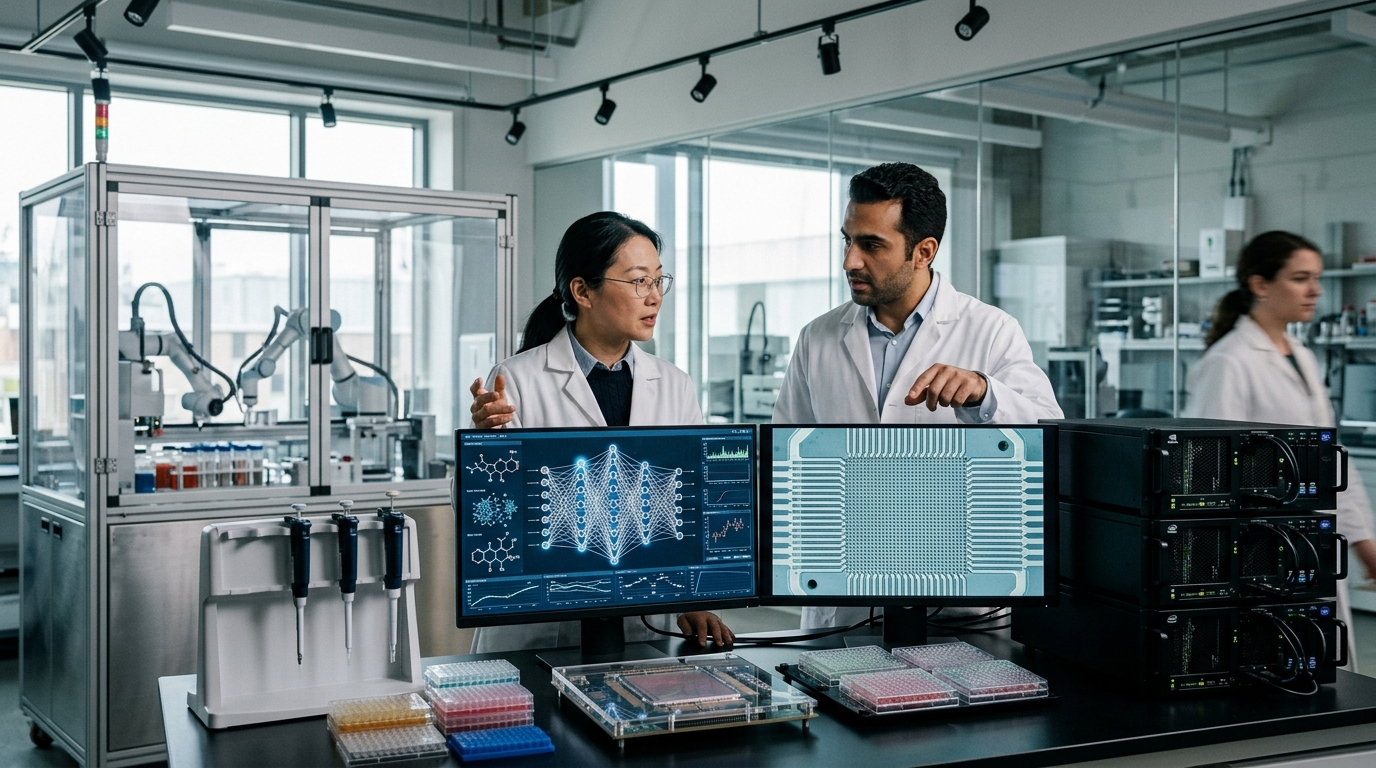
Megalibraries are not buildings filled with books, but microscopic arrays (chips) containing millions, or even billions, of different nanomaterials on a surface no larger than a fingernail. Using techniques such as scanning probe lithography, scientists can deposit different combinations of elements in specific locations. This creates a "map" of possibilities.
The primary advantage over self-driving labs is speed. While an SDL might take hours or days to synthesize and test a single material using robotic arms, a megalibrary has millions of samples already "ready." AI can then scan these samples simultaneously, identifying patterns that would be impossible to find using a linear method. The difference is akin to looking up a word in a dictionary page-by-page versus using a search engine that has already indexed the entire content.
The Challenge of Self-Driving Labs
Self-driving labs (SDLs) were initially seen as the ultimate solution. They combine machine learning with robotics to design, execute, and analyze experiments without human intervention. However, physical reality poses significant hurdles. Robots must move liquids, clean containers, and wait for chemical reactions to complete. This "physical latency" limits throughput.
Furthermore, SDLs often suffer from the problem of "local optima." The AI guiding the robot might focus on an area that looks promising, completely ignoring another region of the chemical space that could hide a revolutionary discovery. Megalibraries, due to their immense diversity, provide a much broader and more representative training set for AI models, reducing the likelihood of bias in the results.
AI as the Ultimate Catalyst
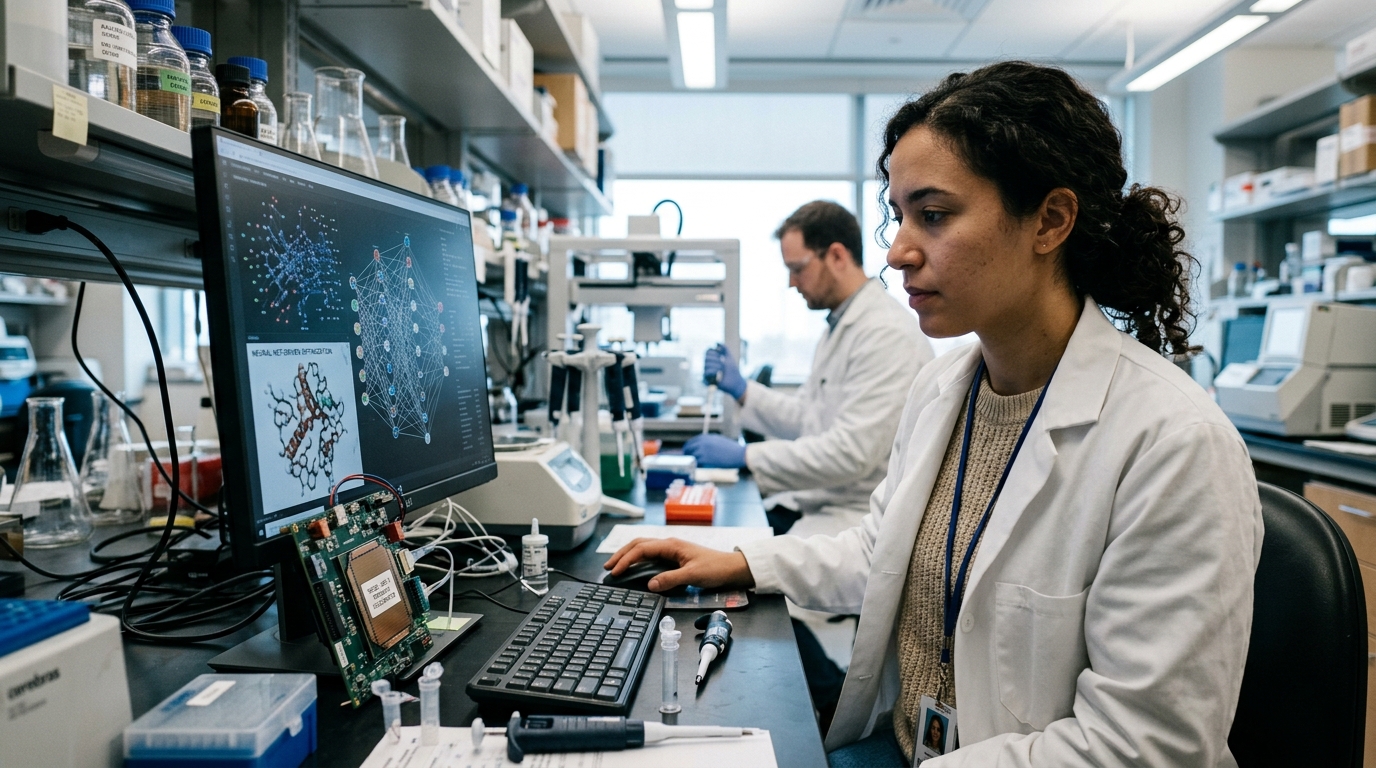
The true power of megalibraries is unlocked through deep learning algorithms. Researchers use AI to analyze images and performance data from millions of nanoparticles. This process allows AI to "learn" the rules governing material behavior at the nanoscale—rules that often elude conventional theory.
For instance, in the search for new catalysts for green hydrogen production, AI can examine thousands of alloys consisting of five or six elements simultaneously. Within days, it can identify the optimal composition that would have required years of research in a traditional lab. This "predictive" capability makes the scientific method less dependent on luck and more on computational power.
Towards a New Industrial Revolution?
The implications of this development for industry are immense. From developing longer-lasting batteries to creating biocompatible materials for medical implants, the speed of discovery is the deciding factor. Companies that adopt the megalibrary approach will have a significant market advantage, as they will be able to patent new materials at rates that traditional industry cannot match.
However, challenges remain. Constructing these libraries requires highly specialized equipment and expertise currently concentrated in a few top academic institutions and large tech companies. The remaining question is whether this technology will be democratized or if it will lead to a new form of "discovery monopoly."
- Parallel synthesis of millions of materials reduces research time from years to days.
- AI performs best with the massive, homogeneous datasets produced by megalibraries.
- Self-driving labs remain useful for final optimization, but libraries win in initial discovery.
- Green energy and biotechnology are the sectors set to benefit immediately.
In conclusion, while self-driving labs are an impressive feat of robotics, megalibraries represent a more fundamental upgrade to scientific infrastructure. Their ability to provide "big data" for the physical world is what will allow Artificial Intelligence to reach its full potential, transforming the laboratory from a place of manual labor into an information processing hub.