It is May 2026, and the promise of the fully automated enterprise—where AI agents manage everything from sales pipelines to supply chain logistics—is hitting an unexpected wall: digital amnesia. While Large Language Models (LLMs) have become remarkably adept at drafting text and analyzing real-time data, they are proving tragically unreliable when it comes to maintaining the context of long-term business processes. The problem isn't a lack of intelligence; it's a lack of structured memory.
The RAG Wall: A Shallow Solution for Deep Problems
To date, the dominant architecture for providing knowledge to AI models has been Retrieval-Augmented Generation (RAG). The logic of RAG is simple: when a user asks a question, the system searches a database for the most "relevant" documents and feeds them to the model. However, as recent analyses highlight, RAG is only good at surfacing semantically relevant information. It stops there. It cannot understand the sequence of events, hierarchical relationships, or the reasoning behind previous decisions.
In an enterprise environment, this translates to disaster. Imagine an AI sales agent that forgets a client expressed dissatisfaction with a specific feature three months ago, or a project management agent that fails to realize how a schedule shift in January impacts a June delivery. RAG views data as isolated snapshots, losing the narrative continuity required for complex workflows.
Decision Context Graphs: The Architecture of Conscious Memory
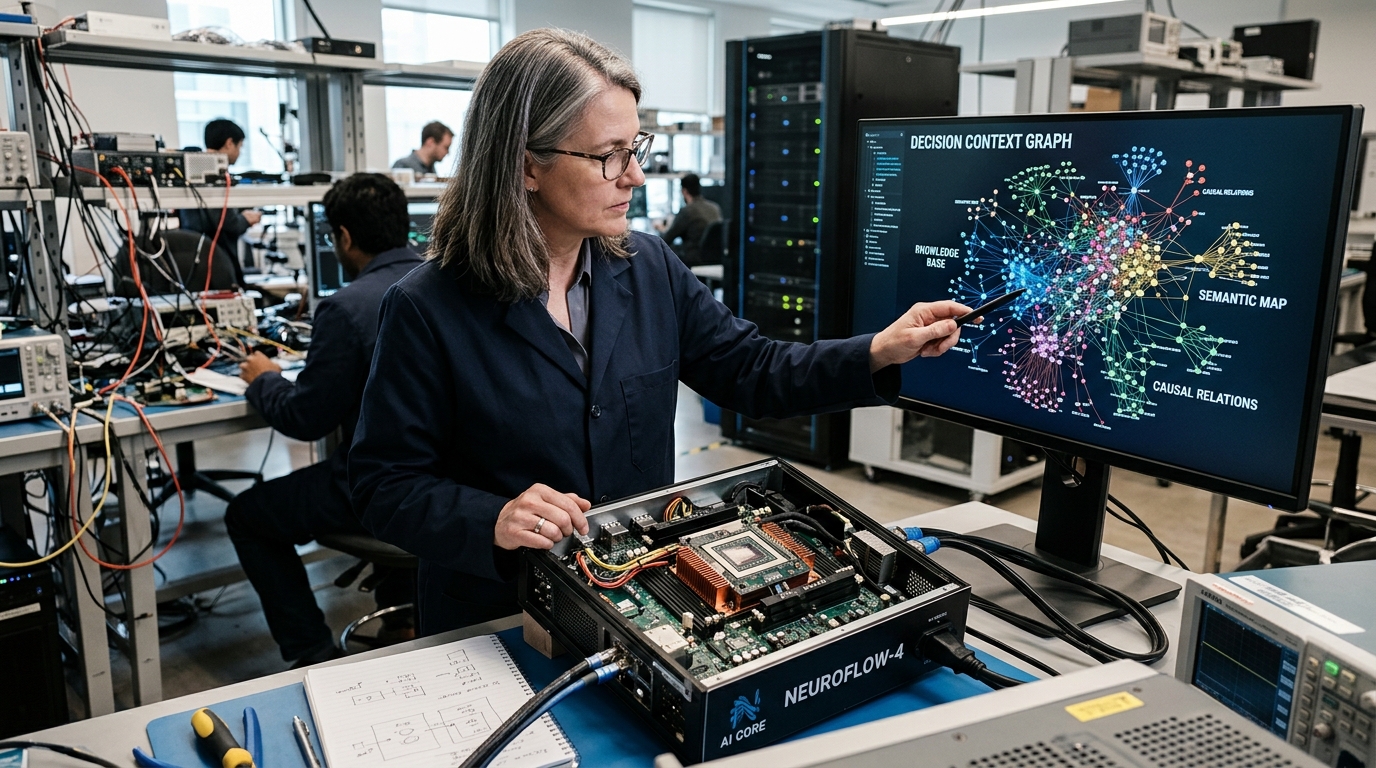
A new approach gaining momentum, pioneered by startups like Rippletide in collaboration with Neo4j, is the Decision Context Graph (DCG). Instead of a flat list of documents, DCG creates a structured graph that connects data, time, and decision logic. This allows AI agents to possess what researchers call "temporal reasoning."
- Structured Memory: The agent doesn't just remember words; it understands relationships between entities (e.g., "Customer A is linked to Contract B, which was modified by Manager C").
- Time Awareness: The system understands the sequence of events, allowing it to look back at the past to explain the present.
- Decision Transparency: Every action taken by the agent is recorded as a node in the graph, making the AI "auditable" by humans.
"The difference between RAG and Decision Context Graphs is the difference between having access to a library and having a seasoned employee who remembers every meeting that ever took place," says an industry executive.
Why Enterprises are Failing at AI Adoption
The failure of AI agents is not just technical; it is strategic. Many companies attempted to "throw" AI at messy, unstructured data, hoping the model would figure it out on its own. The reality is that artificial intelligence requires a "memory operating system" to function at a professional grade. Without it, agents remain "stochastic parrots" that can speak convincingly but cannot act responsibly.
The cost of this amnesia is immense. From lost sales opportunities to manufacturing errors, the unreliability of AI agents is shaking board-level confidence. The transition from RAG to more complex structures like DCG is no longer optional; it is the prerequisite for the survival of any organization's AI strategy in 2026.
The Future: From Retrieval to Understanding
As we move forward, the focus is shifting from model size (parameters) to context quality. A system's ability to "think" over a knowledge graph will separate the winners from the losers. The AI agents of the future will not just be chat interfaces; they will be digital entities with a deep historical knowledge of the organization they serve. Only then can we talk about true autonomy.