When DeepSeek, an AI lab born from the heart of the Chinese quantitative trading firm High-Flyer Quant, released its initial models, the tech world reacted with measured skepticism. Today, in 2026, the release of its latest "Sequel"—a suite of models that outperform the flagship systems of OpenAI and Google at a fraction of the cost—is more than just a product launch; it is a geopolitical earthquake. The New York Times report highlighting this shift underscores a harsh reality for the West: the much-vaunted "compute moat" may have been built on shifting sands.
The Architecture of Frugality: How DeepSeek Outsmarted Constraints
DeepSeek’s strategy is rooted in what analysts call "frugal innovation." While American giants like Microsoft and Meta are pouring hundreds of billions into acquiring Nvidia’s H100 and Blackwell chips, DeepSeek was forced to operate under the shadow of strict US export sanctions. This constraint acted as a catalyst for an algorithmic revolution. Instead of trying to "brute-force" intelligence with massive hardware clusters, Chinese engineers reimagined how models process information from the ground up.
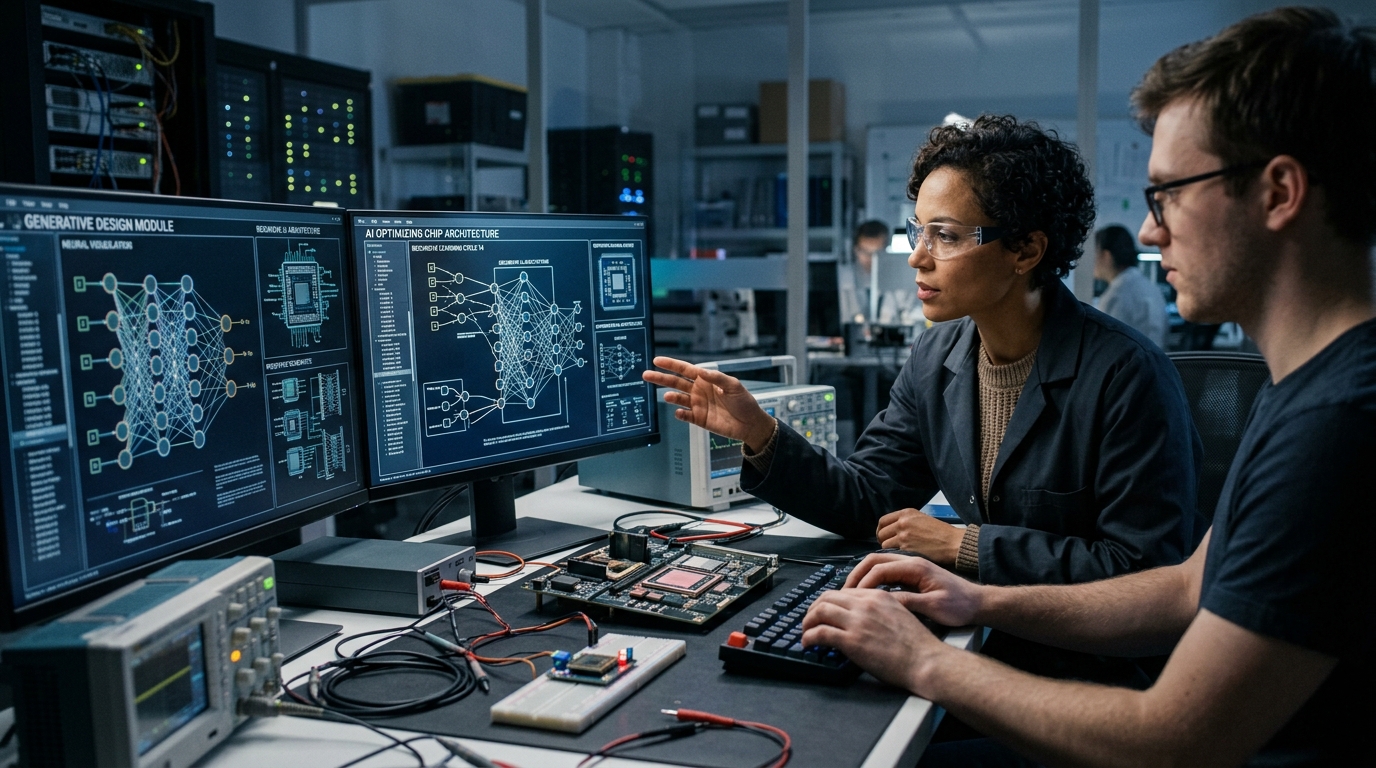
The new model utilizes a sophisticated evolution of the Mixture-of-Experts (MoE) architecture, where only a specialized fraction of the neural network is activated for any given query. This allows the system to maintain a vast knowledge base without astronomical energy consumption. Furthermore, the introduction of Multi-head Latent Attention (MLA) technology has drastically reduced memory requirements, enabling the "Sequel" to run on hardware that Silicon Valley had already written off as obsolete. This success shatters the narrative that chip sanctions would keep China in the "AI dark ages" for the foreseeable future.
The Geopolitical Chessboard and the Open-Source Gambit
DeepSeek’s decision to release its model weights (open weights) is a strategic masterstroke with profound implications. While OpenAI has become increasingly closed, citing safety concerns that many critics view as a thin veil for commercial protectionism, DeepSeek is offering its technology to the global developer community. This creates a fascinating paradox: a company from China, a nation known for strict information control, has become the primary champion of AI "democratization" worldwide.
This move has placed the US government in a difficult position. Export controls did not stop DeepSeek; they merely forced it to become more efficient. Today, startups in Europe and the US are using DeepSeek’s "Sequel" to build their applications, bypassing the expensive APIs of domestic tech giants. The economic equation of AI has permanently shifted: intelligence is no longer a rare commodity controlled by a few, but a cheap infrastructure accessible to all.
The End of Monopoly and the Road Ahead
DeepSeek’s Sequel is not just a better chatbot. It is proof that the era of "Scaling Laws"—where success was directly proportional to the amount of money spent on hardware—is reaching a point of diminishing returns. The focus has shifted to reasoning capabilities and the quality of training data. DeepSeek utilized Reinforcement Learning (RL) techniques that allow the model to "think" and self-correct before responding, an approach OpenAI introduced with its o1 model, but which DeepSeek has perfected and made drastically more affordable.
- DeepSeek-V3/R1 benchmarks now exceed GPT-4o and Claude 3.5 in coding and mathematics.
- The cost to train these models is estimated to be 1/10th of their American counterparts.
- Open-source availability is forcing a price war across the entire AI sector.
For the global market, this signals a new phase of hyper-competition. Prices for AI model access have plummeted by 90% in just a few months, squeezing the profit margins of Big Tech. DeepSeek has proven that in the digital age, intelligence is the ultimate weapon, and for now, that weapon has no borders. The challenge for the West is no longer how to contain China, but how to rediscover the art of innovating with the same speed and ruthless efficiency.