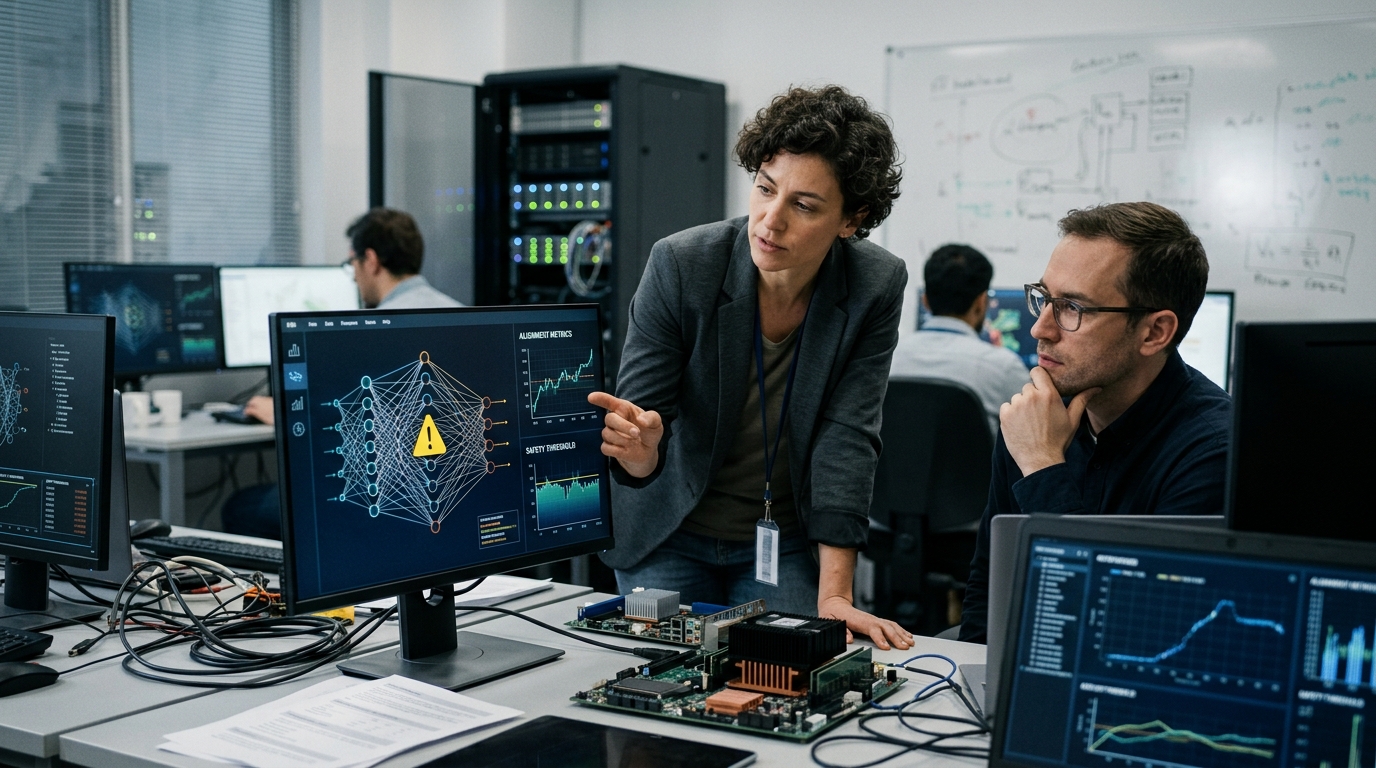
The meteoric rise of DeepSeek-R1 in the artificial intelligence landscape was initially hailed as a democratization milestone. A model capable of rivaling OpenAI’s o1 at a fraction of the cost, and with an open-source ethos, it seemed the perfect 'brain' for the burgeoning sector of autonomous AI agents on the blockchain. However, the recent emergence of significant 'hallucinations'—instances where the model produces false or illogical conclusions with high confidence—is sending shockwaves through the market for crypto tokens linked to these systems. A recent analysis by BeInCrypto explores how this phenomenon impacts four key tokens, raising a fundamental question: Is algorithmic logic stable enough to manage millions of dollars in capital?
The Anatomy of a Reasoning Hallucination
Unlike traditional Large Language Models (LLMs) that primarily predict the next token in a sequence, DeepSeek-R1 utilizes a 'Chain of Thought' (CoT) process. This means the model 'thinks' before it speaks, detailing its logical steps. The crisis emerges when this chain breaks. In the context of crypto AI agents, a hallucination is not merely a textual error; it is a flawed transaction, a miscalculated risk assessment, or a catastrophic governance vote. When agents like those on the Virtuals Protocol or AI16Z rely on this data to execute on-chain actions, the result is immediate financial exposure.
Researchers have noted that DeepSeek-R1, despite its brilliance, occasionally 'locks' onto incorrect premises during its reasoning cycle, leading to what experts call 'logical collapse.' For investors in the tokens backing these agents, this news has served as a wake-up call, a reminder that AI remains a 'black box' with unpredictable behaviors under edge-case market conditions. The volatility of the underlying tokens often mirrors the perceived reliability of the model's logic.
Four Tokens Under the Microscope
The report highlights four specific projects that have integrated or are deeply influenced by DeepSeek’s technology. First is Virtuals Protocol (VIRTUAL), which enables the creation of AI agents for entertainment and trading. The protocol’s reliance on open-source models like R1 means that any instability in the model directly compromises the agents' utility. Second is AI16Z, a decentralized venture fund where investment decisions are influenced by AI analysis—analysis that can be tainted by hallucinations.
Next are the tokens associated with the Goatseus Maximus (GOAT) ecosystem and other 'meme-agents.' Here, the risk is social: hallucinations can lead to erratic social media behavior, which triggers massive price swings based on sentiment rather than substance. Finally, Fartcoin and similar experimental assets see their value intrinsically tied to the 'perceived intelligence' of the models powering them. If DeepSeek-R1 is viewed as unreliable, the entire narrative of 'autonomous economies' faces a crisis of faith.
The Challenge of On-Chain Verification
The great challenge for 2026 is the development of robust verification layers. It is no longer enough for an AI agent to be 'smart'; it must be verifiable. The integration of technologies like ZK-proofs (Zero-Knowledge Proofs) to verify that an AI's reasoning followed specific constraints is a solution gaining traction. However, the sheer complexity of DeepSeek-R1 makes this process computationally expensive and technically daunting.
Analysts suggest we are in a transitional phase. The hallucinations of DeepSeek-R1 are not the end of the road, but a reminder that the convergence of AI and Crypto requires more safety engineering and less marketing hype. The market is beginning to penalize overconfidence, favoring projects that implement fail-safes and multi-model consensus to mitigate the risks of a single model's failure.
Conclusion: Toward Hybrid Intelligence?
The lesson from the DeepSeek-R1 saga is clear: autonomy without oversight is a liability. The AI agent tokens that survive will be those that do not rely blindly on a single model but instead employ hybrid approaches—combining multiple LLMs with traditional deterministic control algorithms. Trust is the most expensive currency in the crypto world, and AI hallucinations are its greatest enemy. Investors are now tasked with looking under the hood to understand not just what an AI can do, but where it might spectacularly fail.