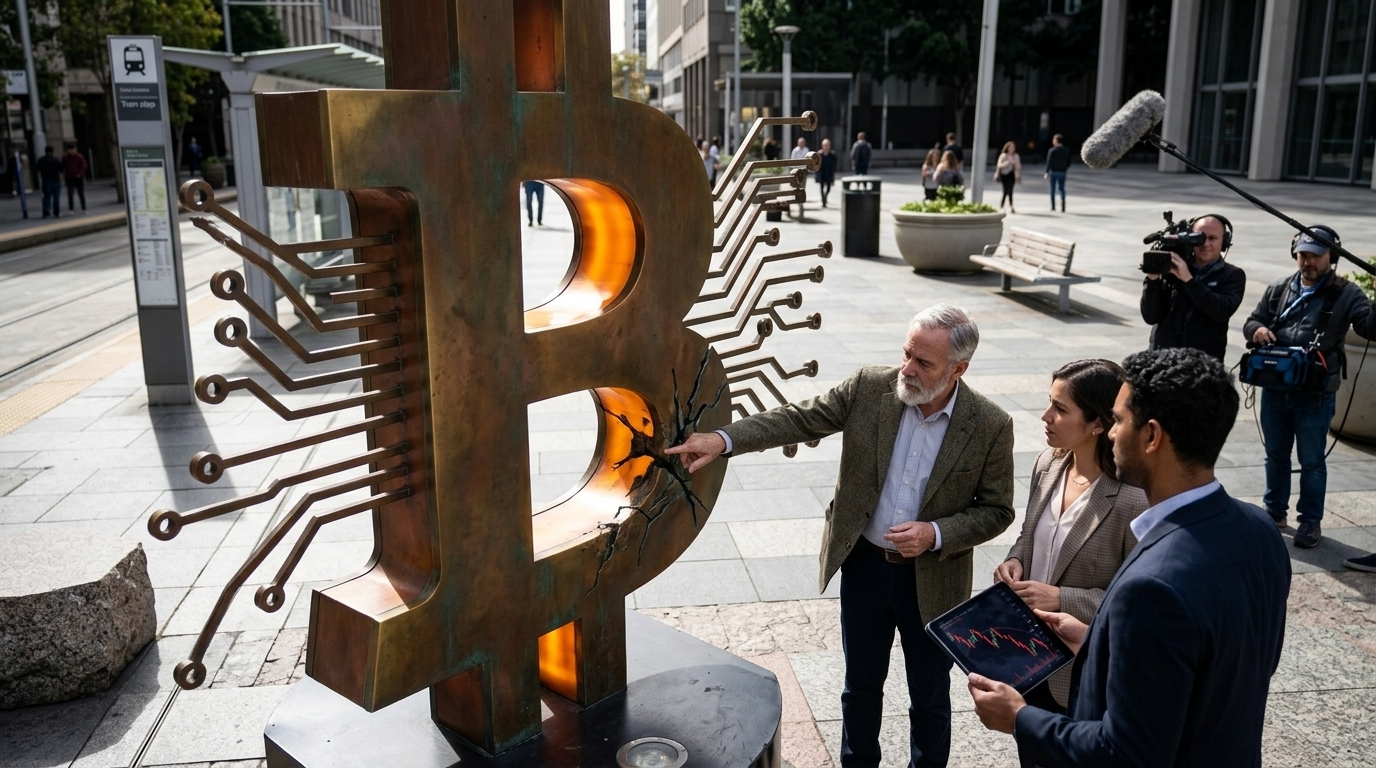
The global AI community has long watched the rise of DeepSeek with bated breath—the Chinese lab that managed to prove efficiency could triumph over raw compute. However, the company's latest release, anticipated as the definitive answer to the 2026 iterations of GPT-5 and Claude 4, seems to bring expectations back to earth. Benchmark results, leaked and later confirmed, show a stagnation that raises questions about the future of Chinese AI under the regime of international sanctions.
A Collision with Numerical Reality
For years, DeepSeek was the industry's "dark horse." With its Mixture-of-Experts (MoE) architecture and the ability to train models at a fraction of the cost of American giants, it had earned the respect of the open-source community. Yet the new update, which promised leaps in reasoning complexity and code understanding, showed only marginal improvements in critical tests like MMLU-Pro and GPQA.
According to analysts, the disappointment lies not in the model's absolute power—which remains formidable—but in the fact that the gap between DeepSeek and leading Western labs appears to be widening rather than closing. While OpenAI and Anthropic have moved toward models exhibiting systematic logic (System 2 thinking), DeepSeek appears to have hit a wall regarding the scaling of its existing architecture.
The Hardware Factor: The Shadow of Sanctions
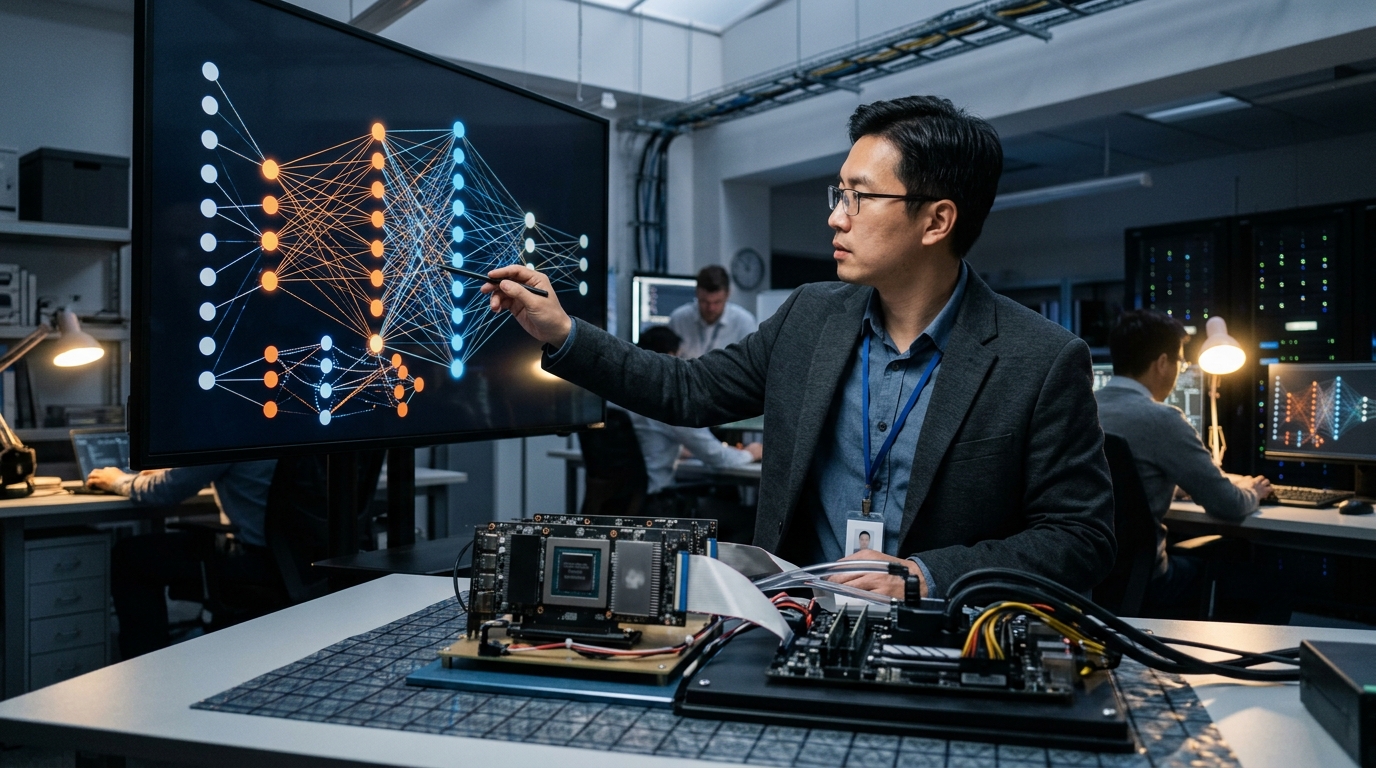
One cannot analyze DeepSeek's trajectory without considering the geopolitical context. Since 2024, US export restrictions on advanced semiconductors (such as NVIDIA’s H100 and Blackwell series) have forced Chinese labs to get creative. DeepSeek relied on domestic solutions and software optimization to compensate for the hardware deficit.
"Creativity can only take you so far. When your competitor has access to ten times more compute, optimization stops being an advantage and becomes a survival necessity," says a Shanghai-based industry executive.
The benchmark disappointment may be the first tangible evidence that China is beginning to feel the weight of technological isolation. Despite government efforts to boost domestic chip production, the disparity in performance-per-watt and data center interconnect speeds remains the primary obstacle.
Efficiency vs. Absolute Power
Despite the negative headlines, there is another reading of the situation. DeepSeek may no longer be aiming for the top of the benchmarks, but for market dominance through cost-effectiveness. The new model, while theoretically less "intelligent" than its rivals in synthetic tests, remains extremely lightweight and inexpensive to deploy. In the AI economy of 2026, where enterprises seek sustainable solutions rather than just impressive demos, this strategy might prove more profitable in the long run.
- Limited progress in reasoning capabilities compared to the previous version.
- Excellent performance in coding tasks, but with higher hallucination rates.
- Increased reliance on distillation techniques from larger proprietary models.
- Significant reduction in inference latency for real-time applications.
In conclusion, DeepSeek's new update serves as a reminder that the path to Artificial General Intelligence (AGI) is not a straight line. Resource constraints and training data bottlenecks are starting to create clear fault lines on the global innovation map. DeepSeek remains a key player, but the aura of the "miracle" that would leapfrog Silicon Valley seems to be fading, replaced by a more realistic, if less exciting, evolutionary pace.