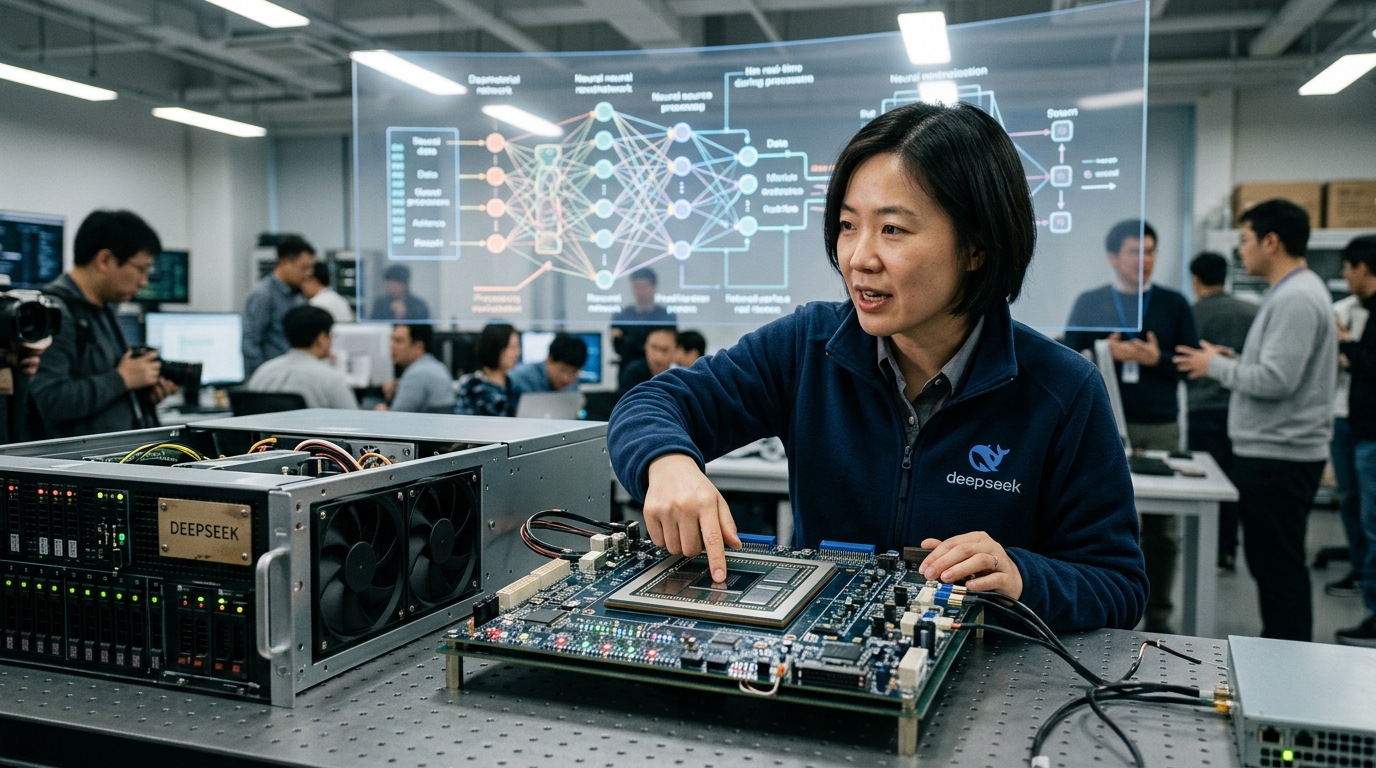
In the breakneck world of artificial intelligence, where power is often measured by GPU counts and capital expenditure, China’s DeepSeek has delivered a significant blow to the Silicon Valley status quo. The unveiling of its new flagship model—exactly one year after its first major breakthrough—is more than just a technical iteration; it is a strategic manifesto: architectural ingenuity can overcome raw computational might.
The Architecture of Efficiency: MLA and DeepSeekMoE
DeepSeek’s new model is built upon two pillars that drastically distinguish it from Western counterparts like GPT-4 and Claude 3.5. The first is Multi-head Latent Attention (MLA), an innovation that slashes memory requirements during inference, allowing the model to handle vast context windows with minimal overhead. The second is an evolved Mixture-of-Experts (MoE) framework, which activates only a fraction of the model's parameters for any given query.
This approach allows the flagship model to achieve performance levels that rival or exceed OpenAI’s premier offerings, while its training costs are estimated to be a fraction of the industry standard. For the global market, this means that access to reasoning-level AI is becoming economically viable for thousands of enterprises that previously hesitated due to prohibitive API costs.
Geopolitics and the Response to Chip Restrictions
The rise of DeepSeek occurs against a backdrop of intense geopolitical friction. With the US imposing strict export controls on advanced semiconductors (such as Nvidia’s H100 and B200) to China, DeepSeek was forced to innovate under scarcity. Their ability to train world-class models using less powerful hardware or by maximizing existing resources serves as a masterclass for the entire industry.
- FP8 Optimization: The model utilizes advanced quantization techniques that allow training at lower precision without compromising intelligence.
- Open Weights Strategy: DeepSeek’s commitment to releasing model weights has fostered a massive community, challenging the "walled garden" approach of OpenAI and Google.
- Cost-per-Token: The company offers pricing up to 10 times lower than its competitors, effectively triggering a price war in the AI infrastructure sector.
The Challenge to Silicon Valley
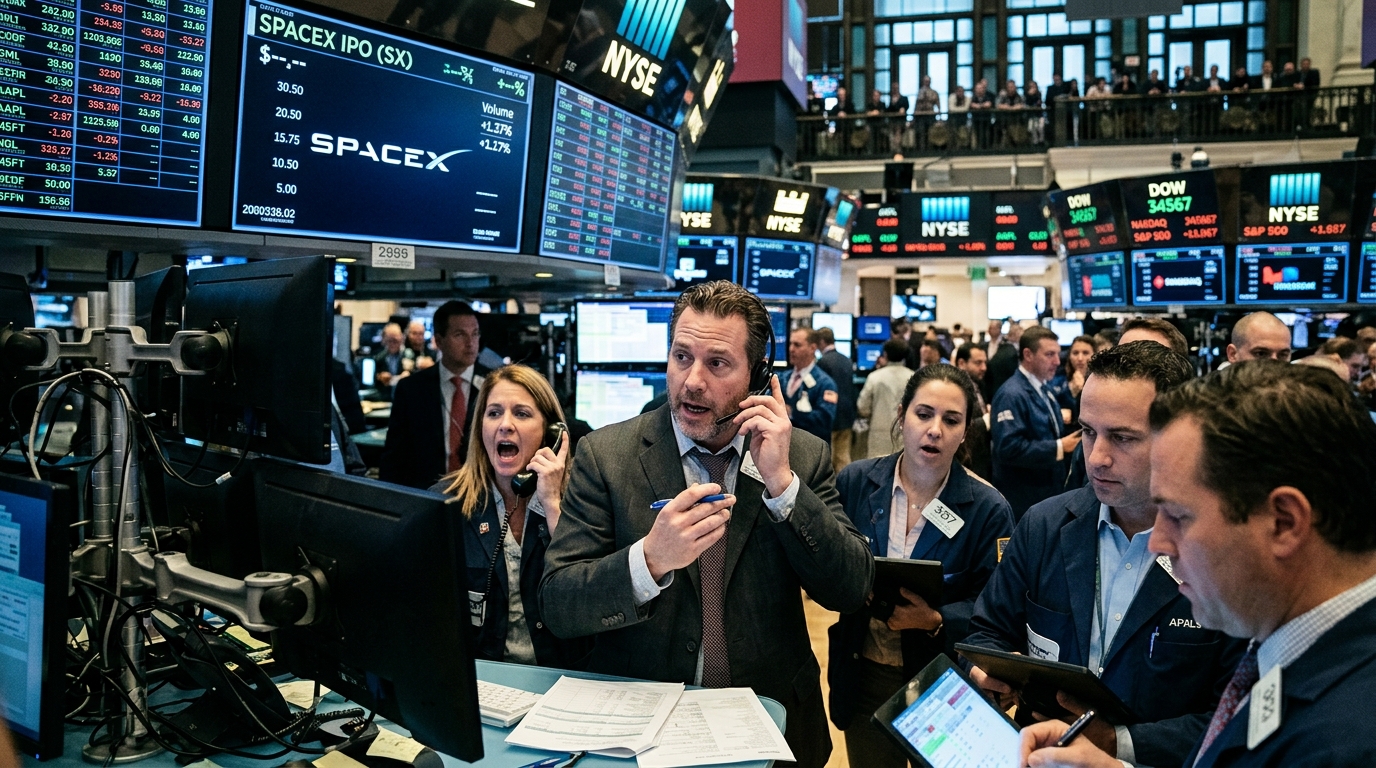
DeepSeek’s success poses a critical question: Is the "brute force" scaling strategy pursued by American giants sustainable? While Microsoft and Google invest tens of billions into massive data centers, DeepSeek has proven that algorithmic elegance can deliver comparable results with significantly fewer resources. This shifts the narrative for the investment community, which is increasingly prioritizing efficiency over sheer scale.
"It’s no longer about who has the most chips, but about who knows how to use them best," market analysts noted regarding the latest release.
In conclusion, DeepSeek’s new flagship model is not just a victory for Chinese tech, but a win for open research. As competition intensifies, the ultimate beneficiaries will be the developers and businesses who now have high-intelligence tools at their disposal without the constraints of astronomical budgets.