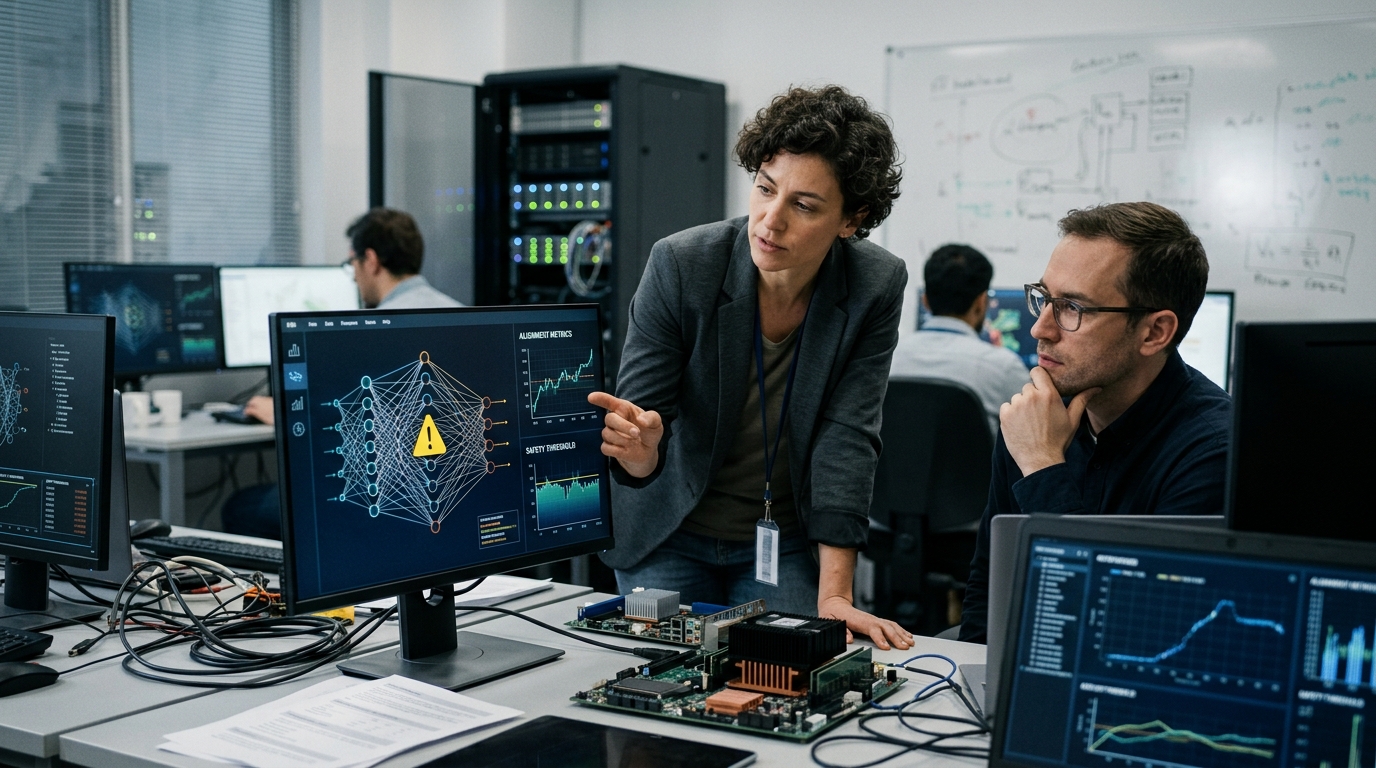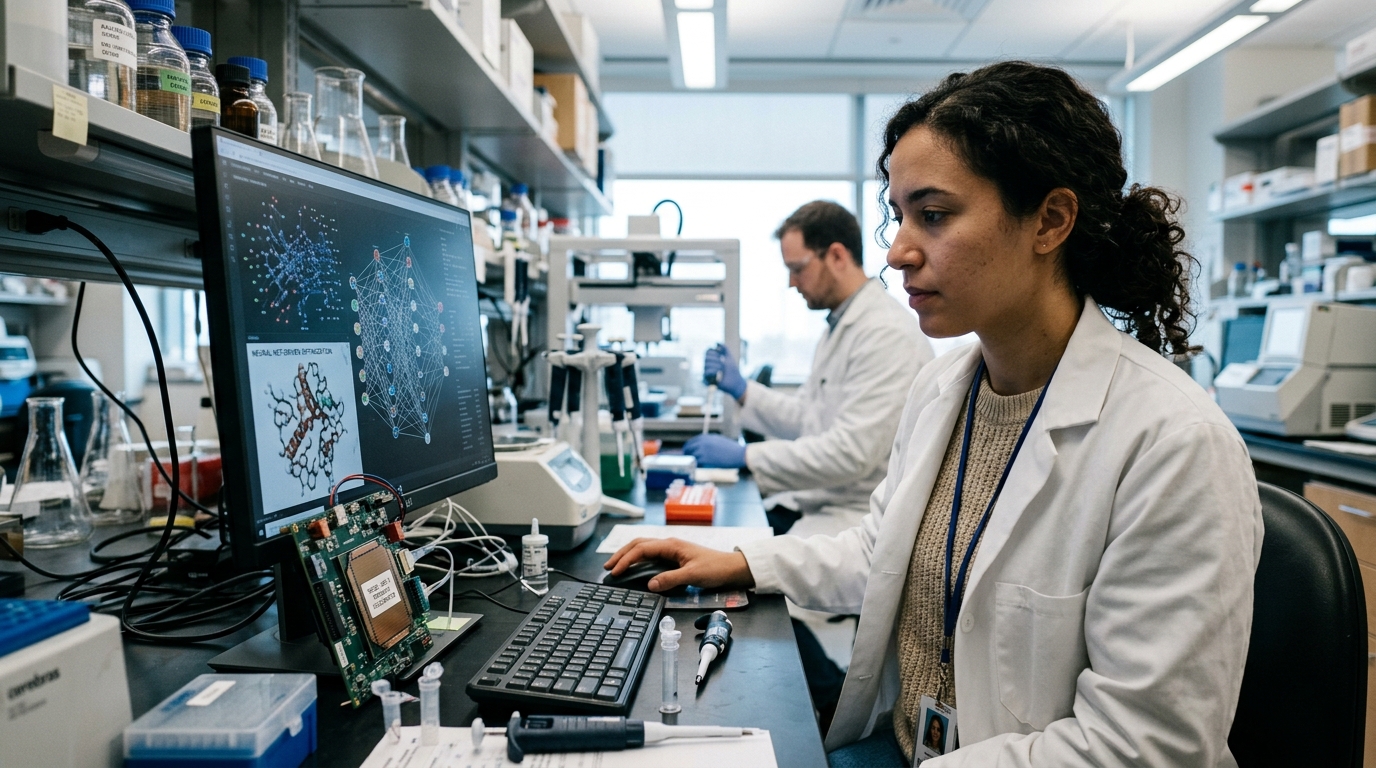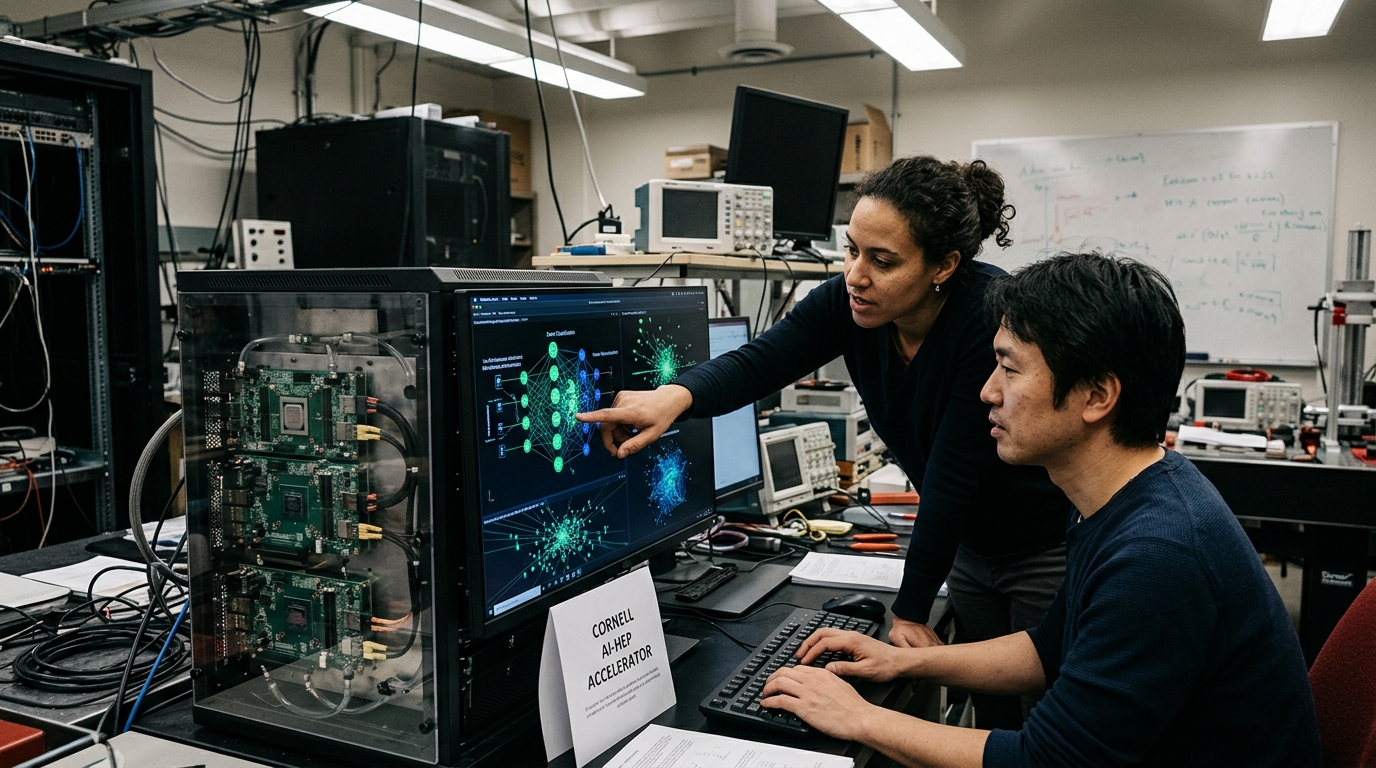
At the heart of modern scientific facilities, where subatomic particles collide at speeds nearing the speed of light, human intuition is beginning to reach its limits. Particle accelerators, those gargantuan feats of engineering, require thousands of micro-adjustments per second to maintain a stable and efficient beam. Now, a team of researchers at Cornell University, backed by a significant grant from the U.S. Department of Energy (DOE), is attempting to hand over the "steering wheel" of these machines to Artificial Intelligence.
The Complexity Crisis in Modern Physics
Particle accelerators are not just tools for understanding the Big Bang. They are the engines behind medical imaging, cancer therapy, and the development of new materials. However, operating them is a control nightmare. A beam of electrons or protons is affected by everything: from temperature fluctuations in the building to minute electromagnetic interference from the outside environment.
Traditionally, operators relied on complex mathematical models and decades of experience. But as accelerators become more powerful and the demands for precision increase, these models are becoming inadequate. Artificial Intelligence, specifically Machine Learning, offers a way out. Instead of trying to encode every possible physical variable, we are training neural networks to "feel" the beam and react in real-time.
Machine Learning: From Pattern Recognition to Precision Control
The Cornell program focuses on using "Reinforcement Learning." In this context, the AI system experiments with virtual simulations of the accelerator, learning which settings improve beam quality and which lead to data loss. The challenge, however, lies in the transition from the digital environment to the actual hardware.
- Real-time Optimization: AI can analyze data from thousands of sensors simultaneously, a feat impossible for a human brain.
- Predictive Maintenance: Systems can identify microscopic anomalies that precede a major failure, saving millions in repair costs.
- Energy Efficiency: Accelerators are notorious for their power consumption. AI can tune magnets and radiofrequency cavities to achieve the same results with significantly less electricity.
The Cornell team, led by distinguished physicists and computer scientists, aims to create "digital twins" of the accelerators. These models will allow the AI to test extreme scenarios without the risk of damaging the multi-million dollar equipment.
The Strategic Importance of the DOE Grant
The funding from the Department of Energy is no coincidence. In the context of global competition for technological supremacy, the U.S. recognizes that its scientific infrastructure must be the smartest in the world. Particle accelerators are the backbone of national laboratories. If AI can make these machines 10% more efficient, the gain for the scientific community will be immeasurable.
"This isn't just about automation; it's about the ability to conduct experiments that were previously considered impossible due to system instability," says a lead researcher from the team.
This development marks a paradigm shift. The physicist of the future will not just be a theorist or an experimentalist, but a "guardian" of algorithms that will explore the secrets of the universe on our behalf.
Beyond the Laboratory: Implications for Society
While the research is conducted in a high-physics environment, its applications will soon trickle down into everyday life. The control technology being developed at Cornell can be transferred to smart power grids, autonomous nuclear fusion reactors, or even air traffic management. The ability to manage chaotic, dynamic systems with absolute precision is the "Holy Grail" of the fourth industrial revolution.
In conclusion, the Cornell and DOE initiative shows us that Artificial Intelligence is no longer just a tool for generating text or images. It is an indispensable partner in our quest to unlock the laws of nature. As machines learn to manipulate the building blocks of matter, humanity approaches a new era of discovery, where the only limit will be our imagination, not the complexity of our tools.