For years, our interaction with Large Language Models (LLMs) has resembled a visit to a modern oracle. We pose a question, and we receive a definitive answer. This linear process, while convenient, is in fact a statistical illusion. A groundbreaking research paper recently uploaded to ArXiv (2604.18724) challenges this status quo, arguing that evaluating models based on single outputs is insufficient and potentially dangerous. The researchers advocate for a radical shift: visualizing and comparing the entire distributions of potential model generations.
The Illusion of the Singular Truth
When a model like GPT-4 or Claude generates text, it isn't selecting the 'correct' answer from a predefined set. Instead, it navigates a vast probability space where each generated token influences the likelihood of the next. What the user sees is merely a single 'sample' from this distribution. The core issue, as highlighted by the research, is that this single sample can be an outlier or fail to represent the model’s true 'belief' or latent structure.
Focusing on a single output hides what researchers call 'latent multimodality.' For instance, when faced with an ethically nuanced question, a model might harbor two strong but opposing tendencies within its distribution. By displaying only one, the system masks its internal conflict, projecting a sense of certainty that doesn't exist. This practice not only limits transparency but also makes detecting biases extremely difficult, as these biases might not manifest in every single sample but could dominate the overall distribution.
Visualization: Mapping the Statistical Chaos
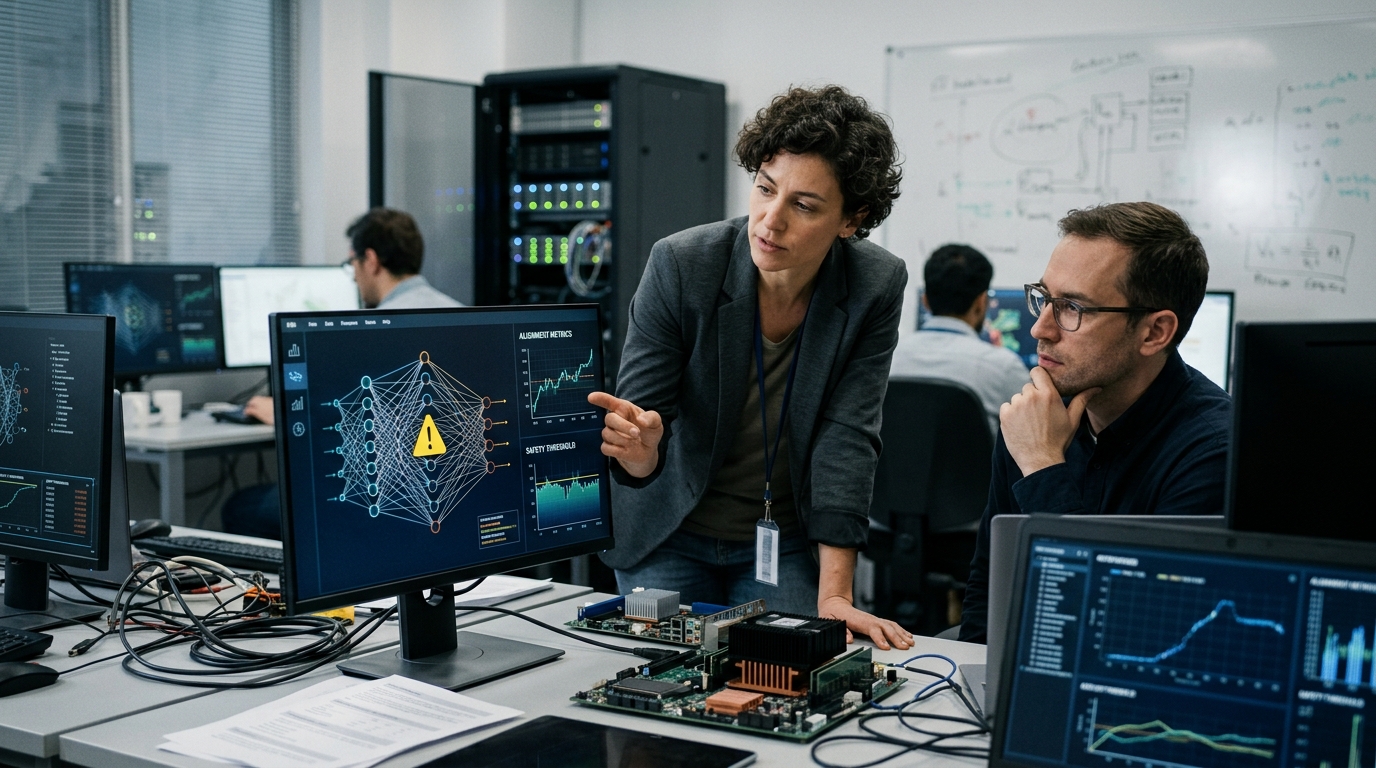
The primary contribution of this work is the development of tools that allow researchers to 'see' these distributions. Instead of raw text, scientists are now employing dimensionality reduction and clustering techniques to map thousands of potential responses onto a two-dimensional or three-dimensional landscape. Each point on this map represents a different variation of the answer.
"Understanding a model through a single output is like trying to understand a country's climate by looking at the weather on a single day," the research team notes.
Through this visualization, the 'modes' (peaks) of the distribution become visible. If we observe a distribution with multiple scattered peaks, we know the model is uncertain or the prompt is ambiguous. Conversely, a tightly clustered distribution suggests high confidence. This information is invaluable for AI Safety, as it enables developers to identify 'dangerous' regions in the probability space that might never have surfaced during standard testing but exist as latent risks.
From Theory to Practice: Why It Matters
The shift toward distributional analysis is not merely an academic exercise; it has immediate implications for how businesses and organizations deploy and trust AI. Consider a medical diagnostic system powered by an LLM. If the system provides a diagnosis, a physician needs to know if that diagnosis was the model's sole reasonable output or if there were ten other alternatives with similar probabilities that the model simply chose not to show.
- Hallucination Detection: Hallucinations often appear as isolated clusters or outliers in a distribution. Visualization helps distinguish grounded knowledge from stochastic noise.
- Model Comparison: We can now compare models not just based on their accuracy scores, but on the 'breadth' of their reasoning. A model with a richer distribution might be more creative, while one with a narrow distribution might be more reliable for standardized tasks.
- Transparency and Accountability: Regulators could eventually require AI companies to prove that their models' distributions do not contain hate speech or dangerous instructions, even if those outputs aren't the most probable ones.
The Future of User Interfaces
This research also foreshadows the end of the traditional 'chat box.' Future interfaces may not offer a single answer but a 'landscape' of options. Users could navigate different perspectives or see exactly where the model feels uncertain. This would transform AI from an opaque authority into a transparent collaborator that presents data and probabilities, allowing humans to maintain the final, critical role in decision-making. The era of 'statistical honesty' in Artificial Intelligence has officially begun.