Head and neck cancer (HNC) represents one of the most intricate and challenging malignancies in the global medical landscape. Due to the proximity of tumors to vital organs, nerves, and major blood vessels, precision in diagnosis and treatment is not merely a goal but a necessity for survival and functional preservation. A recent umbrella review published in the journal Cureus sheds light on the transformative role that Artificial Intelligence (AI) is playing in this complex field.
The Diagnostic Revolution via Medical Imaging
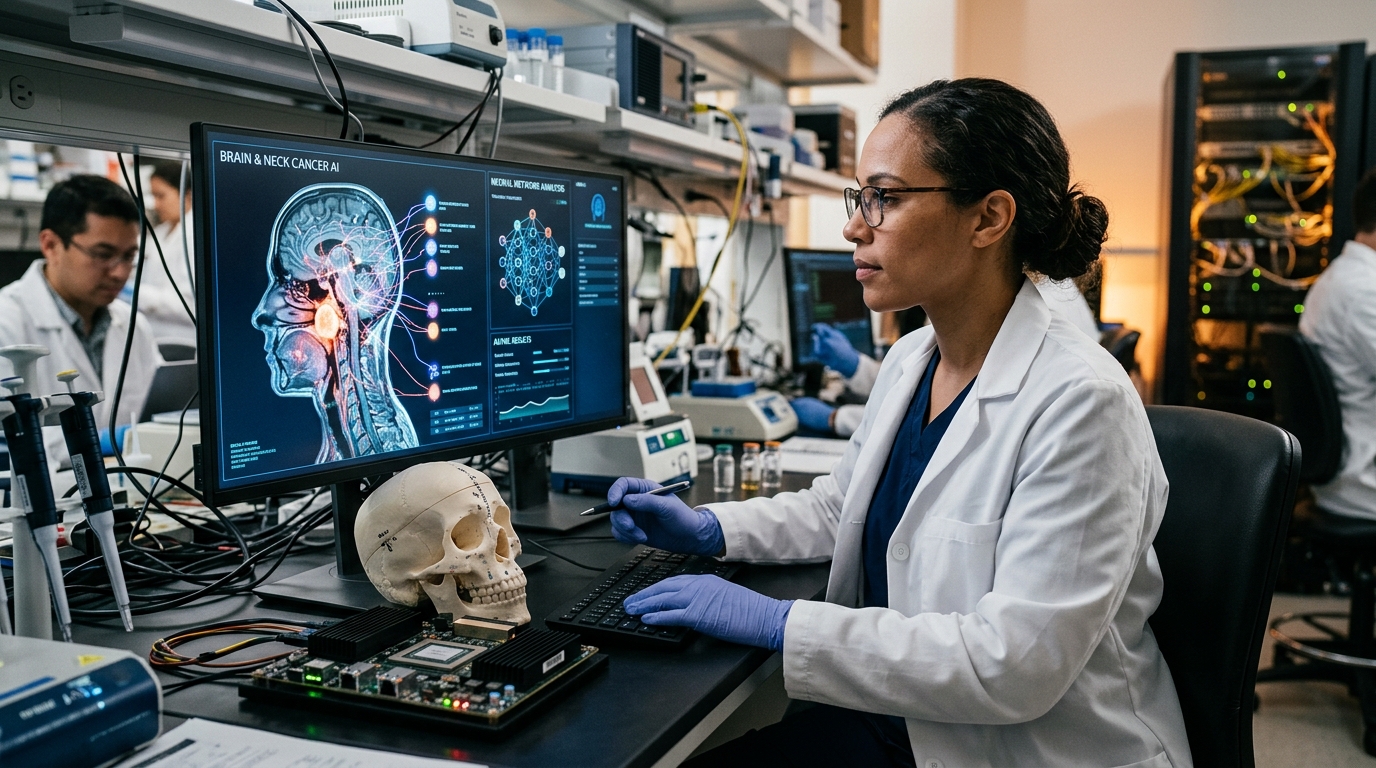
The review emphasizes that AI, particularly deep learning algorithms, has demonstrated remarkable efficacy in the analysis of medical imagery. In HNC, early detection is paramount. AI algorithms are trained on vast datasets of Computed Tomography (CT), Magnetic Resonance Imaging (MRI), and PET scans, achieving accuracy levels that often match or exceed those of seasoned radiologists.
A key focus is the ability of AI to identify microscopic alterations that might be imperceptible to the human eye. This is especially critical for detecting cervical lymph node metastases, a factor that significantly dictates the therapeutic roadmap. The use of Convolutional Neural Networks (CNNs) allows for automated tumor segmentation, providing clinicians with a three-dimensional representation of the disease with mathematical precision, facilitating more targeted interventions.
Prognosis and Survival: The Power of Big Data
Moving beyond diagnosis, AI is emerging as a powerful ally in predicting disease progression. Radiomics—the extraction of high-dimensional data from medical images that are invisible to the naked eye—enables the creation of robust predictive models. According to the Cureus review, these models can successfully forecast the likelihood of recurrence or a patient's response to specific chemotherapeutic agents.
This shift toward personalized medicine means that patients are no longer treated based solely on generalized protocols, but rather according to the unique biological and imaging profile of their tumor. AI can synthesize data from genomics, lifestyle factors, and imaging to provide a holistic prognosis. This assists oncologists in selecting the most effective strategy while avoiding unnecessary toxicity from ineffective treatments.
Robotic Surgery and Radiotherapy Optimization
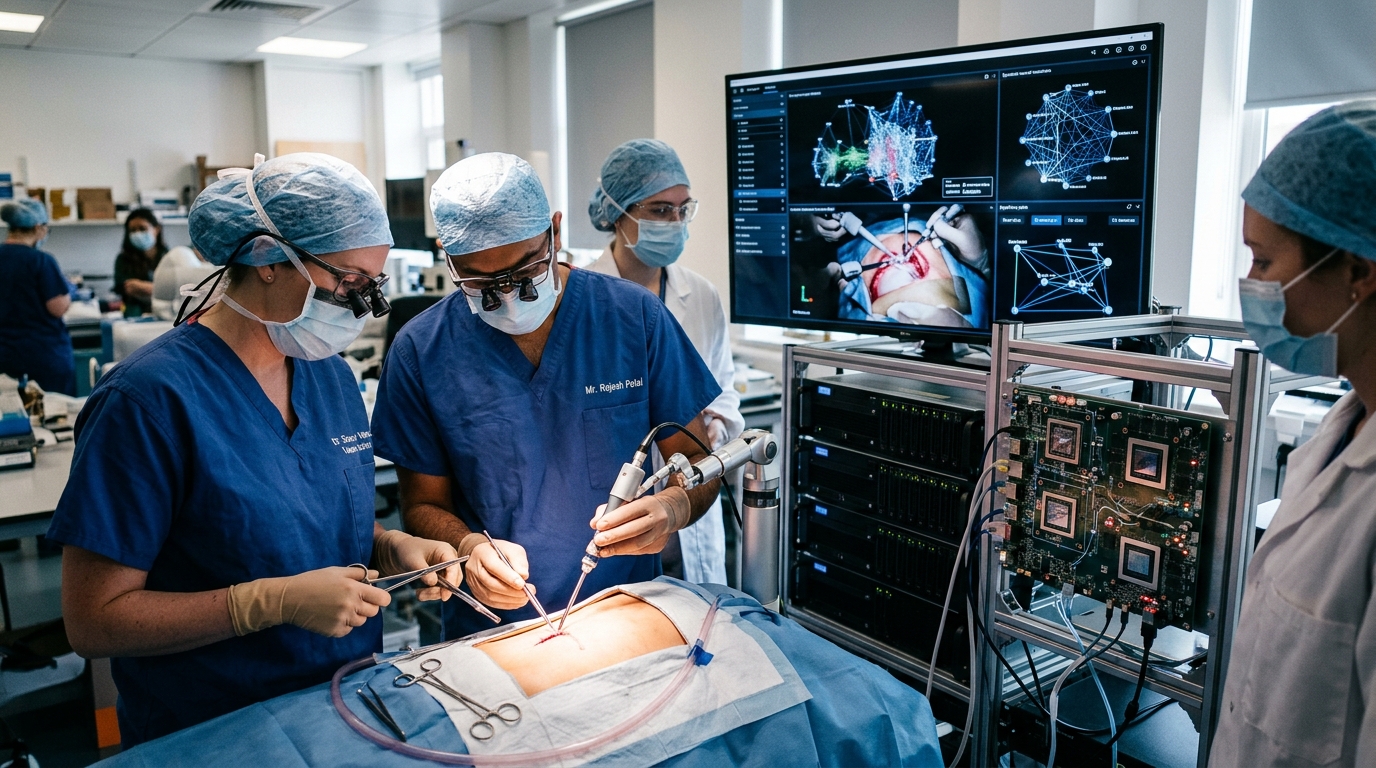
In the operating room, the integration of AI with Transoral Robotic Surgery (TORS) is redefining surgical boundaries. AI provides real-time guidance, helping surgeons maintain clear margins while sparing healthy tissue and critical neurovascular structures. Furthermore, in radiotherapy, dose planning is a labor-intensive process requiring absolute precision. AI can automate "contouring"—the delineation of tumor boundaries and surrounding at-risk organs—reducing preparation time from hours to minutes while ensuring radiation is focused exclusively on the malignancy.
Challenges and the Ethical Imperative
Despite the prevailing optimism, the review does not shy away from significant hurdles. The "black box" phenomenon, where clinicians cannot fully discern the reasoning behind an algorithm's decision, remains a substantial ethical and practical barrier. Moreover, the lack of standardized data across different global healthcare institutions complicates the universal deployment of these systems.
The need for external validation of algorithms across diverse populations is urgent. AI is not intended to replace the oncologist but to serve as an "augmented" assistant. The ultimate responsibility remains with the human practitioner, and the education of the next generation of doctors in utilizing these tools is the next great challenge for healthcare systems worldwide.
Conclusion
The Cureus umbrella review confirms that we are at a pivotal juncture. Artificial Intelligence in head and neck cancer is no longer a futuristic promise but a rapidly evolving clinical reality. With proper regulation, transparency, and ongoing research, this technology can offer patients the most precious gift: more time and a significantly improved quality of life.