Cardiology is on the brink of a historic transformation. According to recent reports and scientific studies published in News-Medical, the integration of Artificial Intelligence (AI) into cardiac care is no longer a futuristic promise but a present reality with impressive results. New computational models are demonstrating an accuracy that often surpasses human capability, especially in detecting subtle patterns in electrocardiograms (ECGs) and imaging tests that the human eye cannot perceive.
The Digital Revolution of Diagnosis
Traditional diagnosis of heart disease has always relied on a combination of clinical experience and the interpretation of laboratory tests. However, AI introduces a new parameter: the ability to analyze vast volumes of data in fractions of a second. Deep learning models are now being trained on millions of historical cases, allowing them to recognize early signs of heart failure, arrhythmias, and valvular diseases long before the first symptoms manifest.
Specifically, the use of AI in interpreting ECGs has shown that it can predict the risk of atrial fibrillation—one of the leading causes of strokes—with an accuracy reaching 90%. This is achieved through the recognition of microscopic changes in the heart's electrical signal that remain invisible even to the most experienced cardiologists. This capability transforms a simple, inexpensive test into a powerful risk prediction tool.
From the Hospital to Daily Life: The Role of Wearables
One of the most significant pillars of this evolution is the diffusion of technology through wearable devices. Smartwatches and health sensors are no longer just gadgets for fitness enthusiasts. Supported by sophisticated AI algorithms, these devices provide continuous monitoring of cardiac function in real-time, creating a safety net for the general population.
- Continuous heart rate monitoring for the detection of silent arrhythmias.
- Analysis of heart rate variability (HRV) as an indicator of myocardial stress and fatigue.
- Automatic notification of medical authorities in case of detecting concerning patterns.
This shift from "reactive" medicine (treatment after the onset of disease) to "preventive" medicine is perhaps AI's greatest contribution to humanity. The ability for a patient to know they are at high risk of a heart attack weeks before it happens allows for life-saving interventions and reduces costs for healthcare systems.
Challenges, Ethics, and the Future
Despite the excitement, the integration of AI in cardiology is not without challenges. The "black box" problem remains central: clinicians often find it difficult to understand how an algorithm reached a specific diagnosis. Furthermore, the quality of training data is critical. If the data contains biases (e.g., underrepresentation of certain ethnicities or genders), the algorithms may produce inaccurate results for those groups.
"Artificial intelligence will not replace the cardiologist, but the cardiologist who uses artificial intelligence will replace the one who does not," leading researchers in the field often remark.
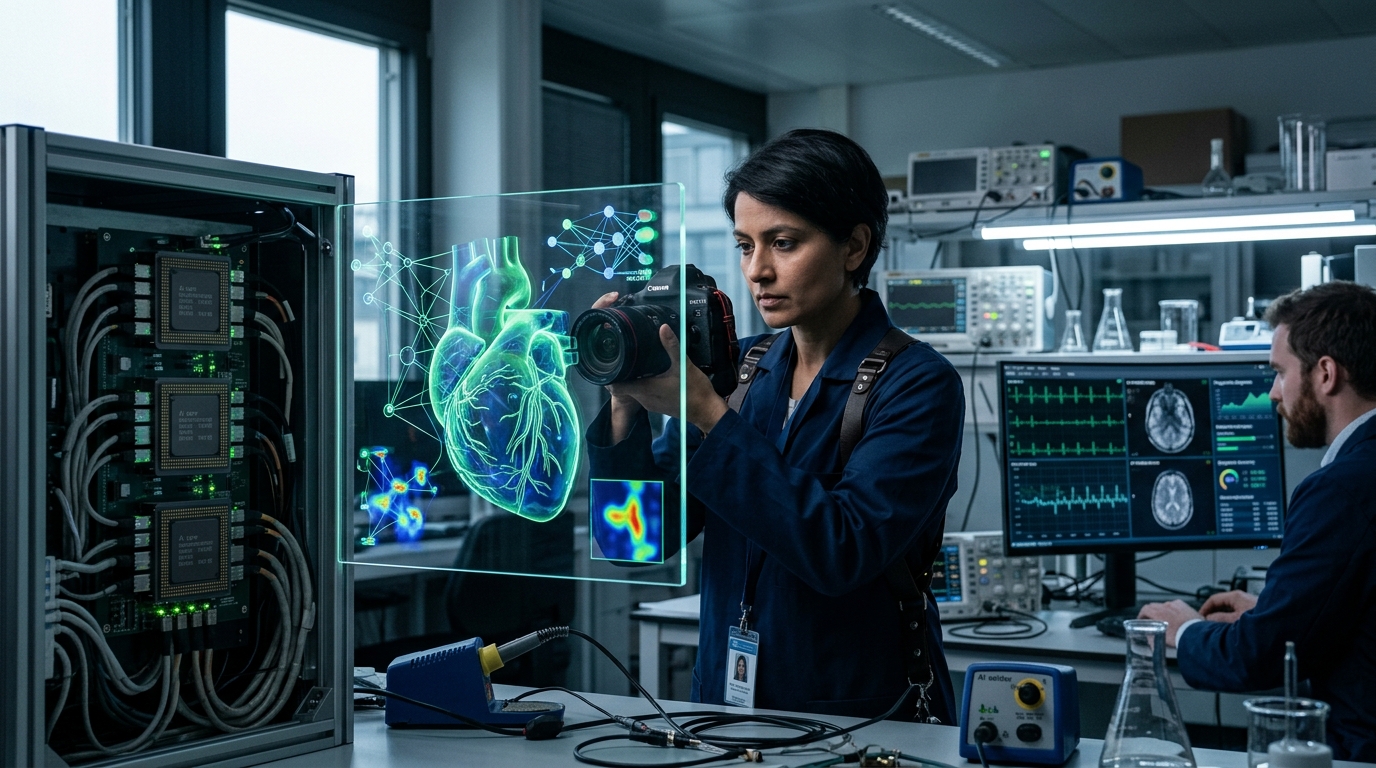
In the future, we expect the development of "digital twins," where a complete digital replica of a patient's heart will be used to test drugs or surgical procedures in simulation before they are applied to the actual person. The accuracy we see today is only the beginning of a journey toward personalized medical care, where every heart will be treated as a unique entity with its own digital footprint.