In a rare moment of self-reflection that resonated across the global tech community, Sam Altman, the architect behind the ChatGPT revolution, publicly admitted that his initial projections regarding which jobs would be first impacted by Artificial Intelligence (AI) were fundamentally flawed. For years, the dominant Silicon Valley narrative suggested that robots would first replace warehouse workers, truck drivers, and manual laborers, leaving the "creatives" and "intellectuals" safely insulated. The reality of 2026, however, proves the exact opposite.
The Collapse of the Prediction Pyramid
Altman’s admission is not merely a personal retreat but a recognition of "Moravec’s Paradox." According to this principle, skills we consider "high-level" (such as programming, legal analysis, or content creation) require far less computational power for an AI than the motor skills of a toddler. "We thought the order would be: manual labor, then cognitive labor, and finally creativity," Altman noted. "As it turns out, the order reversed completely. Creativity and code generation came first, while physical interaction with the world remains the hardest frontier."
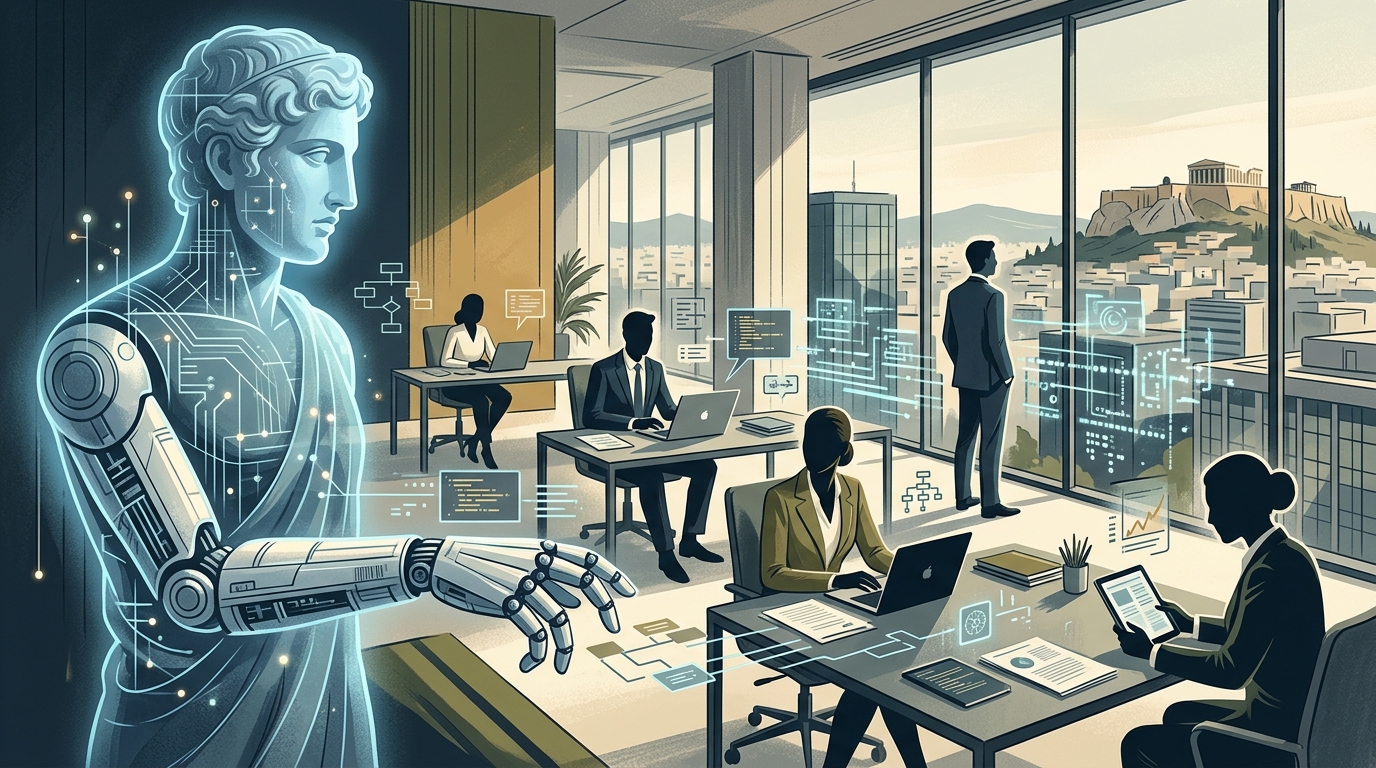
This shift has sent shockwaves through the labor market, particularly in economies where the service sector and intellectual labor form the backbone of the middle class. While robotic arms still struggle to make a hotel bed or pick olives with human precision, algorithms from OpenAI and Google can now draft complex contracts, design architectural blueprints, and write thousands of lines of code in seconds.
The White-Collar Crisis and the Speed of Transition
The concern is no longer just about job loss, but the devaluation of human intellectual labor. In previous industrial shifts, workers had generations to adapt. Today, the transition is happening in a matter of months. This "Great Reversal" forces us to reconsider the value of education and professional expertise.
- Economic Impact: The plummeting cost of content and data production is leading to significant wage compression in specialized fields.
- The Educational Gap: Academic institutions are still training students for roles that AI has already optimized or rendered redundant.
- Strategic Opportunities: Conversely, AI as a "copilot" allows small enterprises to compete with giants by accessing high-level analytical tools previously unaffordable.
Altman maintains that AI will eventually create "new and better" jobs, but the velocity of this displacement is unprecedented. If the Industrial Revolution taught us anything, it is that societies require decades to adjust to such structural changes. We do not have decades this time.
Toward a New Social Contract?
The admission by the OpenAI CEO reignites the debate over Universal Basic Income (UBI) and the taxation of algorithms. If intellectual labor, which has traditionally been the ladder for social mobility, becomes a cheap commodity, then the very fabric of our society must be re-engineered.
"This is no longer just a technological evolution; it is an existential renegotiation of human value in the productive process,"analysts argue.
Ultimately, Altman may have been wrong in his timeline and sequencing, but his candor highlights a harsh truth: AI did not arrive to simply make our jobs easier; it arrived to redefine what "work" means. The challenge for global policy-makers is to ensure that we do not become mere passive consumers of these technologies, but instead fortify our workforce with the uniquely "human" skills that AI—for now—cannot replicate: critical thinking, deep empathy, and complex ethical judgment.