Until a few years ago, the conversation around Artificial Intelligence was largely confined to text and image processing. Today, in mid-2026, "Physical AI" has moved intelligence from screens into the material world. The recent update from the ETF Database highlights a critical turning point: robotics is no longer viewed as an isolated niche, but as a comprehensive ecosystem reshaping global supply chains, manufacturing, and daily labor.
The Era of Humanoids and Mass Production
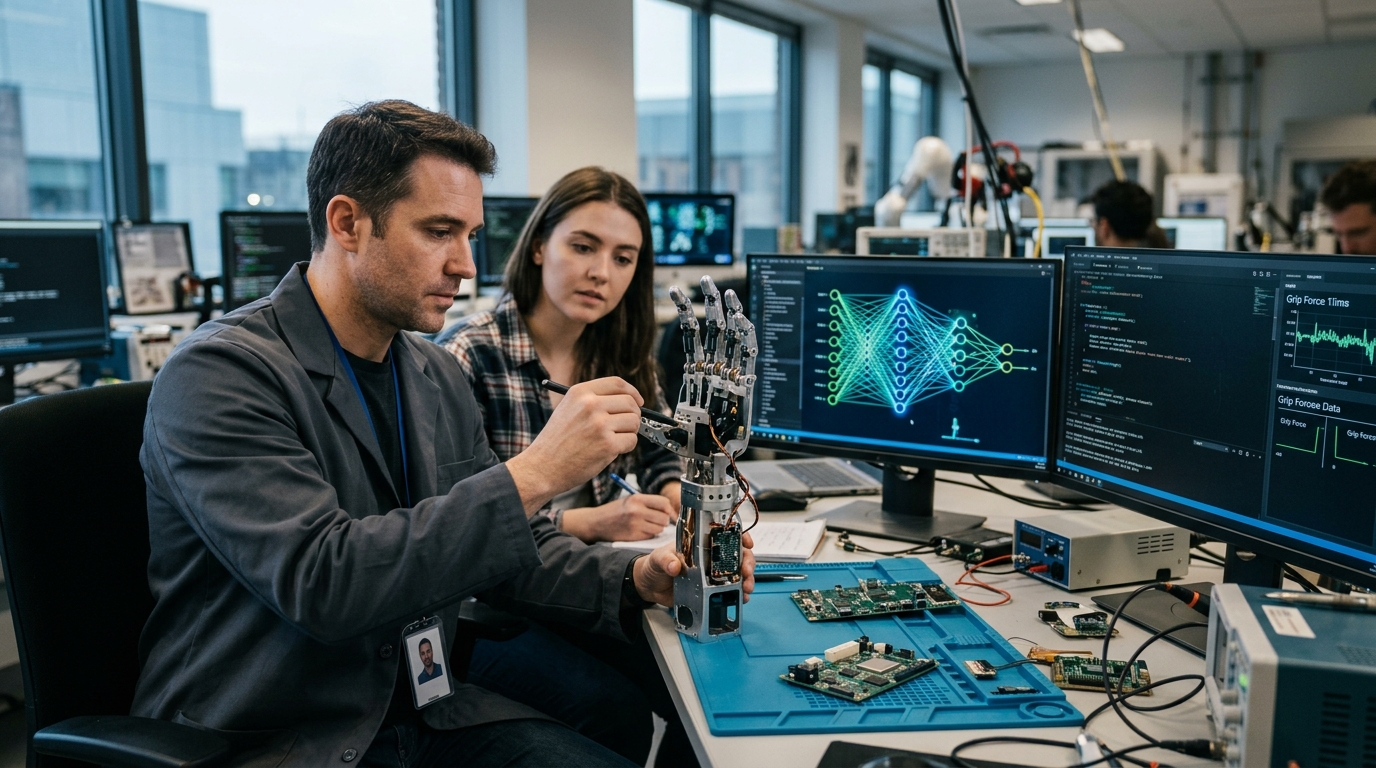
2026 will go down in history as the year humanoid robots transitioned from labs to production lines. Companies like Tesla with Optimus Gen-3, Figure AI, and Boston Dynamics have already deployed fleets of thousands in automotive plants and fulfillment centers. The difference from the past lies in "Robotics Foundation Models." These models allow robots to learn through observation and simulation, rather than being individually programmed for every specific movement.
Production is finally scaling. Prices for a functional humanoid have dropped significantly, approaching the cost of a mid-sized passenger car. This has triggered an explosion in investments in automation-focused ETFs, as businesses rush to fill labor gaps in sectors plagued by aging populations. Robotics is no longer a luxury, but a survival necessity for the economies of the West and East Asia alike.
The Ecosystem Beyond the Metal
The ETF Database report emphasizes that the "Physical AI Ecosystem" encompasses much more than the robot manufacturers themselves. Value is shifting to the providers of critical components: high-precision LiDAR sensors, actuators that mimic muscle movement, and, of course, cutting-edge semiconductors. NVIDIA and Groq dominate the power supply for edge computing, allowing robots to make millisecond-level decisions without relying on the cloud.
- Sensors and Perception: The ability of robots to understand their environment in 3D has improved by 400% over the last two years.
- Energy Autonomy: New solid-state batteries allow for 12-hour continuous operation, making human-free shifts a reality.
- Collaboration Software: Operating systems like ROS 3 (Robot Operating System) allow robots from different manufacturers to communicate and cooperate in the same workspace.
Geopolitical and Economic Chessboard
The rise of physical AI has ignited a new technological cold war. China, through state support, has established "robotics zones" in Shenzhen, aiming to become the global supplier of affordable humanoids. On the other hand, the US and Europe are focusing on high-intelligence software and safety standards. Investors are closely watching developments, as tariffs and chip export restrictions directly impact the performance of related indices.
"You are no longer buying a single robotics company; you are buying the infrastructure of the next industrial revolution," notes an analyst from the ETF Database.
In the Mediterranean and beyond, the adoption of these technologies is starting with the Logistics and Agrotech sectors. The need for automated harvesting and smart warehouse management in major ports is creating a new market for specialized technicians and physical AI programmers.
Conclusions for the Future
2026 marks the point of no return. The physical AI ecosystem is now self-sustaining. As robots begin to build other robots, costs will continue to fall while their intelligence increases exponentially. The challenge for society remains the integration of this "new workforce" in a way that promotes prosperity rather than inequality. Economic analysis shows that countries investing in robotics education today will be the dominant powers of the next decade.