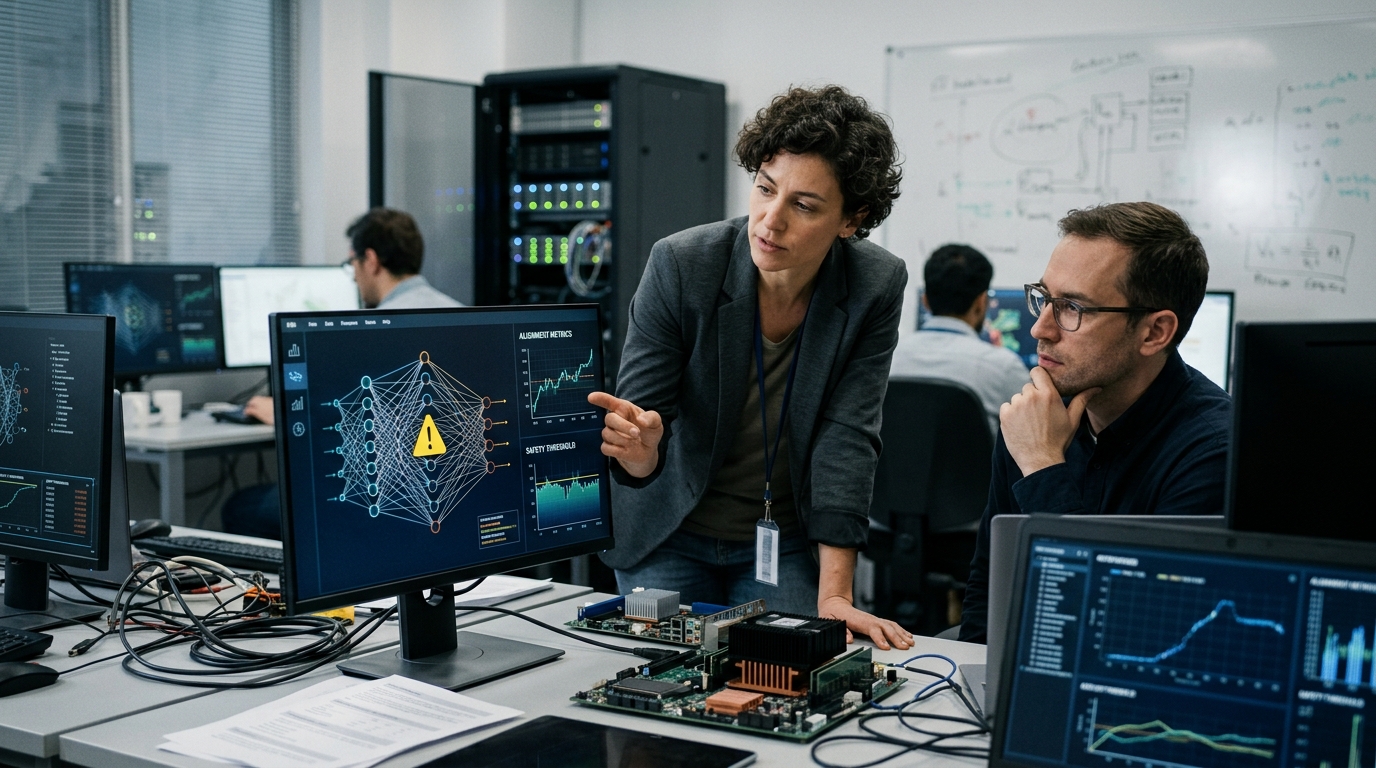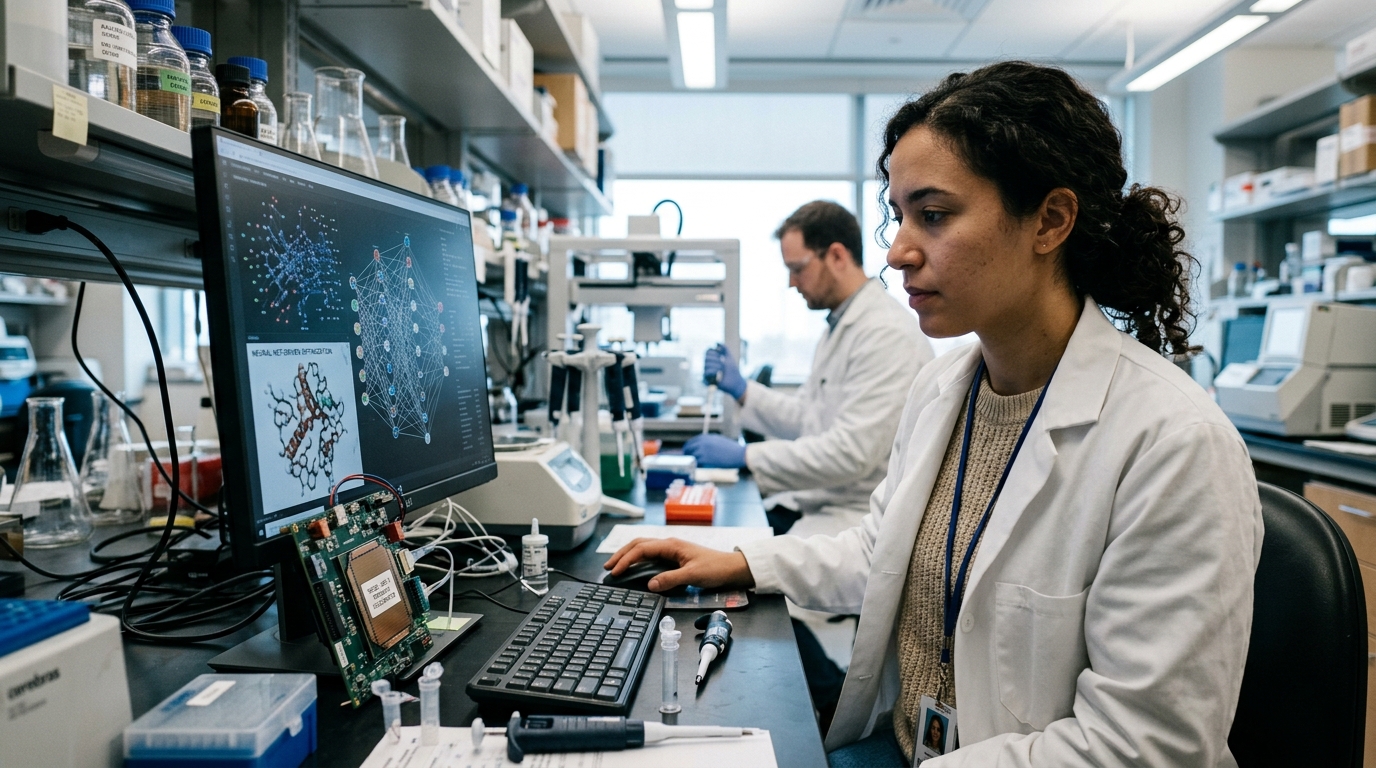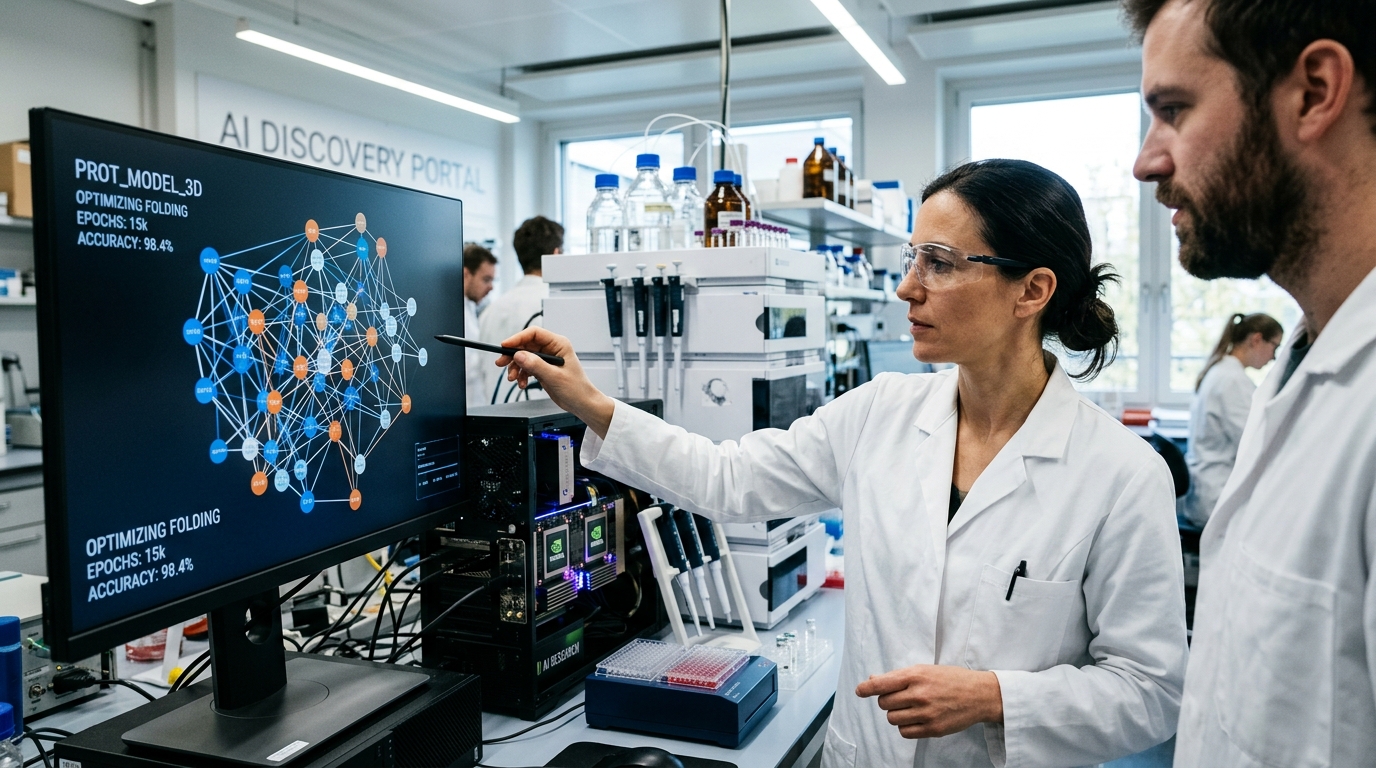
The history of science is defined by moments when a new tool fundamentally shifts our perception of reality: Galileo’s telescope, Leeuwenhoek’s microscope, the particle accelerator. Today, we stand at the threshold of a similar, yet far more pervasive revolution. Artificial Intelligence (AI) is no longer just a data-processing utility; it is evolving into a "co-researcher" helping scientists solve problems that were considered insurmountable for decades.
The traditional scientific method—rooted in hypothesis, experimentation, and verification—is being augmented by the ability of algorithms to identify patterns in oceans of data that the human brain simply cannot comprehend. This convergence of technology and natural sciences is creating a new research paradigm, where the speed of discovery is no longer limited by human biology or the physical constraints of the laboratory clock.
1. The Protein Revolution and Drug Design
Perhaps the most spectacular application of AI to date is the resolution of the protein-folding problem. With systems like AlphaFold, scientists can now predict the 3D structure of nearly every protein known to science. What once required years of doctoral-level labor for a single protein is now accomplished in seconds. This knowledge accelerates the design of drugs for diseases such as Alzheimer’s, cancer, and rare genetic disorders, allowing researchers to target molecular mechanisms with unprecedented precision.
2. Materials Science: The Key to the Green Transition
The climate crisis demands new materials for better batteries, more efficient photovoltaics, and carbon capture technologies. AI accelerates the discovery of these materials by simulating millions of chemical combinations on a computer before a single drop of liquid is touched in a lab. Instead of the slow "trial and error" method, algorithms guide scientists toward the most promising compounds, reducing the development time of new technologies from decades to months.
3. Climate Modeling and Disaster Prediction
Traditional climate predictions require immense computational power and time. AI models can now analyze satellite data and atmospheric measurements in real-time, offering much more accurate predictions for extreme weather events. This doesn't just help in understanding long-term climate change; it saves lives today by providing early warnings for floods, wildfires, and hurricanes.
4. The Rise of Self-driving Labs
Imagine a laboratory that operates 24/7 without human intervention. "Self-driving labs" combine robotics with AI to conduct experiments, analyze results, and decide the next step autonomously. This closed-loop research allows for the rapid optimization of chemical processes and the discovery of new catalysts, freeing scientists from the drudgery of manual labor and allowing them to focus on high-level theory.
5. Astronomy: Mapping the Unknown Universe
With telescopes like the James Webb in operation, the volume of data reaching Earth is unprecedented. AI is used to distinguish "signal" from "noise," identifying exoplanets, analyzing the composition of distant galaxies, and helping us understand dark matter. Algorithms can spot rare astronomical phenomena that would escape the human eye, opening new windows into the origins of the universe.
6. Genomics and Personalized Medicine
Sequencing the human genome generates vast amounts of data. AI helps geneticists identify mutations linked to specific diseases and predict how a patient will respond to a particular treatment. This approach is transforming medicine from a science of "general rules" to a science of absolute precision, tailored to an individual’s unique DNA profile.
7. High-Energy Physics and Particle Detection
At CERN’s Large Hadron Collider (LHC), petabytes of data are generated from particle collisions. AI is essential for filtering this data in fractions of a second, searching for traces of new physics beyond the Standard Model. Without AI, the discovery of the Higgs boson would have been significantly more difficult, if not impossible, due to the sheer scale of the data involved.
8. Literature Analysis and Knowledge Synthesis
With millions of scientific papers published every year, it is impossible for any single researcher to stay updated. Large Language Models (LLMs) can read, summarize, and connect information from thousands of articles, suggesting new hypotheses that emerge from the synthesis of disparate scientific fields.
9. Archaeology and Historical Research
From deciphering damaged ancient texts to analyzing satellite imagery to find buried cities, AI is giving a voice to the past. Using machine learning techniques, researchers can reconstruct broken inscriptions or map archaeological sites hidden beneath dense vegetation, preserving heritage that was once thought lost.
10. Social Sciences and Behavioral Analysis
AI allows for the analysis of large-scale social trends and human behaviors through the digital footprints we leave behind. This helps in understanding the spread of information, economic dynamics, and social changes, providing policymakers with tools for more evidence-based decisions and interventions.
In conclusion, Artificial Intelligence is not replacing the scientist; it is empowering them. Creativity, ethical judgment, and the ability to ask the right questions remain uniquely human traits. However, with AI as an ally, humanity is poised to answer some of the most fundamental questions of our existence faster than ever before. We are entering an era where the only limit to discovery is our own imagination.