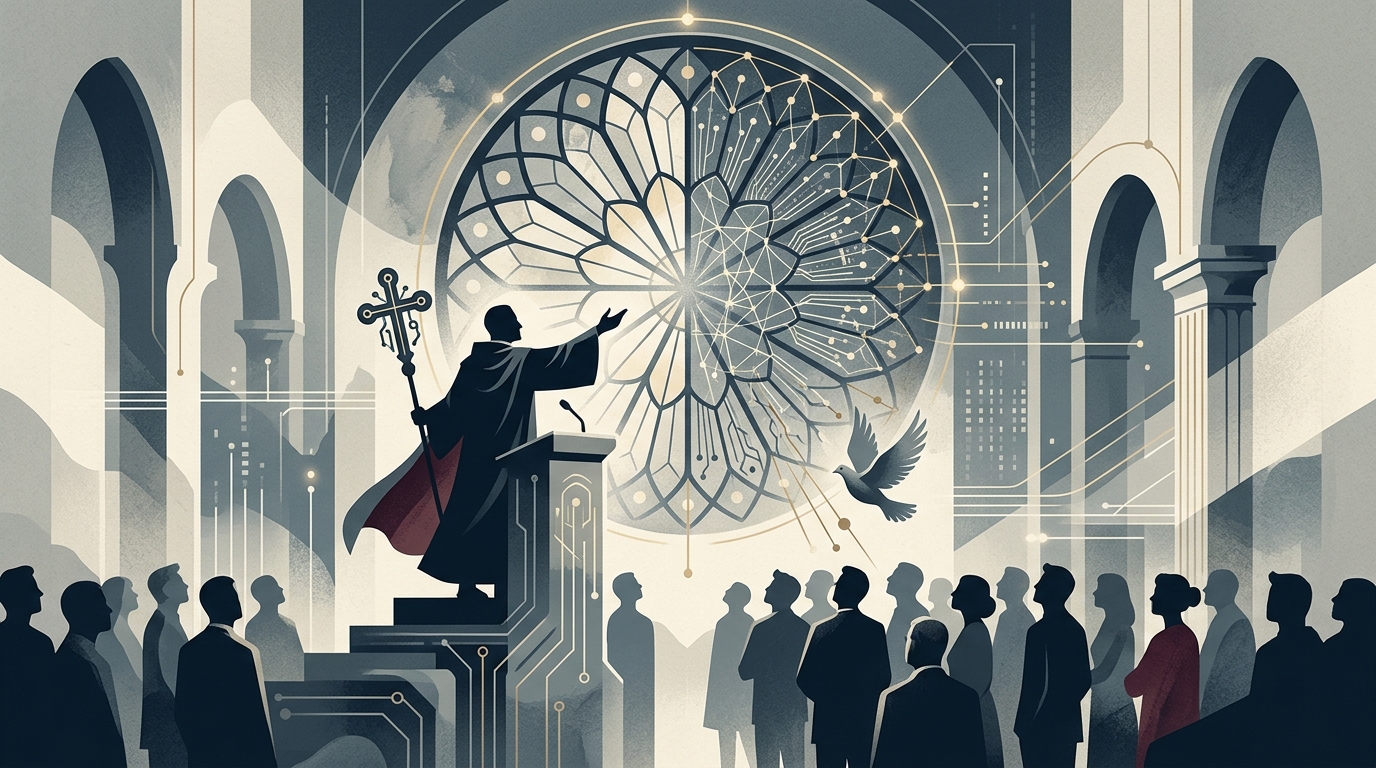
In an era where the digital revolution seems to move at speeds exceeding human comprehension, one of the world's most ancient voices of moral authority, Pope Francis, has emerged as an unexpected protagonist in the debate over Artificial Intelligence (AI). His intervention at the G7 summit in Puglia—marking the first time a Pope has participated in such a forum—was not merely a symbolic gesture, but a profound political and philosophical plea for the protection of human dignity against the dominion of algorithms.
The "Sermon on the Algorithm," as many analysts have dubbed it, focuses on the concept of "Algorethics." This is a term championed by the Vatican, suggesting that ethics cannot be an afterthought but must be embedded into the very design of AI systems. For Francis, AI is a "tool with ambivalent potential": it can democratize knowledge, but it can also impose a new form of technocratic tyranny.
Algorethics as a New Moral Code
The Vatican's core concern lies in the loss of human judgment. The Pope warns that if we allow machines to make decisions about life and death, or even about social welfare and labor, without the "human heart," we risk turning society into a cold, calculative system. "Algorethics" demands that algorithms be governed by the principles of transparency, inclusion, accountability, and impartiality.
According to the Pontiff, technology is never neutral. Every piece of code carries the values and biases of its creators. Therefore, the global governance of AI must not be left solely to market forces or the technocrats of Silicon Valley. It requires a "multilateral commitment" involving religious leaders, philosophers, and civil society.
The Danger of Lethal Autonomous Weapons
One of the sharpest points of the Pope's critique concerns the use of AI in the military sector. Francis has been categorical in his call for a ban on Lethal Autonomous Weapons Systems (LAWS). "No machine should ever choose to take the life of a human being," he stated, emphasizing that removing human responsibility from the battlefield represents a moral regression for our civilization.
This warning carries particular weight in a period of global instability, where the use of drones and algorithmic targeting systems is becoming increasingly prevalent. The Pope sees in AI the risk of an "invisible war," where responsibility is dissipated into lines of code, making the delivery of justice impossible.
The Rome Call and Bridging the Gap with Tech
The Vatican is not limiting itself to mere rhetoric. Through the Pontifical Academy for Life, it promoted the "Rome Call for AI Ethics," a document signed by industry giants such as Microsoft, IBM, and Cisco. This initiative demonstrates that the Church seeks to build bridges with the technological world, recognizing that isolation is not a solution.
However, the Pope remains wary of what he calls the "technocratic paradigm"—the belief that every problem can be solved with more technology. He highlights that AI could exacerbate inequalities between the global North and South, creating a new "digital colonialism" where the data of poor nations is mined for the profit of wealthy corporations.
Conclusion: Humanity at the Center
Pope Francis's stance reminds us that Artificial Intelligence is, above all, an anthropological issue. It is not just about what machines can do, but about who we want to be as human beings. In the 21st century, protecting the "sacredness" of human existence may involve regulating the code itself. His message is clear: technology must serve humanity, and humanity must not be forced to adapt to the profitability requirements of algorithms.