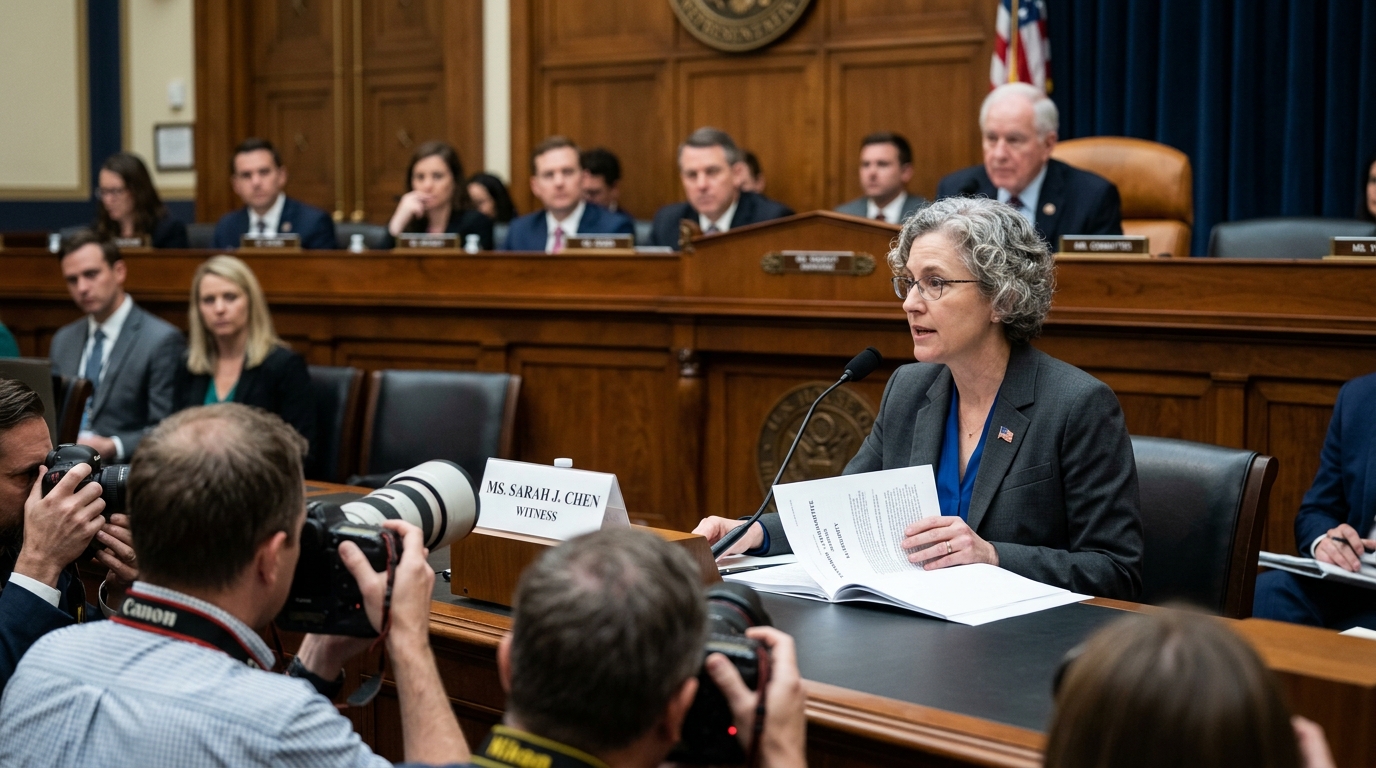
As we navigate through May 2026, Washington is grappling with a paradoxical crisis: while Artificial Intelligence (AI) has become the central pillar of U.S. national security and economic prowess, the administration appears to be faltering in its organizational structure. According to recent reports, the “lack of organization” within the White House regarding AI policymaking has caused significant friction among lobbyists and Silicon Valley executives.
The Labyrinth of Washington Power
The problem is not a lack of interest, but an excessive diffusion of responsibility. Currently, AI policy is fragmented across the Office of Science and Technology Policy (OSTP), the National Security Council (NSC), the Department of Commerce, and the Department of Justice. Without an “AI Czar”—a figure with the absolute mandate to coordinate these entities—tech companies complain they are receiving conflicting messages.
Lobbyists, who traditionally serve as the bridge between industry and the state, are in despair. “There is no single front door to knock on,” says a senior executive at a major software firm. “If you talk to the OSTP, they talk about ethics and safety. If you go to the Commerce Department, it’s all about competing with China. If you go to the NSC, their only concern is cyberattacks. The result is a regulatory quagmire where no one makes the final call.”
Conflicting Priorities and the Regulatory Void
This situation is exacerbated by the pressure from the European Union following the full implementation of the AI Act. While Europe has established clear rules, the U.S. remains reliant on Executive Orders that lack legislative permanence. This “organizational disarray” prevents the creation of a stable framework that would allow American businesses to plan long-term investments.
- Overlapping jurisdictions between NIST and the Department of Commerce.
- Delays in issuing guidelines for generative AI deployment.
- Inability to form a unified national strategy for large-scale model training.
- Intense internal debates over whether priority should be given to 'safety' or 'innovation'.
The criticism isn't just coming from the industry; civil society is also vocal. Digital rights organizations point out that the lack of central oversight allows companies to engage in “forum shopping”—targeting the most sympathetic branch of the administration to advance their interests, thereby undermining consumer protection.
The Geopolitical Risk
Beyond the domestic front, the lack of organization has serious geopolitical implications. China, with its strictly hierarchical and centralized approach, is moving rapidly to standardize AI. U.S. diplomats often find themselves at international forums without clear directives from the White House, resulting in the U.S. missing opportunities to shape the global rules of the game.
“Innovation requires freedom, but scale requires order. Right now in Washington, we have the former, but we are desperately lacking the latter,” states an analyst from the Brookings Institution.
In conclusion, the frustration of lobbyists is not merely a complaint about access to power. It is a reflection of a deeper structural weakness in the American bureaucracy to keep pace with the speed of technological evolution. If the White House fails to get its “internal house in order” within 2026, the cost to American AI hegemony may be irreversible.