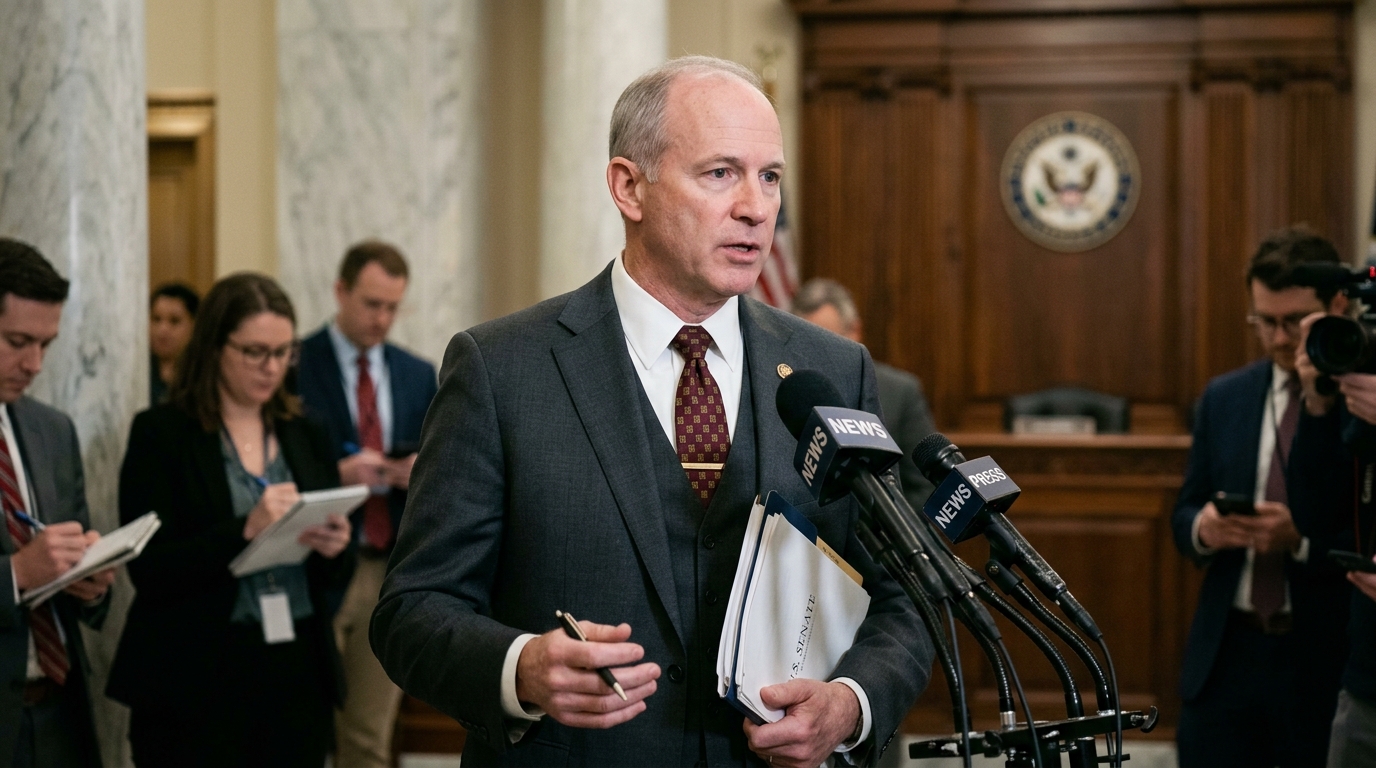
Washington has launched one of its most significant strikes in the ongoing digital financial war, announcing the freezing of $344 million in cryptocurrency. According to US Treasury Secretary Scott Bessent, these funds are directly linked to Iran, forming part of a broader network used by Tehran to circumvent international sanctions and fund its activities across the Middle East.
Technology at the Service of Law Enforcement
This move is not merely a political decision but a technological milestone. The use of sophisticated blockchain analysis tools allowed US authorities to trace labyrinthine digital currency paths starting from Iranian entities and ending at international exchanges. Despite cryptocurrency's original promise of anonymity, the transparency of the public ledger is proving to be the "Achilles' heel" for those seeking to hide illicit money flows.
According to Treasury sources, the operation relied on close cooperation with private cybersecurity firms and selected crypto exchanges that comply with US protocols. Washington's ability to intervene in digital wallets previously thought to be "untouchable" sends a resounding message throughout the digital asset ecosystem.
Iran and the Strategy of Circumvention
For Tehran, cryptocurrencies were never just a theoretical tool for financial freedom; they were a survival necessity. With the traditional SWIFT banking system remaining closed to most Iranian banks, the regime turned to Bitcoin mining and the use of stablecoins to pay for imports and fund allied organizations. The loss of $344 million is a heavy blow to this effort, especially at a time when the Iranian economy is under pressure from high inflation and social unrest.
The US maintains that these funds were intended to finance the Revolutionary Guard's Quds Force. "We will not allow the digital space to become a haven for terrorism and sanctions evasion," Bessent stated, emphasizing that Washington will continue to use every available tool to economically isolate Tehran.
Geopolitical Implications and the Future of Crypto
This action highlights a new reality: cryptocurrencies have become one of the primary fronts on the global geopolitical chessboard. It is no longer an internal matter for investors but a question of national security. The US's ability to impose its jurisdiction on global crypto networks challenges the concept of decentralization that lies at the core of blockchain technology.
- Regulatory Tightening: Exchanges are expected to face even greater pressure to implement strict KYC (Know Your Customer) and AML (Anti-Money Laundering) rules.
- Digital Protectionism: Other nations, such as Russia and China, may accelerate the development of their own Central Bank Digital Currencies (CBDCs) to evade US oversight.
- Technological Rivalry: The battle between privacy tools (privacy coins) and surveillance tools will intensify.
"The era when cryptocurrencies were considered the 'Wild West' of the financial system is ending. Today, blockchain is the new battlefield of diplomacy," says an international relations analyst.
In conclusion, the freezing of $344 million is a reminder that technology does not operate in a vacuum. As digital assets become part of the global economy, they will increasingly be subject to the rules of traditional power. For Iran, the loss is financial. For the rest of the world, it is a lesson in the limits of digital autonomy in a dollar-dominated world.