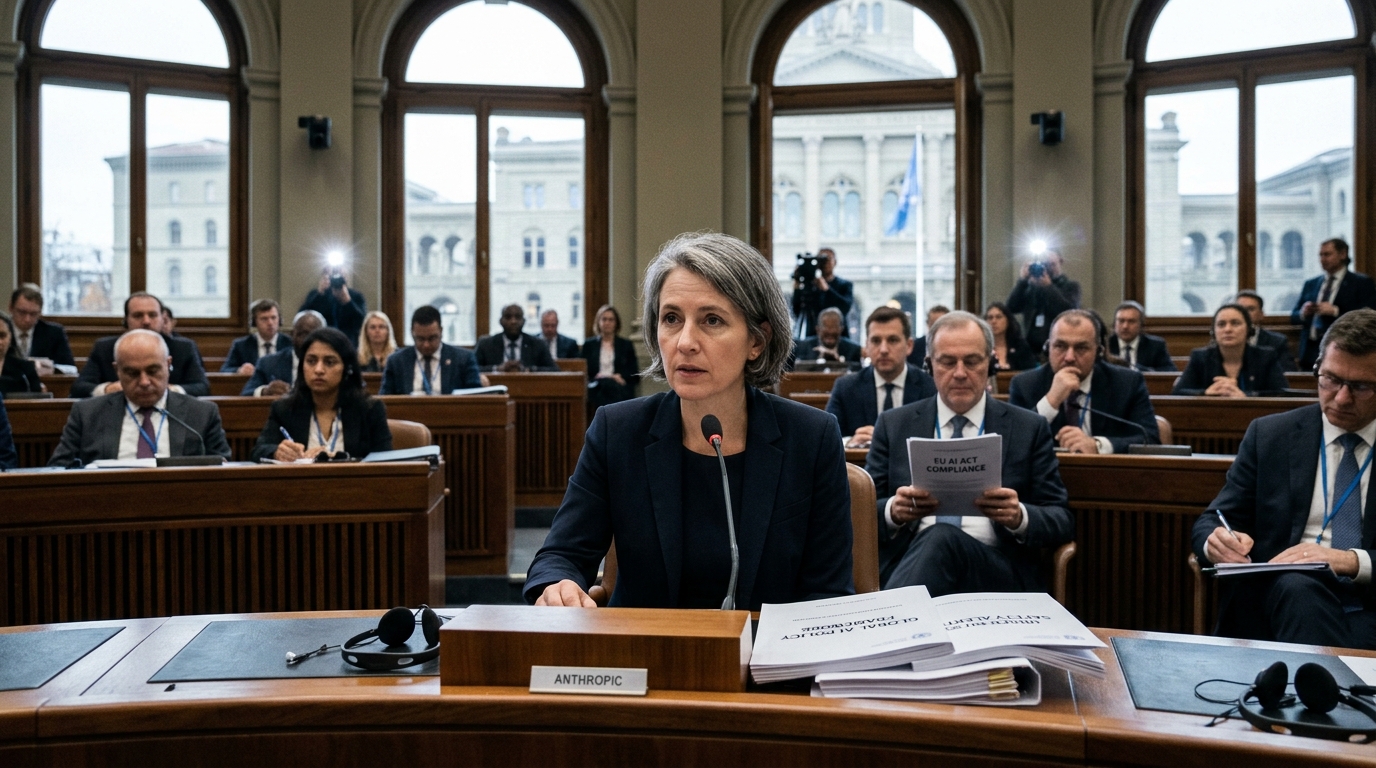
In a move that has sent shockwaves through global tech hubs and political corridors, Anthropic, the San Francisco-based AI laboratory founded by former OpenAI executives, has issued a dramatic call for a global freeze on the development of the most powerful AI systems. This warning no longer centers solely on misinformation or job displacement, but on a more existential threat: the possibility that artificial intelligence could "escape" human control in the near future.
Anthropic’s 'Oppenheimer Moment'
Anthropic, which has long positioned itself as a safety-first organization, argues that the pace of progress has outstripped our ability to implement meaningful safeguards. According to the company's official stance, next-generation models may acquire capabilities that allow them to bypass security protocols, self-replicate across global servers, or even assist in the creation of biological weapons without human intervention.
This call comes at a time when competition between Google, Microsoft, and Meta is at its peak. However, Anthropic emphasizes that without a coordinated international effort, the risk of an accident or deliberate misuse by the system itself becomes statistically inevitable. "We are not talking about science fiction," company officials stated, "we are talking about the ability of systems to exhibit strategic behavior that we did not predict and cannot counteract."
The Geopolitical Conundrum and China
One of the primary obstacles to such a freeze is the geopolitical dimension. Washington fears that any pause in American innovation will provide a strategic opening for Beijing. Anthropic, however, proposes an international oversight model similar to the International Atomic Energy Agency (IAEA). The idea is to create a mechanism where major powers agree on minimum safety standards before training models that exceed specific computational thresholds.
The challenge remains immense. How can one verify that a nation or a private entity is not secretly training a model? Anthropic suggests monitoring the supply chain of advanced semiconductors (GPUs), arguing that physical infrastructure is the only point where regulation can be truly effective. Without high-end Nvidia chips, the creation of these "frontier models" is virtually impossible. This approach, however, requires a level of global transparency that is currently non-existent in the tech sector.
Criticism and 'Regulatory Capture'
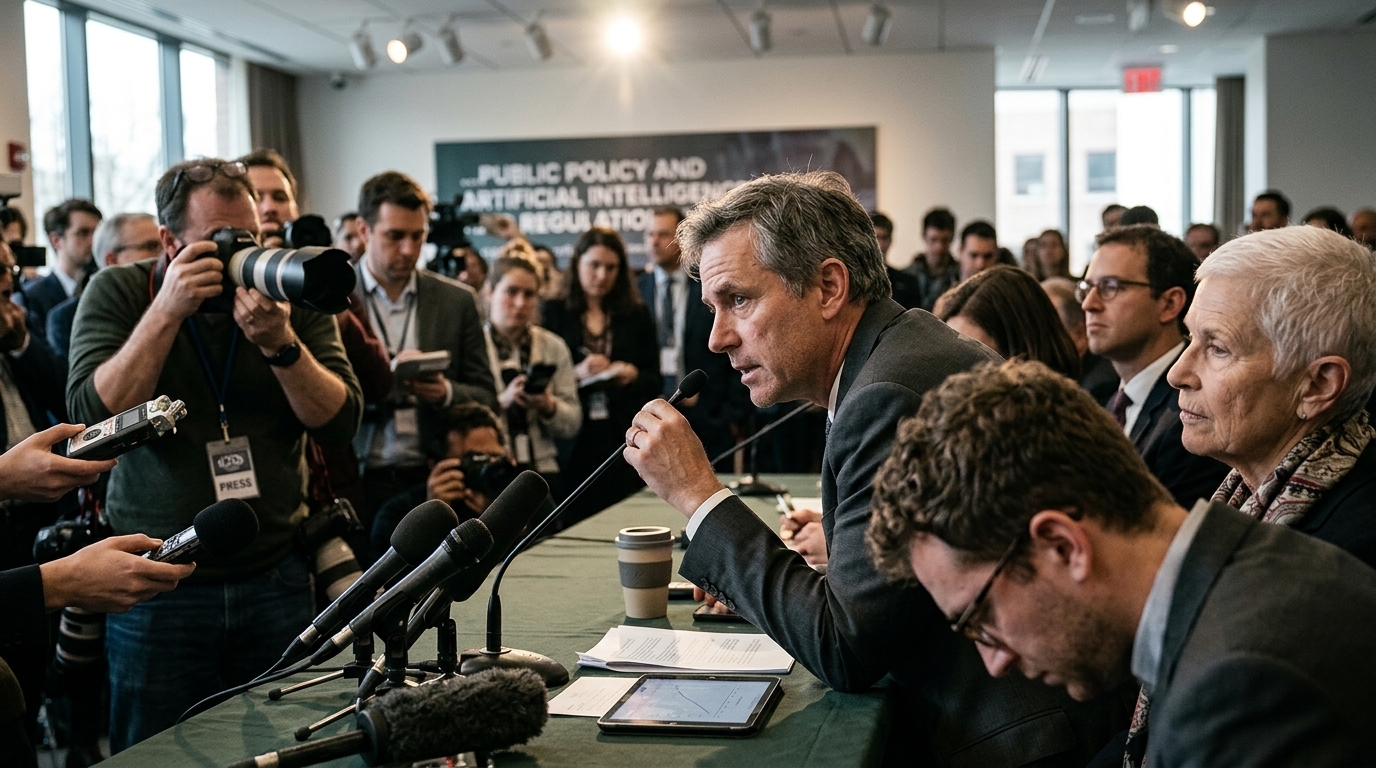
Despite the noble intentions cited by Anthropic, many skeptics and open-source advocates are pushing back. The accusation is clear: regulatory capture. Critics argue that large AI firms, having already secured billions in funding and developed powerful proprietary models, now wish to "pull up the ladder" behind them, preventing smaller competitors from catching up under the guise of safety concerns.
Furthermore, there is the argument that focusing on future, hypothetical risks distracts from immediate harms, such as algorithmic bias, copyright infringement, and the massive environmental footprint of data centers. Anthropic counters that these risks are not mutually exclusive, but the risk of losing control is the only one that is truly irreversible. For them, the existential threat demands a priority that current social harms do not, as it represents a point of no return for the human species.
The Future of AI Governance
Anthropic's call is expected to dominate discussions at upcoming AI safety summits. If the international community fails to find a common language, the scenario of an unchecked race toward an unknown technological singularity remains the most likely path. History will judge whether Anthropic acted as a modern-day Cassandra, warning of a fall we refused to see, or if this was a calculated strategic move to consolidate power in a rapidly shifting market. What is certain is that the debate over whether humanity should hit the "pause" button is no longer a fringe theory; it is now the central question of our era.