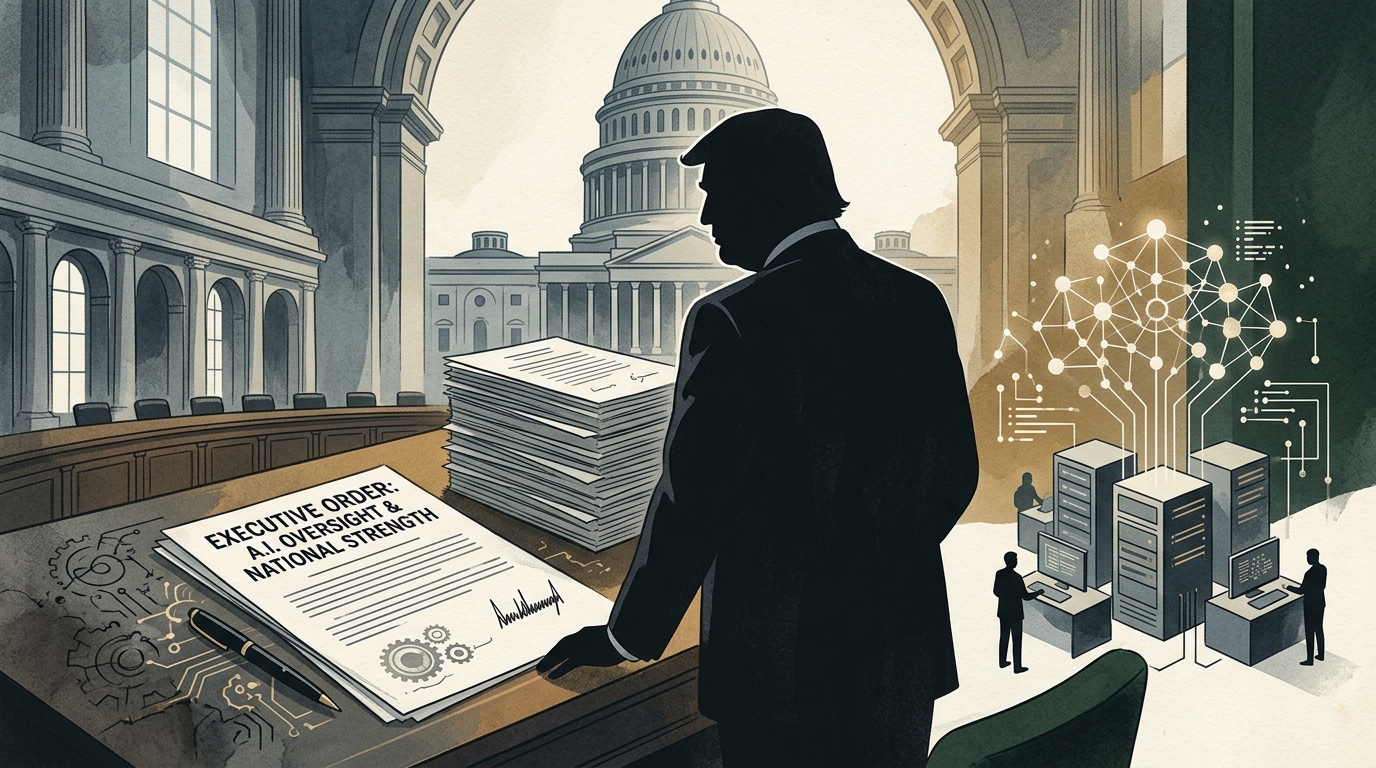
In a move that signals a total reversal of Washington's approach to emerging technology, President Trump signed a new executive order today that redefines the oversight of Artificial Intelligence (AI) models. This action, which stands in direct contrast to the policies of the previous Biden administration, aims to accelerate AI development by slashing regulatory hurdles while establishing a rigid "national security" framework focused on geopolitical competition.
The signing ceremony in the Oval Office was more than just a bureaucratic procedure; it was a statement of intent. The President described AI as the "new battlefield" for American dominance, emphasizing that excessive regulation is a "gift to our adversaries." The order mandates federal agencies to review and repeal rules deemed to hinder innovation, while simultaneously creating a new AI Oversight Council under the direct control of the White House.
The Shift from 'Safety' to 'Strength'
The central argument of the new administration is that the previous emphasis on "AI Safety" and "bias risks" acted as a drag on American companies. The new order replaces these terms with the concept of "Technological Supremacy." According to White House sources, oversight will no longer focus on monitoring content for "political correctness" but rather on ensuring these models do not leak to foreign powers and are optimized for military and economic utility.
Particular emphasis is placed on "ideological neutrality." The order includes provisions prohibiting federal agencies from imposing standards that could lead to "censorship" or "programmed bias" in AI models. This represents a clear victory for conservative critics who argued that existing models, such as ChatGPT or Gemini, were infused with liberal values.
Energy and Infrastructure: A 'Manhattan Project' for AI
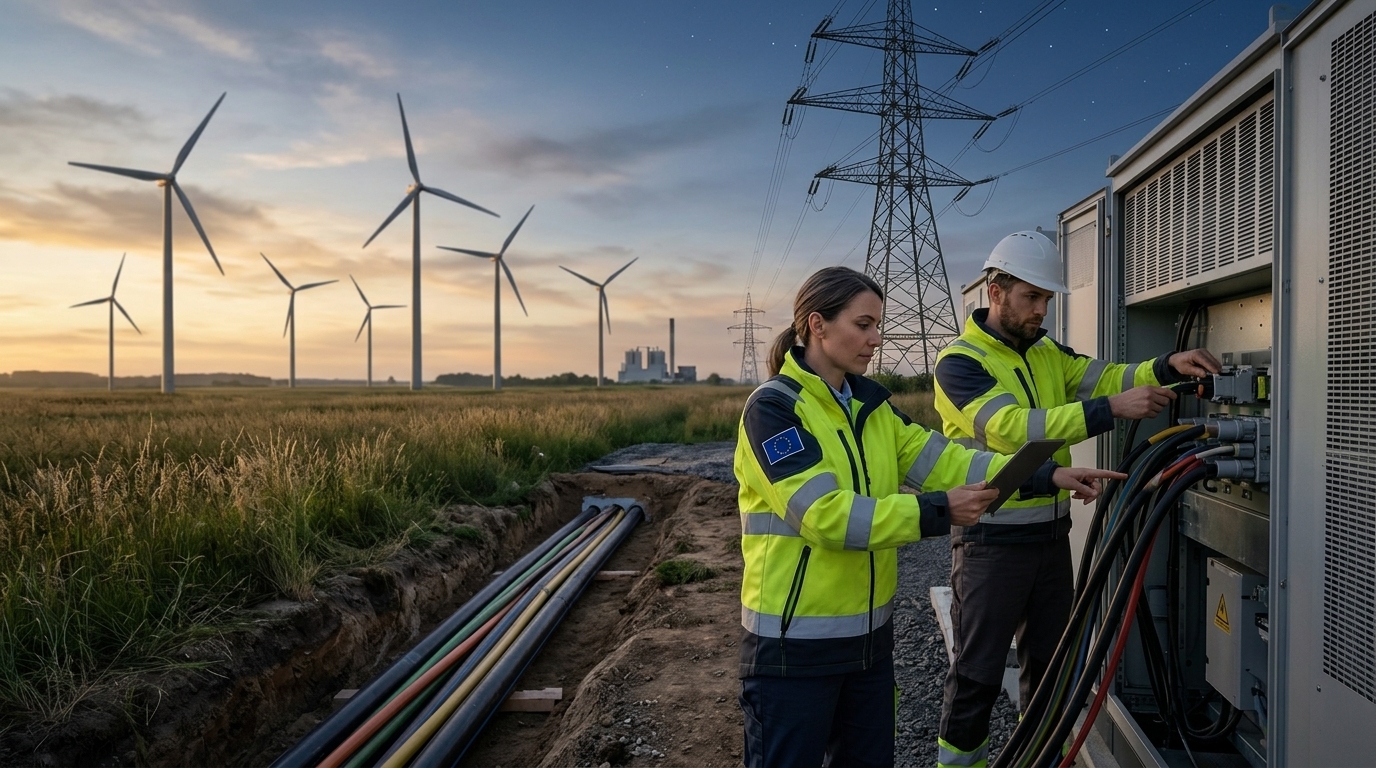
One of the most ambitious segments of the order concerns energy supply. The development of large language models requires massive amounts of electricity, a fact that has caused concern among tech firms. Trump pledged an "energy liberation," prioritizing the construction of small modular nuclear reactors (SMRs) and the expansion of natural gas infrastructure specifically to support data centers.
- Acceleration of permits for new data centers.
- Incentives for building energy infrastructure adjacent to tech parks.
- Reduction of environmental restrictions for projects deemed "vital for AI national security."
This approach has sparked mixed reactions. While Silicon Valley welcomes the prospect of cheaper energy and less red tape, environmental organizations warn of an "ecological catastrophe" in the name of the technological race.
Reactions and Geopolitical Implications
The international community is watching with bated breath. In Brussels, EU officials express concerns that the U.S. move could undermine global efforts to regulate AI, such as the AI Act. There is a fear of a "race to the bottom," where safety standards are sacrificed at the altar of speed.
"We cannot afford the luxury of excessive caution when China is moving at the speed of light," said a senior government technology advisor. "Our oversight will be strategic, not punitive."
Domestically, Big Tech remains divided. On one hand, deregulation promises higher profits and faster product deployment. On the other, the creation of a new oversight body under direct White House control raises questions about the political weaponization of technology. The oversight Trump promises may not be the bureaucracy they feared, but it could be a different form of control—more direct and more politicized.
Conclusion
The executive order of June 3, 2026, will go down in history as the moment AI ceased to be treated as a scientific wonder and officially became a tool of state power. The shift from ethics to power is now a reality, and the consequences of this change will define the global economy and society for decades to come. America is betting everything on speed, hoping that the power of its models will be enough to bridge the gaps left by the lack of precautionary regulation.