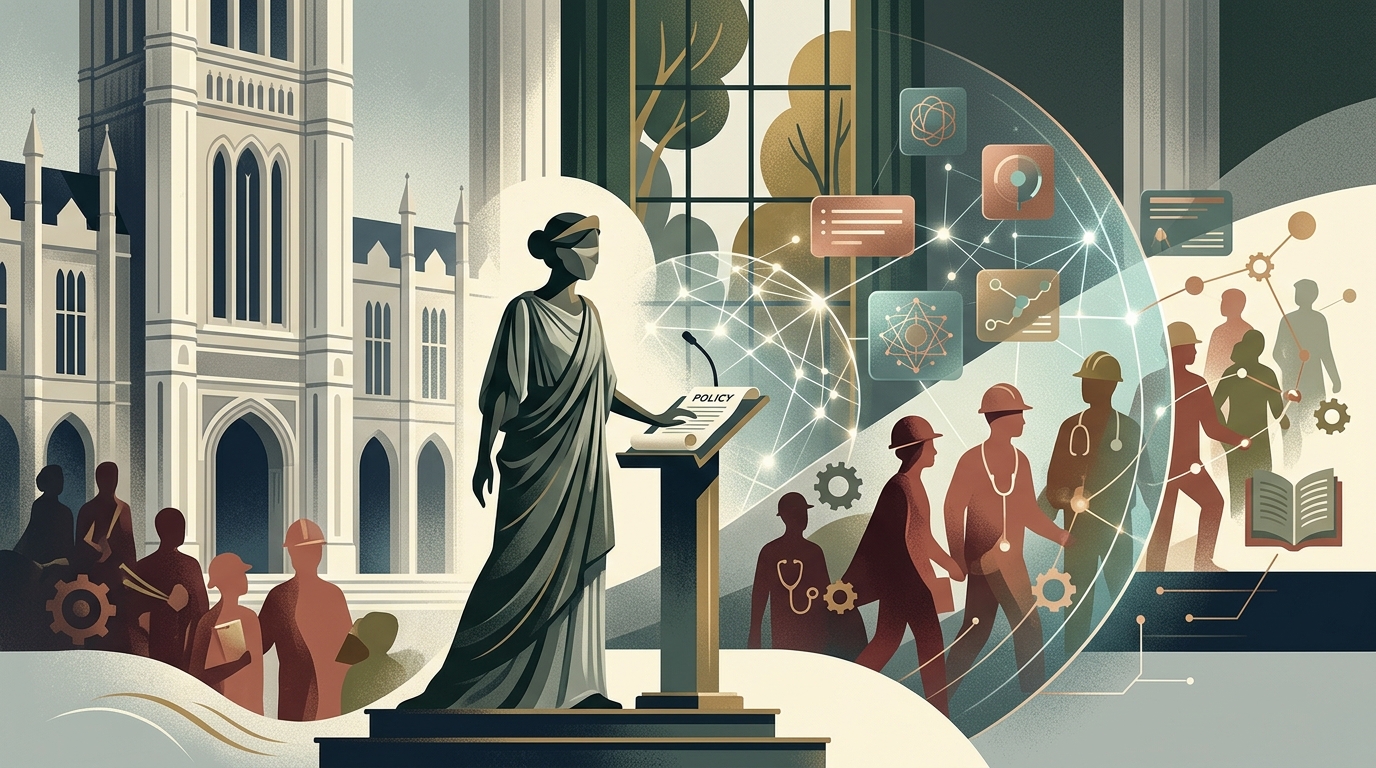
The educational community in Torrington, Connecticut, finds itself at a pivotal crossroads as the local Board of Education works diligently to draft a comprehensive policy regarding Artificial Intelligence (AI). This move is not merely a reaction to the emergence of tools like ChatGPT, but a proactive effort to redefine learning in the digital age. As we navigate through 2026, the conversation has shifted from blanket bans to controlled, ethical integration.
The Necessity of a Clear Framework
For decades, education relied on the static transfer of knowledge. The advent of Generative AI disrupted this model within months. In Torrington, policymakers recognize that students graduating today will enter a workforce where the ability to collaborate with AI will be as fundamental as reading and writing. However, the challenge remains: how do you foster innovation without sacrificing critical thinking?
The policy under development aims to address three core pillars: academic integrity, data privacy, and equitable access. Educators within the district express concern over the difficulty of distinguishing between a student's authentic work and machine-generated text. The proposed solution is not surveillance, but rather evolving the nature of assignments to require personal analysis and reflection—elements that AI cannot easily replicate.
Ethical Challenges and Data Protection
One of the more nuanced aspects of using AI in schools is the management of minor students' data. Every time a student interacts with a chatbot, they feed the system information. The Torrington school district is examining rigorous protocols to ensure that tech companies do not exploit student data for commercial purposes. This includes approving only specific, vetted tools that comply with federal privacy laws.
- Creation of a "white list" of approved AI applications.
- Continuous professional development for teachers in new technologies.
- Parental education regarding risks and opportunities.
- Integration of digital literacy lessons into the core curriculum.
The Future of Pedagogy
Introducing AI into the classroom does not mean replacing the teacher; it means empowering them. In Torrington, officials envision AI as a "teaching assistant" capable of providing personalized support to students with varying learning paces. For instance, a student struggling with mathematics could have an AI tutor explain concepts in multiple ways until they are fully understood, allowing the human teacher to focus on more complex pedagogical needs.
"We cannot close our eyes to reality. AI is here, and our duty is to prepare our students to use it wisely and ethically," committee members noted during recent sessions.
In conclusion, Torrington's initiative serves as a microcosm of the global effort to domesticate the technological revolution. The success of this policy will be judged not by the sophistication of the tools deployed, but by whether it manages to preserve the human-centric nature of education in a world increasingly dominated by algorithms.