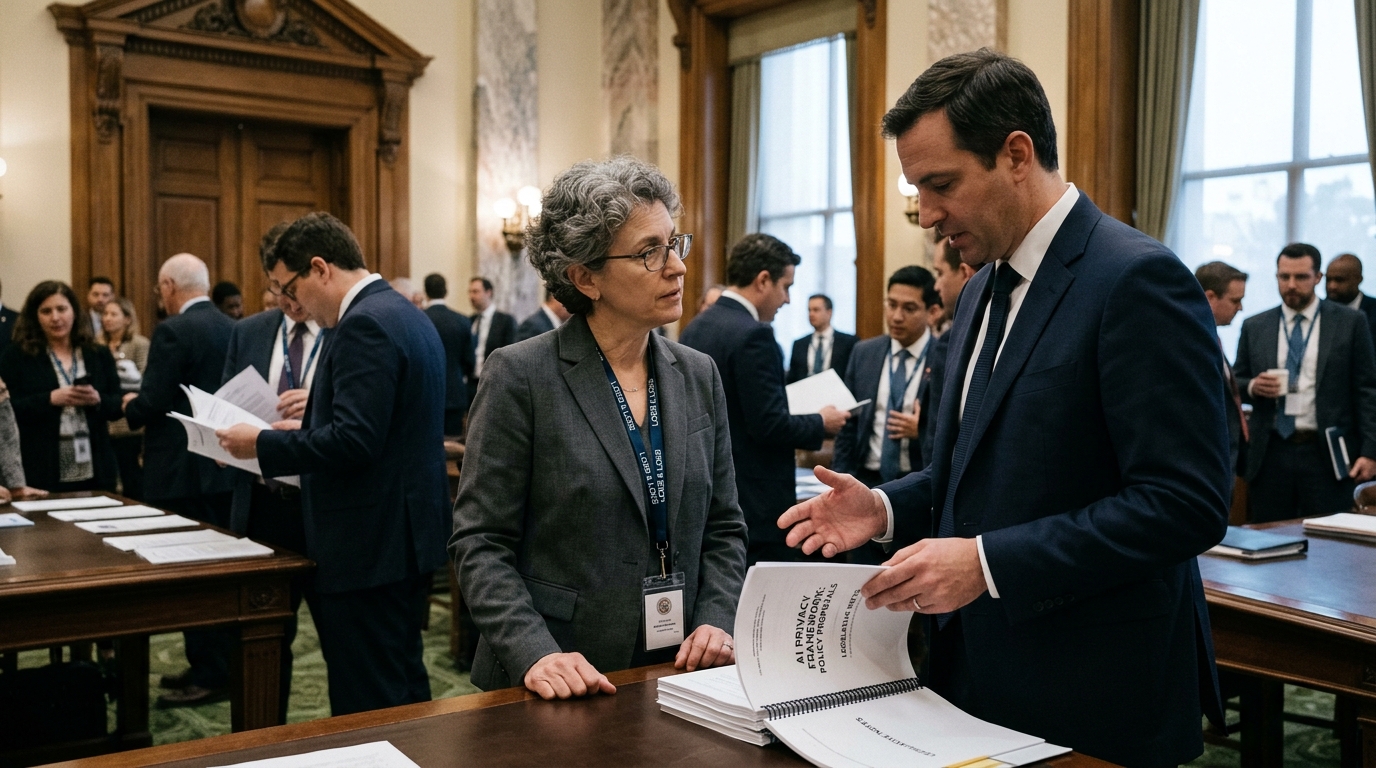
In the heart of Los Angeles, where Silicon Valley's technological innovation meets Hollywood's entertainment industry, the recent AI Summit hosted by Loeb & Loeb LLP highlighted the most critical issue of our time: the collision of Artificial Intelligence and privacy. As we navigate through 2026, the conversation has shifted from whether AI is useful to how it can remain legal and ethical in a rapidly evolving landscape.
The Challenge of Data Provenance
The central theme of the privacy roundtable was "data governance." Participants emphasized that the era of unfettered web scraping is coming to an end. Regulators worldwide, influenced by the European Union's stringent framework (AI Act), now demand full transparency regarding the datasets used to train Large Language Models (LLMs).
Legal experts at Loeb & Loeb pointed out that companies must develop "data provenance" systems. It is no longer enough to possess data; one must be able to prove it was acquired with user consent or under the doctrine of "fair use," a concept currently being sternly tested in U.S. courts. The discussion focused on how businesses can shield themselves from lawsuits concerning the infringement of intellectual property and the personal sphere of creators.
Regulatory Fragmentation and Compliance
One of the most concerning takeaways from the summit was the "regulatory maze" facing multinational corporations. In the absence of unified federal privacy legislation in the U.S., states like California (CCPA/CPRA) and New York are forging their own paths. This creates an environment where compliance becomes an extremely costly and complex process.
- The necessity of "Privacy by Design" in AI systems.
- Managing data subject rights (e.g., the right to be forgotten in AI).
- The use of synthetic data as a solution for privacy protection.
Experts suggested that companies should not wait for legislation but instead voluntarily adopt ethical standards. Self-regulation, though often criticized as insufficient, serves as the first line of defense against future sanctions. Furthermore, the role of the Data Protection Officer (DPO) was discussed, which in 2026 is evolving into the "AI Ethics and Compliance Officer," taking responsibility for algorithmic transparency.
Biometric Data and the Threat of Deepfakes
Special emphasis was placed on the protection of human likeness and voice. In Los Angeles, the concern over deepfakes is not theoretical; it relates to the survival of the entertainment industry. The roundtable analyzed legal avenues for protecting the biometric data of artists, as well as ordinary citizens, from unauthorized use in AI productions.
"Privacy in the age of AI is no longer a static right, but a dynamic negotiation between the individual and the algorithm," it was noted during the discussion.
In conclusion, the Loeb & Loeb AI Summit made it clear that trust is the new currency of the digital economy. Companies that manage to convince users that their data is secure and that algorithms do not infringe upon their privacy will be the ones to dominate the market in the coming years. Legal science is now called upon to bridge the gap between technological speed and social protection.