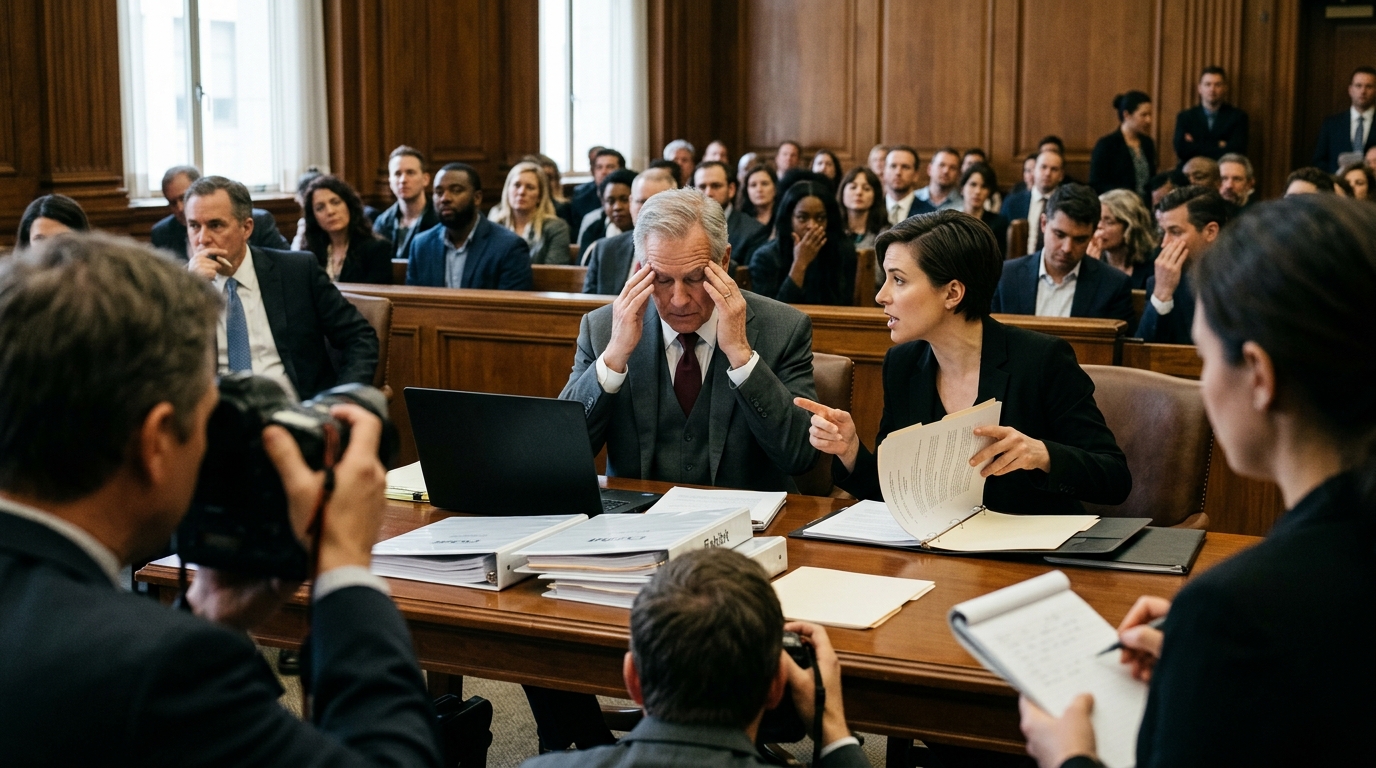
The legal saga that has captivated Silicon Valley and is actively reshaping the future of artificial intelligence has reached a pivotal juncture. At the heart of the trial between Elon Musk and OpenAI—the organization he helped co-found—lies a fundamental question: Can the fear of human catastrophe serve as a valid legal argument in a breach-of-contract case? As we move through April 2026, the courtrooms of California are becoming a theater where moral philosophy and corporate pragmatism collide.
Existential Risk Rhetoric vs. Legal Precedent
Elon Musk, through his legal counsel, contends that OpenAI has betrayed its original mission—to develop artificial general intelligence (AGI) for the benefit of humanity—by transforming into a closed-source, de facto profit-driven subsidiary of Microsoft. His central argument hinges on the notion that unchecked AI development poses an "existential threat." However, judges appear increasingly skeptical. In the realm of contract law, philosophical concerns and altruistic intentions rarely override the specific terms of written agreements.
OpenAI’s defense maintains that Musk’s warnings of danger are "performative" and designed to handicap a competitor, especially given his own heavy investment in xAI. Their legal team emphasizes that there never was a formal, binding "founding agreement" that strictly prohibited for-profit structures, only expressions of intent found in emails and early blog posts.
The Transparency and Open-Source Dilemma
A major point of contention is OpenAI’s shift from an open-source model to one of strategic secrecy. Musk argues that "openness" was the safety valve intended to prevent AI from becoming a corporate monopoly. Conversely, OpenAI’s leadership, led by Sam Altman, argues that releasing their most powerful models into the wild would be dangerous, potentially enabling bad actors—an argument Musk dismisses as a "smokescreen" to protect Microsoft’s commercial interests.
- OpenAI claims safety requires restricted access to advanced weights.
- Musk views secrecy as a tool for market dominance rather than safety.
- Legal experts warn the ruling will define "AGI" for future regulatory frameworks.
Microsoft’s Shadow and Commercial Dominance
The trial has brought to light internal documents revealing the immense pressure on OpenAI to deliver returns for its investors. Microsoft, having funneled billions into the partnership, stands as the silent giant in the background. Musk alleges that OpenAI is no longer a research lab but a product-development arm for Big Tech. This argument resonates with public anxiety regarding the concentration of AI power in the hands of a few trillion-dollar entities.
"We have watched a non-profit designed to save the world transform into a $100 billion profit-engine," noted a witness for the plaintiff.
Yet, the legal hurdle remains high: how do you prove "damages" in a case where the plaintiff is not a shareholder but a former donor who left voluntarily? OpenAI argues that Musk is simply attempting to use the court to reverse a business loss he suffered in 2018 when his bid to take over the company failed.
Conclusion: A Trial for Future Governance
Regardless of the verdict, the Musk-OpenAI trial has already achieved one major feat: it has forced the tech industry into a public debate over accountability. If the court rules that "existential risks" have no standing in commercial disputes, then AI regulation must come solely from legislative bodies rather than judicial interpretation. If Musk prevails, however, it sets a precedent where the founding promises of tech giants are treated as sacred contracts with humanity.
As the proceedings continue, the stakes couldn't be higher. The outcome will determine whether AI remains a tool subject to public oversight or becomes the ultimate private asset of the corporate elite.