In an era where the global economy navigates uncharted waters, the Greek government is attempting to redefine the very essence of progress. Speaking at the 7th Conference of the Economic Chamber of Greece, Kyriakos Pierrakakis presented a vision that moves beyond traditional metrics of quantitative growth, placing stability at the heart of national strategy. His statement, "stability is the new growth," is not merely a communication slogan but a profound acknowledgment that Greece cannot afford further cycles of volatility.
The 120% Landmark and Fiscal Strategy
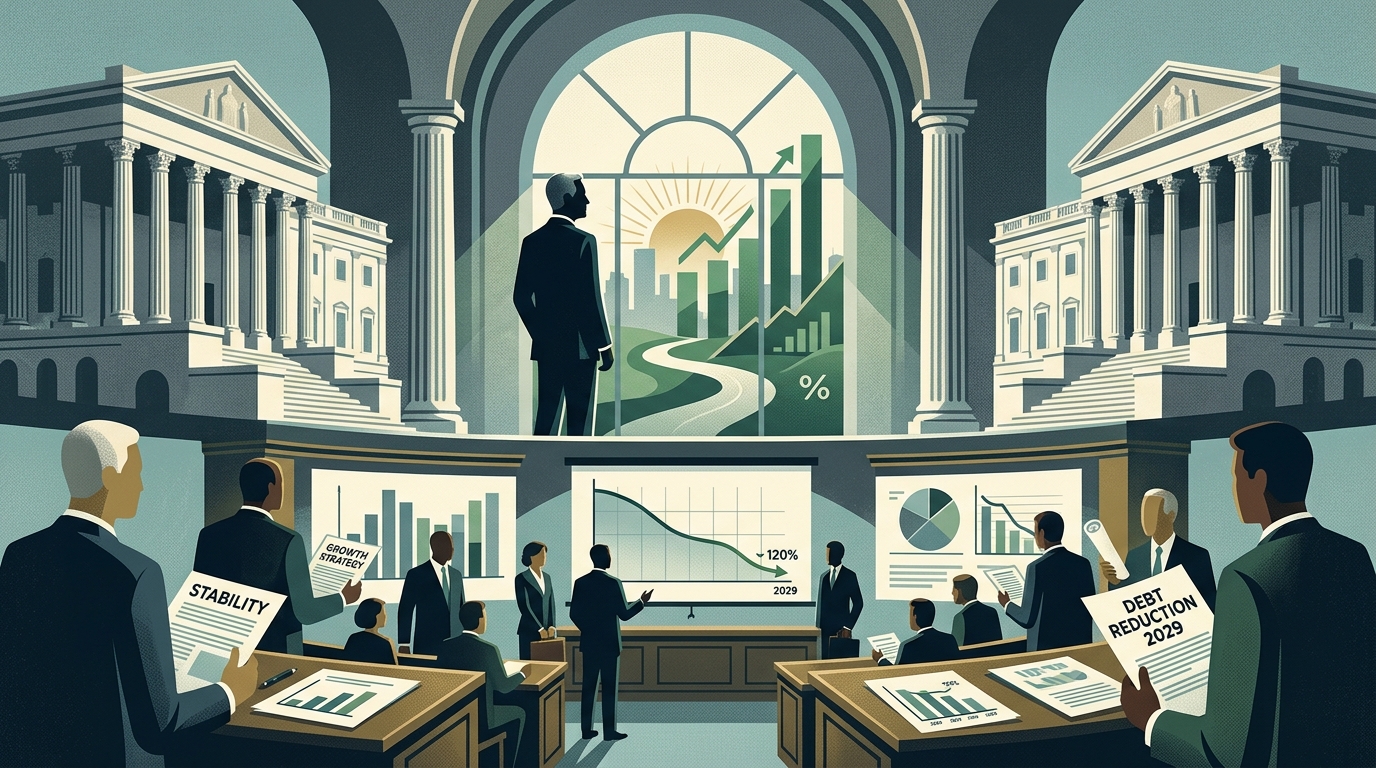
The central target set is clear and ambitious: reducing public debt below 120% of GDP by 2029. For a country that just a few years ago stood on the brink of bankruptcy with debt exceeding 200%, this prospect signals a definitive return to European normalcy. Pierrakakis emphasized that achieving this goal is not an end in itself, but a necessary prerequisite for maintaining investment grade status and lowering borrowing costs for both the state and private enterprises.
This strategy rests on three pillars: maintaining primary surpluses, accelerating investments through the Recovery and Resilience Facility (RRF), and the continuous digitization of the state to curb tax evasion. The Minister's analysis focused on the fact that "resilience" has become the new currency in the international economy. In a world of geopolitical upheavals, Greece seeks to be a "safe haven" for international capital.
From Digital Transition to Economic Reform
Although Pierrakakis now holds the Education portfolio, his speech reflects his role as a key strategic thinker for the government. He inextricably linked economic stability with structural reforms in human capital. "There is no growth without skills, and there are no skills without a stable economic environment to absorb them," he noted. The reform of higher education and its alignment with the labor market are considered critical tools for boosting productivity, which remains the "Achilles' heel" of the Greek economy.
- Digitization of tax audits as a means to increase revenue without raising taxes.
- Attracting Foreign Direct Investment (FDI) in high value-added sectors.
- Leveraging RRF funds for the green transition and energy autonomy.
- Reducing bureaucracy, which acts as an "indirect tax" on entrepreneurship.
The Minister pointed out that stability does not mean stagnation. On the contrary, it is the foundation upon which a sustainable model can be built—one that does not rely on transient consumption spikes but on exports and innovation. The transition from a consumption-led economy to a production-led one is the great challenge of the current decade.
Challenges in the Global Environment
The analysis did not ignore the risks. Inflation, high energy prices, and the demographic crisis remain significant hurdles requiring constant vigilance. Pierrakakis noted that the EU's new Stability and Growth Pact sets strict limits, and Greece must remain a "top student" to maintain its hard-won credibility. Political stability was also cited as a crucial factor, as markets punish uncertainty faster than ever before.
"History has taught us that growth based on borrowed money is an illusion. Real prosperity requires solid foundations, and those foundations are built with fiscal seriousness and reformist courage."
In conclusion, the Minister's intervention at the Economic Chamber sent a clear message to both domestic and international audiences: the Greece of 2026 is no longer looking for "miracles" but for the systematic implementation of a roadmap that will lead to debt below 120% and an economy capable of withstanding future shocks. The stakes are high, but the commitment to stability appears to be the only realistic way out of the systemic failures of the past.